The Micro-Repair Gap: Why Wearables Are the Final Frontier for Right-to-Repair
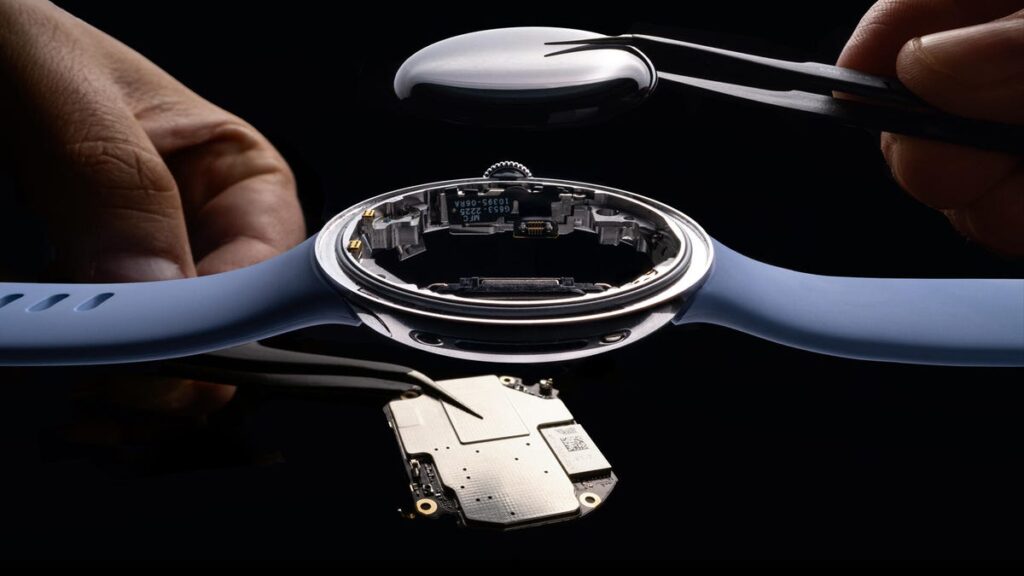
Table of Contents
The Precision Paradox
For most consumer electronics, the ‘Right to Repair’ movement has moved from fringe activism to legislative reality. In the US, a growing coalition of states has passed laws mandating that manufacturers provide parts and manuals. In Europe, the EU Right to Repair Directive is poised to shift the burden of longevity back onto the producers. However, as we move from the palm of our hand to the circumference of our wrist, the physics of repair changes fundamentally.
Repairing a smartphone is a challenge of accessibility; repairing a smartwatch is a challenge of dexterity. The industry is currently facing what can be described as a ‘micro-repair gap,’ where the tools and techniques that work for a MacBook or an iPhone are virtually useless when confronted with the adhesive-heavy, vacuum-sealed internals of a wearable.
The Adhesive Wall
The primary antagonist in wearable repair is the industrial adhesive. To achieve water resistance and a compact form factor, manufacturers like Apple and Samsung have traditionally relied on permanent glues that effectively turn a device into a single, fused brick. Attempting to replace a screen or a battery often requires heat guns and surgical precision, where a millimeter’s deviation can result in a severed ribbon cable or a cracked chassis.
This is where the Google Pixel Watch 4 represents a curious pivot in design philosophy. Unlike its predecessors and competitors, Google reengineered the device to move away from heavy adhesives, aiming for a modularity that allows for disassembly without catastrophic failure. According to Kyle Wiens, CEO of iFixit, Google has essentially ‘swung for the fences,’ attempting to prove that a high-performance wearable doesn’t have to be a disposable product.
Even with this shift, the barrier to entry remains staggeringly high. The process requires specialized tools—spudgers for prying and ultra-fine tweezers for manipulating connectors—that the average consumer does not own. The psychological friction of performing ‘open-heart surgery’ on a $300 device is a significant deterrent, often leading users to simply buy a new model rather than risk bricking their current one.
A Growing E-Waste Problem
The lack of a robust repair ecosystem for wearables is not just a consumer inconvenience; it is an environmental liability. As smart rings, AI-integrated glasses, and health-tracking wearables proliferate, the volume of miniaturized e-waste is skyrocketing. These devices contain rare earth minerals and cobalt, often sourced from regions with fraught human rights records, yet they are frequently discarded due to a dead battery that is technically replaceable but practically impossible to reach.
While the ‘Genius Bar’ model or third-party repair cafes work for laptops, the sheer scale of the work required for a smartwatch makes it economically unviable for many independent shops. The labor cost of spending three hours to replace a $20 battery often exceeds the value of the device itself.
The Path to Modular Wearables
For the Right to Repair movement to succeed in the wearable space, the industry must move beyond ‘allowable’ repair to ‘intuitive’ repair. This means transitioning from adhesives to mechanical fasteners and standardized components. If the Pixel Watch 4’s gamble on a glue-free design gains traction, it could force a shift in how the rest of the industry views the lifecycle of a gadget.
Until then, wearables remain the most vulnerable link in our tech ecosystem—small, sophisticated, and frustratingly fragile.