The ‘Masterpiece’ Trap: Why The Witcher 3’s Universal Acclaim Masks a Fundamental Genre Divide
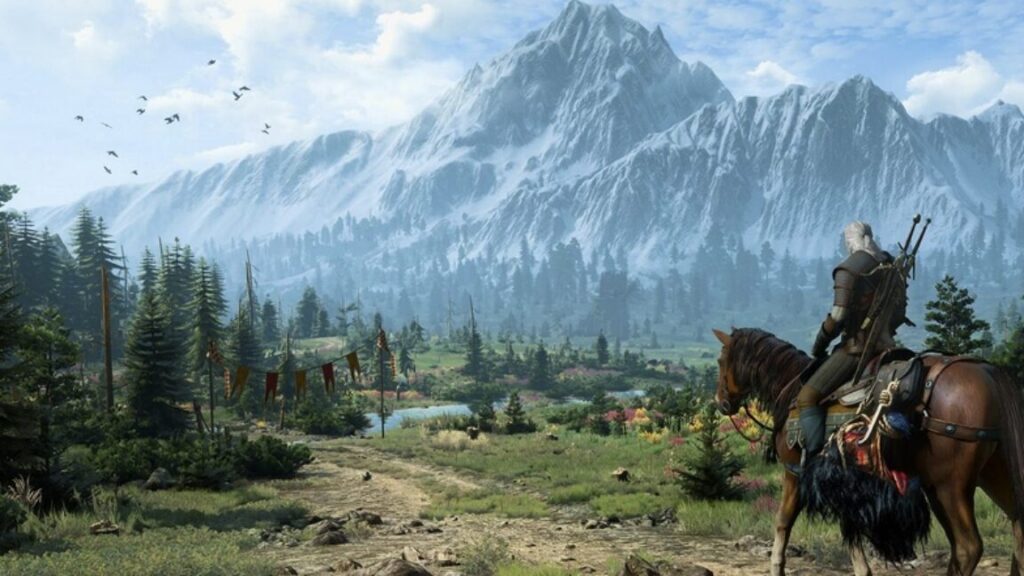
Table of Contents
The Weight of the ‘Game of the Year’ Label
In 2015, The Witcher 3: Wild Hunt didn’t just launch; it colonized the gaming conversation. Showered in accolades and virtually undisputed by critics, it became the gold standard for the open-world RPG. For many, it was a flawless realization of narrative depth and world-building. But for a specific subset of players, this universal acclaim created a psychological friction: the feeling that if you didn’t love the game, you were somehow missing the point of the genre.
This phenomenon isn’t unique to CD Projekt Red’s magnum opus. We see it repeated in the modern era with titles like Clair Obscur: Expedition 33, where the collective momentum of influencers and journalists creates an atmospheric pressure to agree. When a game is anointed as a masterpiece, the act of struggling through it becomes a chore of social compliance rather than an act of entertainment.
The Identity Gap: Preset vs. Player-Created
The friction often stems from a fundamental misunderstanding of what “RPG” means to different people. To the casual observer, The Witcher 3, Skyrim, and Mass Effect all occupy the same space. In reality, they represent two entirely different philosophies of role-playing.
The core of the experience in The Witcher 3 is the habitation of an existing identity. Geralt of Rivia is not a blank slate; he is a character with decades of established lore, a specific moral code, and a predefined history. While the writing allows for meaningful branching paths, these choices are essentially different lenses through which to view a consistent personality. You aren’t creating a character; you are interpreting one.
For players raised on the tradition of tabletop systems like D&D, GURPS, or Shadowrun, this can feel restrictive. The joy of the RPG often lies in the “blank character sheet”—the process of defining an identity from scratch and seeing how that specific set of values interacts with the world. This is the middle ground Cyberpunk 2077 attempted to strike, offering a named protagonist while allowing players to customize backgrounds and physical appearances to steer the narrative’s emotional core.
Zero to Hero vs. Hero to Legend
Beyond the narrative identity, there is the mechanical progression. There is a distinct psychological satisfaction in the transition from a novice to a master—the “zero to hero” arc. This is a pillar of the Elden Ring experience, where the player begins as a Tarnished nobody and earns every shred of power through hardship and exploration.
The Witcher 3 rejects this. Geralt is a powerhouse from the first frame. He is a professional, a mutation-enhanced killing machine who is already at the top of his field. The game’s progression isn’t about gaining fundamental competence, but about refining an already lethal skillset. For those who crave the feeling of growth and the struggle of early-game vulnerability, the power fantasy of Geralt can feel stagnant rather than empowering.
The Echo Chamber of Modern Gaming
The struggle to enjoy a universally loved game highlights a growing trend in digital culture. On platforms like Reddit and TikTok, gaming opinions are increasingly homogenized by algorithmic curation and the influence of “tastemaker” creators. There is a pervasive fear of being “out of the loop,” leading players to force themselves through experiences that don’t align with their personal tastes simply to participate in the community discourse.
Ultimately, the divide between loving The Witcher 3 and preferring a more traditional character-driven RPG isn’t a matter of quality, but of flavor. A game can be technically perfect and narratively brilliant, yet still be the wrong fit for a player’s specific definition of role-playing. Recognizing that critical consensus is not a mandate for personal enjoyment is perhaps the most important part of engaging with modern gaming.