The Last Call for the Next Big Thing: TechCrunch Disrupt Closes Startup Battlefield Applications
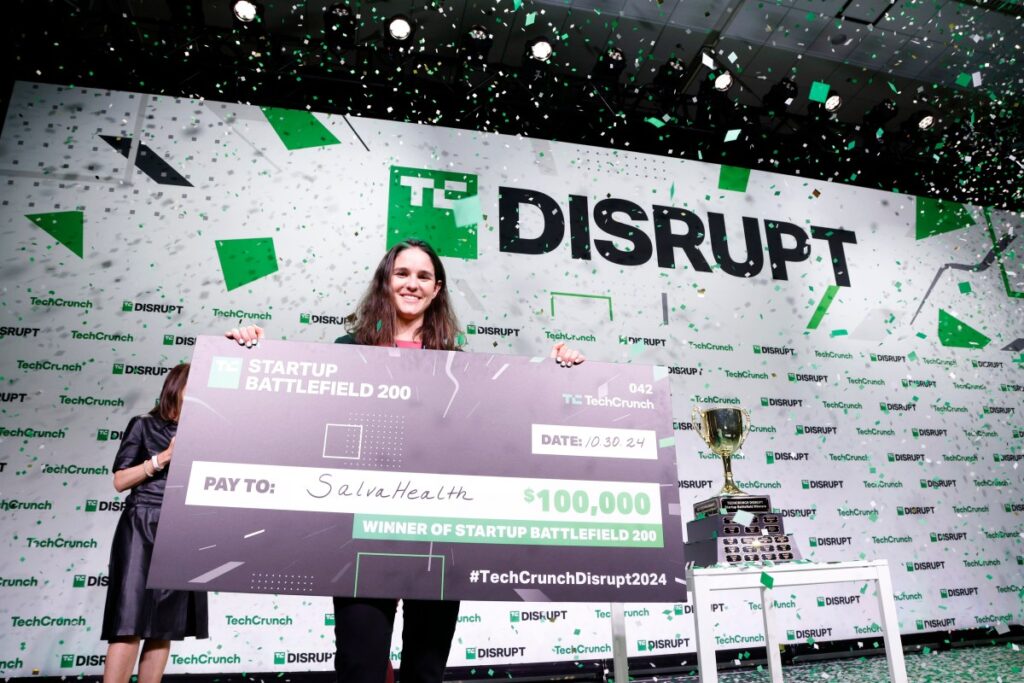
Table of Contents
The High-Stakes Filter for Early-Stage Innovation
For early-stage founders, the difference between remaining a stealth project and becoming a household name often comes down to a single point of leverage: visibility. Tonight at 11:59 p.m. PT, that window of opportunity closes as TechCrunch Disrupt officially ends the application period for its Startup Battlefield 200.
While many industry competitions focus on polished metrics and scaled revenue, Startup Battlefield has historically operated as a discovery engine for raw potential. The program isn’t designed for the companies that have already won; it is designed for the ones that are about to. This distinction is why the competition remains one of the most respected filters in the venture ecosystem, offering $100,000 in equity-free funding to the ultimate winner and a level of concentrated investor attention that usually takes months of networking to achieve.
A Legacy of ‘Unlikely’ Successes
To understand the gravity of the Battlefield stage, one only needs to look at the alumni list. The program has a track record of identifying category-definers long before the broader market catches on. Dropbox, Cloudflare, and Discord all passed through this pipeline at stages where their business models were viewed as speculative or niche. Discord, for instance, entered the arena as a scrappy gaming startup known as Hammer & Chisel, far removed from the communication behemoth it is today.
According to internal data, more than 1,700 startups have participated in Startup Battlefield over the years. The cumulative impact is staggering: alumni have raised over $32 billion in capital and seen more than 250 exits, including high-profile acquisitions by the likes of Microsoft, Google, Salesforce, Uber, and Amazon. For a founder, the $100,000 prize is often secondary to the signal it sends to the VC community that their product has been vetted by one of the industry’s most rigorous selection processes.
The Anatomy of the Selection Process
The funnel is intentionally steep. Thousands of applications are submitted globally, but only 200 companies make the initial cut. From that pool, a mere 20 finalists earn the right to pitch on the main Disrupt Stage. This scarcity creates a high-pressure environment that mimics the intensity of a real funding round, forcing founders to distill their value proposition into a concise, high-impact presentation.
The criteria for entry remain intentionally broad. The program explicitly welcomes pre-launch startups and those without significant revenue, provided the product demonstrates the potential to disrupt an existing industry or create an entirely new one. While the majority of selected participants are pre-Series A, certain Series A companies may qualify if their growth trajectory is sufficiently exceptional.
Direct Access in a Crowded Market
In the current economic climate, where venture capital has become more discerning and ‘growth at all costs’ has been replaced by a demand for sustainable unit economics, the exposure provided by TechCrunch Disrupt is more valuable than ever. Selected startups will showcase their tech in front of over 10,000 attendees, including leading venture firms and global media outlets.
Whether a founder ends up on the main stage or the Pitch Showcase Stage, the primary value is the proximity to decision-makers. In an era of automated outreach and crowded LinkedIn inboxes, the ability to demo a product live to a room full of GPs and analysts is a rare competitive advantage.
For those who have been nominated or are still debating a submission, the clock is the only remaining obstacle. The application window shuts tonight, marking the start of the curation process for the next generation of the tech elite.