The Kinetic Legacy of Top Gun: Why the 1986 Original Still Defines Aerial Cinema
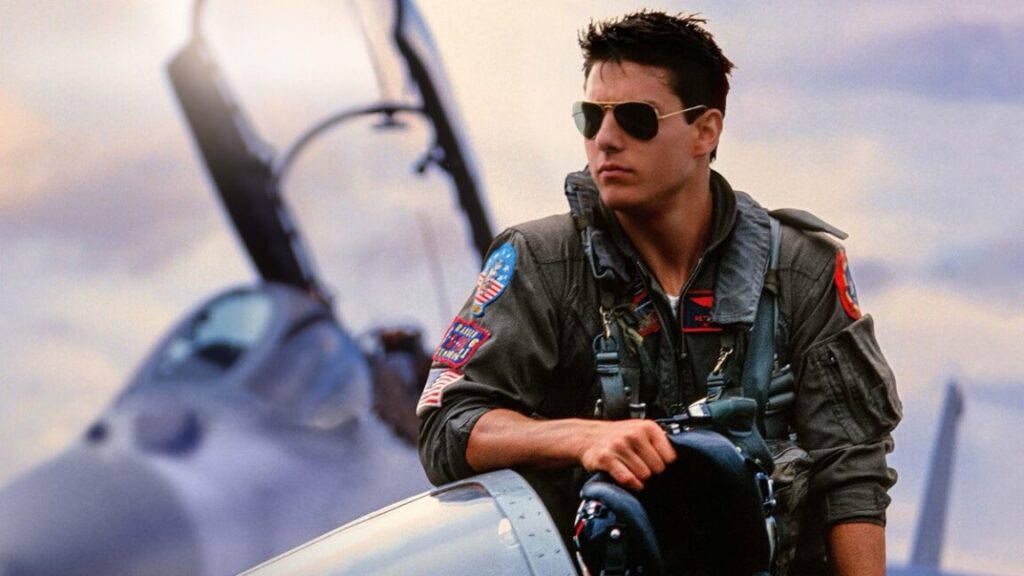
Table of Contents
The raw power of the F-14
When Top Gun premiered in 1986, it wasn’t just a movie; it was a high-octane recruiting brochure for the U.S. Navy. While the critical reception at the time was a mixed bag of praise and skepticism, the audience response was visceral. The film grossed $358 million globally, dominating the box office and cementing Tom Cruise’s status as a global superstar. But forty years later, the narrative beats and 80s melodrama have faded into the background, leaving behind something far more enduring: the breathtaking, kinetic aerial footage.
Long before the era of seamless CGI and digital set extensions, Top Gun relied on the terrifying reality of G-forces and aluminum. The film’s DNA was rooted in a 1983 California magazine piece about the Naval Air Station Miramar—the legendary ‘Fightertown USA.’ Producers Jerry Bruckheimer and Don Simpson wanted that same sense of authenticity on screen, leading them to hire Tony Scott. At the time, Scott was a commercial director with a knack for speed, having previously filmed a Saab car racing against a Saab 37 Viggen fighter jet. It was this specific technical appetite that made him the right fit for the project.
The technical struggle of the cockpit
Capturing the sensation of Mach-speed flight in 1986 required more than just a good eye; it required a willingness to experiment with hardware. Scott faced a significant hurdle: the anamorphic lenses typically used for widescreen cinema were simply too large to fit inside the cramped cockpits of the F-14A Tomcats. To solve this, Scott turned to Super-8 cameras, mounting them throughout the aircraft to capture the claustrophobic, high-pressure environment of the cockpit and the sweeping vistas of the Indian Ocean.
The resulting footage wasn’t just visually stunning—it was physically honest. Much of the air footage was shot from a Learjet, with cameras bolted to the exteriors of the fighters. Because the U.S. Navy provided the aircraft, carriers, and actual flight crews, the deck footage captures real-world operations rather than staged choreography. This commitment to practicals created a sense of weight and danger that modern digital effects often struggle to replicate.
The cost of authenticity
The visceral nature of the film was heightened by the presence of real stunt pilots, including future NASA astronaut Scott Altman, who executed the infamous ‘flipping the bird’ maneuver and the daring tower-buzzes. However, the pursuit of the perfect shot came with a heavy price. Aerobatic pilot Art Scholl, tasked with capturing some of the most complex in-flight camera work, was lost during a flat spin maneuver. Scholl’s biplane crashed into the Pacific Ocean near Carlsbad, California; neither the pilot nor the aircraft was ever recovered.
This tragedy serves as a sobering reminder of the risks taken to achieve the film’s aesthetic. Tony Scott dedicated the film to Scholl, acknowledging that the pulse-pounding sequences the world loves were born from genuine peril.
A blueprint for the modern blockbuster
The legacy of Top Gun is evident not just in its 2022 successor, Top Gun: Maverick, but in how we perceive action cinema today. By prioritizing the sensory experience—the roar of the engines, the shudder of the airframe, and the orange-hued glow of the flight deck—Scott created a visual language for aviation that remains the gold standard. While the story of Maverick’s redemption and his rivalry with Iceman provides the emotional skeleton, it is the technology of the shoot and the bravery of the pilots that give the film its lasting heartbeat.


