The iPad Alternatives: How Chinese Tablet OEMs are Breaking Apple’s Hardware Monopoly
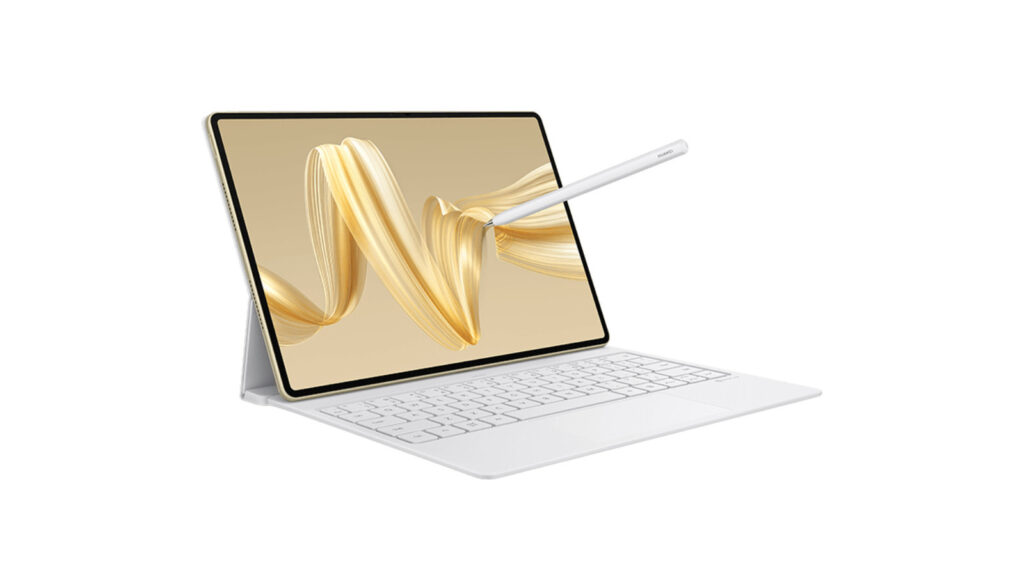
Table of Contents
The Shift in Tablet Value
For years, the narrative around tablets has been simple: if you want a professional-grade experience, you buy an iPad. Apple’s tight integration of silicon and software has created a moat that few Android manufacturers could cross. However, a new wave of hardware from Chinese OEMs is fundamentally changing that math, offering specs that don’t just match the iPad’s capabilities but often exceed them at a lower entry price.
While many of these devices lack official US distribution, the global import market has revealed a significant gap in how Apple prices its ‘entry-level’ hardware versus what the modern consumer actually receives in terms of display technology and charging speeds.
Nubia and the Mid-Range Pivot
The 2025 launch of the Nubia Pad Pro marks a direct assault on the base-model iPad. Starting at approximately $420, the Nubia Pad Pro undercuts the storage-scaling costs Apple is known for, offering 256GB of storage as a baseline. While Apple’s 11th-generation iPad remains a capable machine, it is still hampered by a 60Hz refresh rate—a limitation that feels increasingly dated in 2025.
Nubia has countered this with a 10.9-inch IPS display featuring a 144Hz refresh rate. Combined with the Snapdragon 8 Gen 3 chipset, the device handles multitasking and gaming with a fluidity that the A16-powered base iPad struggles to match. More importantly, the 66W fast charging on the Nubia Pad Pro makes the iPad’s slower power delivery look like a relic of the previous decade.
Flagship Warfare: Huawei vs. the Pro Line
At the top end, the Huawei MatePad Pro 12.2 is attempting to dismantle the ‘iPad Pro’ prestige. The hardware is objectively impressive: a 12.2-inch OLED panel capable of 2,000 nits peak brightness and a 144Hz refresh rate. In a direct comparison to the 11-inch iPad Pro, the Huawei device offers a larger screen and a superior value proposition by bundling a keyboard and protective case—accessories that Apple typically sells separately for nearly $300.
Under the hood, the Kirin T92A processor handles heavy workloads efficiently, though it lacks the raw brute force of Apple’s M5 silicon. However, for the vast majority of users, the bottleneck isn’t processing power—it’s the cost of entry. Huawei is positioning the MatePad Pro 12.2 as a complete workstation out of the box, whereas Apple’s Pro experience requires multiple high-cost peripherals to be fully realized.
Xiaomi’s Aggressive Specification Push
Xiaomi is playing a dual game, attacking both the mid-range and the small-form-factor markets. The Xiaomi Pad 8 Pro is perhaps the most potent threat to the iPad Air. Powered by the Snapdragon 8 Elite—the same silicon found in the Galaxy S25 Ultra—it provides a level of raw compute power that rivals the M4 chip in daily productivity tasks.
The Pad 8 Pro’s 11.2-inch display outperforms the iPad Air’s 60Hz panel, offering a 144Hz experience that makes everything from web browsing to sketching feel instantaneous. Even the weight difference is negligible, with the Xiaomi adding only a fraction of an ounce over the Air, while providing significantly faster wired charging (67W).
Then there is the Xiaomi Pad Mini. While Apple has long dominated the small-tablet niche with the iPad mini, Xiaomi has introduced an 8.8-inch panel with a staggering 165Hz refresh rate and a pixel density of 403 PPI. By utilizing the MediaTek Dimensity 9400+ chipset, Xiaomi has created a compact powerhouse that appeals to the ‘prosumer’ who wants a handheld device that doesn’t compromise on speed or screen quality.
The Software Gap
Despite the hardware superiority in several categories, the ‘iPad advantage’ remains the software. iPadOS is optimized for the tablet form factor in ways that Android still struggles to replicate perfectly. However, as HarmonyOS and Xiaomi’s HyperOS continue to evolve with better windowing and desktop-mode capabilities, the gap is closing. The question for consumers is no longer whether a Chinese tablet can match the iPad’s hardware, but whether the software experience is ‘good enough’ to justify the significant cost savings.


