The Invisible War for the Ear Canal: How AirPods Redefined the Audio Market
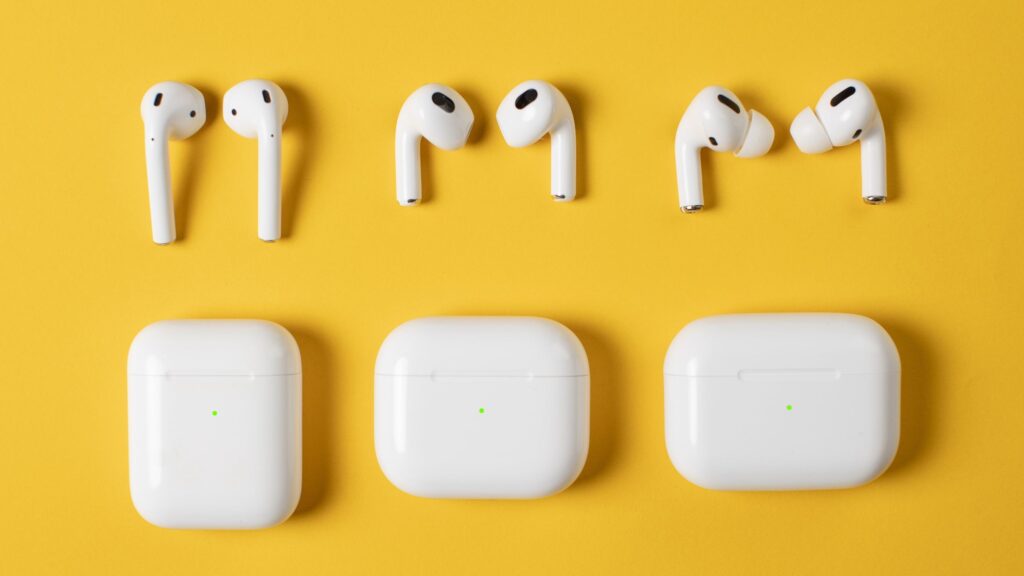
Table of Contents
The Great Decoupling
In 2016, Apple did something that felt like a gamble at the time: they removed the headphone jack from the iPhone 7 and launched the original AirPods. To the audiophile community, it was a heresy. To the general public, it was an inconvenience. But in retrospect, it was the catalyst for the ‘hearables’ era—a shift where the earbud stopped being a mere accessory and became a sophisticated piece of wearable computing.
Before the TWS (True Wireless Stereo) explosion, the market was split between bulky over-ear monitors and wired in-ear buds that frequently tangled in pockets. The original AirPods didn’t necessarily win on sound quality—early reviews often noted a lack of bass and a generic sound profile—but they won on friction. By solving the connectivity hurdle and creating a seamless pairing process, Apple turned a utility into a status symbol.
The Fidelity Trade-off
The fundamental tension in the earbud market has always been the battle between physics and portability. Larger drivers in over-ear headphones allow for a wider soundstage and deeper resonance, something a tiny piece of plastic tucked into the ear canal simply cannot replicate. However, the industry has pivoted toward ‘computational audio’ to bridge this gap.
Modern iterations, specifically the AirPods Pro and its competitors from Sony and Bose, no longer rely solely on the hardware of the driver. Instead, they use sophisticated DSP (Digital Signal Processing) and chips like Apple’s H2 to manipulate sound in real-time. Adaptive EQ and Active Noise Cancellation (ANC) have shifted the goalpost; users are now less concerned with the raw purity of a lossless signal and more interested in how well a device can silence the hum of a jet engine or a crowded subway.
The Ecosystem Lock-in
The success of the AirPods line isn’t just about the hardware; it’s about the software moat. The ability to instantly switch between an iPad, a Mac, and an iPhone is a feature that competitors have struggled to replicate with the same fluidity. This integration has forced other manufacturers to move beyond simply selling ‘buds’ and instead build entire ecosystems.
We see this in the way Samsung has integrated the Galaxy Buds with its One UI interface, or how Google has leaned into the Pixel Buds’ deep Assistant integration. The earbud is no longer just for music; it is the primary interface for voice AI. Every time a user says ‘Hey Siri’ or ‘Alexa’ into a stem, the device is reinforcing a brand loyalty that transcends the audio quality of the music being played.
Market Saturation and the Quest for Value
As the TWS market reaches a point of saturation, the value proposition is shifting. We are seeing a bifurcation in the market: the ultra-premium segment, where $250+ earbuds offer transparency modes and spatial audio, and the budget segment, where brands like Xiaomi and Realme offer 80% of the experience for a fraction of the cost.
For consumers currently eyeing the market, the decision often comes down to the ‘convenience tax.’ While high-fidelity wired IEMs (In-Ear Monitors) still dominate for critical listening, the sheer utility of a wireless pair that lives in a pocket-sized charging case has made them an essential piece of modern kit. The question is no longer whether you need earbuds, but whether the incremental jump to the latest Pro model justifies the upgrade cost.


