The High-Stakes Filter: TechCrunch Disrupt’s Startup Battlefield 200 Enters Final Application Hours
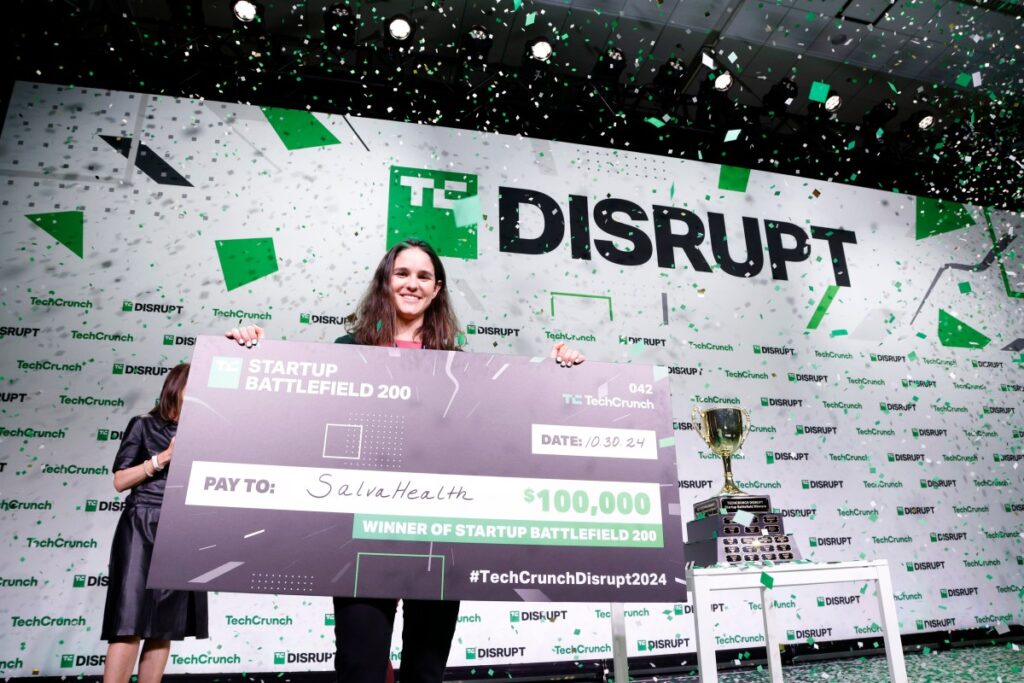
Table of Contents
The Last Call for the Next Category-Definers
The clock is ticking for founders aiming to break into the inner circle of venture capital and global tech visibility. Applications for the Startup Battlefield 200 close today at 11:59 p.m. PT, marking the final deadline for early-stage companies to vie for a spot in one of the industry’s most storied launchpads.
For those unfamiliar with the stakes, Startup Battlefield isn’t just a pitch competition; it is a high-pressure filter designed to identify companies before they become household names. The reward for the top spot is $100,000 in equity-free funding, but for the majority of the 200 selected companies, the true value lies in the institutional exposure. A successful run at TechCrunch Disrupt often serves as a catalyst for seed or Series A rounds, placing founders directly in the line of sight of thousands of attendees, including top-tier GPs and angel investors.
From ‘Hammer & Chisel’ to Global Dominance
To understand the gravity of the Battlefield, one only needs to look at the alumni list. The program has a historical knack for spotting asymmetric potential long before the broader market catches on. Discord, for instance, entered the fray as a scrappy project called Hammer & Chisel. Other early participants include Cloudflare, which pitched its edge infrastructure vision before the concept had reached mainstream consciousness, and Dropbox, which demoed its synchronization tech when cloud storage was still a niche utility.
The cumulative impact of the program is staggering. More than 1,700 startups have passed through the Battlefield over the years, collectively raising over $32 billion. The exit data is equally telling, with more than 250 companies eventually being acquired by giants like Google, Microsoft, Salesforce, and Amazon. This track record transforms the application from a simple form into a strategic move for founders who are comfortable with high-risk, high-reward visibility.
The Anatomy of the Selection Process
The funnel is intentionally narrow. While thousands of applications are submitted globally, only 200 make the initial cut to participate in the showcase. From there, the competition tightens further, with only 20 finalists earning the right to pitch on the main Disrupt Stage.
Editorial and investment criteria for this year remain focused on ambition and innovation over polish. The program explicitly welcomes pre-launch companies and those without immediate revenue, provided the core product addresses a significant industry friction or creates a new category entirely. While the majority of selected firms are pre-Series A, the committee does consider select Series A companies that demonstrate exceptional trajectory.
Why the ‘Loss’ is Often a Win
In the venture world, the binary of winning or losing a pitch competition is often misleading. The real-world utility of Startup Battlefield is the concentrated networking density. Whether a founder pitches on the primary stage or the Pitch Showcase Stage, the proximity to 10,000+ attendees and global media outlets often results in ‘accidental’ partnerships and serendipitous investor introductions that far outweigh the $100,000 prize.
As the deadline looms tonight, the surge in last-minute applications is a perennial trend. For founders still debating whether their product is “ready,” the history of the program suggests that waiting for perfection is a losing strategy. The most influential companies in tech history rarely launched with a polished pitch; they launched with a solution to a problem that the rest of the world hadn’t yet articulated.