The High-Stakes Filter: Inside the Race for TechCrunch Disrupt’s Startup Battlefield 200
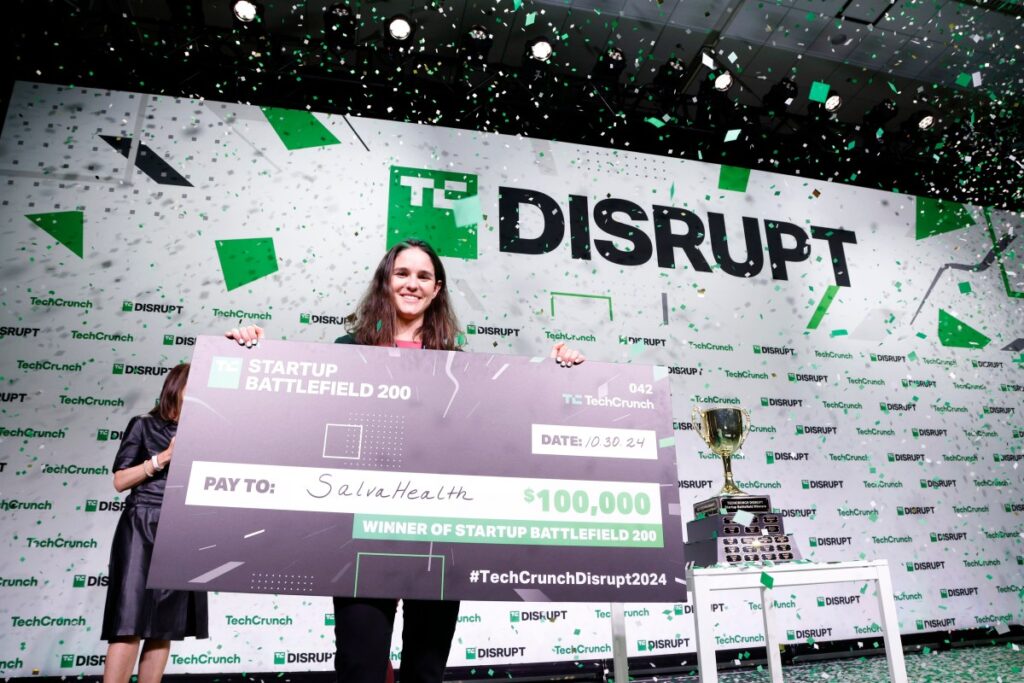
Table of Contents
The Final Countdown for Early-Stage Founders
For thousands of early-stage founders, the next few hours represent a critical pivot point in their company’s trajectory. Tonight at 11:59 p.m. PT, the application window slams shut for the Startup Battlefield 200, the prestigious vetting process that determines which companies will take the stage at TechCrunch Disrupt.
While the headline prize is a $100,000 equity-free grant, the real currency of the Battlefield is visibility. In an era where venture capital has become increasingly selective—shifting away from the ‘growth at all costs’ mantra of the 2021 era toward a rigorous demand for sustainable unit economics—the ability to pitch in front of 10,000 attendees and a concentrated swarm of global VCs is an invaluable asset.
The ‘Battlefield’ Pedigree
The history of Startup Battlefield serves as a blueprint for the modern tech ecosystem. It is not merely a contest, but a historical launchpad for companies that defined their respective categories. Industry veterans often point to the early days of Dropbox, which faced significant skepticism over the viability of cloud storage before it became a utility. Similarly, Cloudflare and Discord—the latter originally known as Hammer & Chisel—utilized the Disrupt stage to move from the periphery of the developer community into the mainstream consciousness.
According to internal data, more than 1,700 startups have cycled through the Battlefield program. The cumulative impact is staggering: alumni have raised over $32 billion in follow-on funding and secured more than 250 exits, including high-profile acquisitions by giants like Salesforce, Google, and Microsoft. This track record creates a self-fulfilling prophecy of success, where the ‘Battlefield’ seal of approval acts as a signal to investors that a company has survived a rigorous initial screening.
Beyond the Polished Pitch
A common misconception among first-time founders is that the Battlefield 200 is reserved for companies with perfect MRR (Monthly Recurring Revenue) or a polished Series A deck. However, the editorial ethos of the program has historically prioritized innovation and ‘category-defining’ potential over corporate symmetry.
Pre-launch companies and those without current revenue are frequently selected, provided their underlying technology or market thesis is disruptive. The program is designed to identify the ‘breakout’—the company that sees a gap in the market that others have overlooked. Whether a startup is utilizing generative AI to reshape legal discovery or building new hardware for the edge-computing era, the criteria remain focused on the magnitude of the problem being solved.
The Logistics of Exposure
The selection process is a brutal funnel. Out of thousands of applicants, only 200 are chosen to participate. From that group, a mere 20 finalists earn the right to pitch on the main Disrupt Stage. However, the value proposition extends beyond the winner’s circle.
Selected companies are placed into the Pitch Showcase Stage, creating a high-density networking environment. For a founder, the opportunity to secure a single introductory meeting with a Tier-1 VC or a strategic partnership with a cloud provider can outweigh the $100,000 prize. In the current market, where ‘warm intros’ are still the primary gatekeepers to capital, the Battlefield provides a legitimate, merit-based shortcut to the decision-makers.
As the midnight deadline approaches, the surge in applications typically peaks, reflecting the classic founder’s tendency to iterate on their pitch until the final possible second. For those still weighing the risk of exposure against the potential for reward, the precedent set by the likes of Trello and Fitbit suggests that the risk of invisibility is far greater.


