The Great Simulation Swap: Origin Lab Raises $8M to Turn Gaming Assets Into AI World Models

Table of Contents
The Data Bottleneck in Physical AI
For the last few years, the AI arms race has been fought primarily with text and images. Large Language Models (LLMs) were built by scraping the vast, unstructured archives of the open web. But as the industry pivots toward “world models”—AI designed to understand 3D space, gravity, and cause-and-effect—the open web is proving insufficient. You cannot learn the physics of a falling glass or the friction of a sliding door by reading a blog post.
This has created a critical data bottleneck for labs attempting to build the brains for the next generation of robotics and spatial computing. To solve this, a new startup called Origin Lab is proposing a pivot: instead of trying to record every single physical interaction in the real world, why not leverage the billions of dollars already spent simulating that world in video games?
Origin Lab recently announced an $8 million seed funding round led by Lightspeed Ventures. The round saw participation from SV Angel, Eniac, Seven Stars, and FPV, with notable angel checks from Twitch co-founder Kevin Lin and Cruise founder Kyle Vogt. The investor lineup is telling, blending the worlds of gaming infrastructure and autonomous vehicle development—two sectors that rely heavily on high-fidelity simulation.
Bridging the Gap Between Unreal Engine and Neural Nets
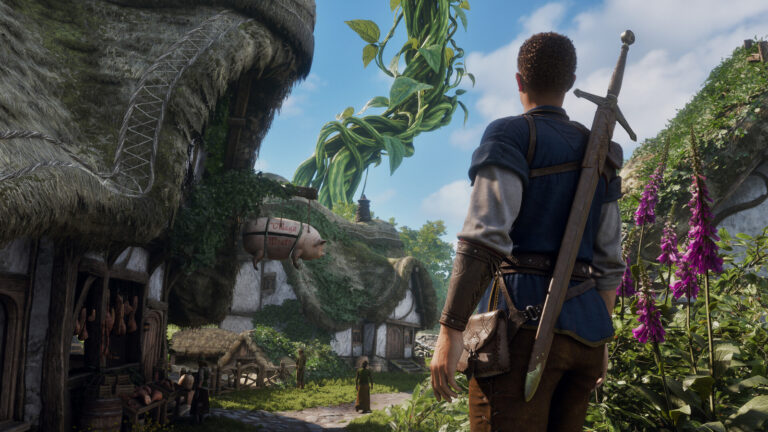
The core premise of Origin Lab is that the video game industry is essentially sitting on the world’s most sophisticated physics laboratory. Modern game engines, such as Unreal Engine 5 or Unity, are built to mimic real-world lighting, collision, and movement with extreme precision. For an AI trying to learn how an object should bounce or how a liquid should flow, a licensed game environment is far more efficient than a grainy YouTube clip.
“The AI systems that are being built now need to understand how the physical world works and how things move,” co-founder and co-CEO Anne-Margot Rodde explained. “That data essentially lives in video games.”
Origin Lab isn’t just a broker; it’s a conversion layer. The company acts as a marketplace that connects world-model labs—such as Fei-Fei Li’s World Labs or Yann LeCun’s AMI Labs—with gaming studios. Origin then converts these digital assets into a format suitable for machine learning. This process can range from simple high-volume rendering runs to the automation of thousands of hours of programmatic “walkthrough” footage, creating a synthetic but physically accurate dataset that can be fed into a neural network.
Moving Past the “Sora Scandal”
Until now, the relationship between AI labs and gaming content has been fraught with tension. In late 2024, OpenAI’s Sora video-generation model faced scrutiny when users noticed it appeared to be regurgitating footage from popular games and Twitch streams, suggesting the model had been trained on copyrighted material without explicit permission. This “scraping” approach has led to a wave of legal threats and a growing demand for licensed, clean data.
Origin Lab aims to replace the “scrape and pray” method with a legitimate revenue stream for developers. By licensing assets, game studios can monetize their technical debt and environmental design in a way that doesn’t interfere with their player base. For the AI labs, the trade-off is a move from ambiguous, copyright-infringing data to high-quality, curated sets that are mathematically verifiable.
The Rise of the Data Vendor
The investment in Origin Lab reflects a broader trend: the shift from valuing the AI model itself to valuing the data pipeline. Faraz Fatemi, a partner at Lightspeed, noted that the precedent set by Scale AI—which became a behemoth by providing the human-in-the-loop labeling necessary for LLMs—shows that the real profit in the AI gold rush often lies with the shovel sellers.
As the industry moves toward “embodied AI,” where models control physical hardware, the demand for synthetic physics data will only intensify. Origin Lab is betting that the virtual worlds we spend our leisure time in are actually the blueprints for the robots of the future.