The ‘Good’ Killer: New Fungus Discovery Could Save Britain’s Decimated Moss Landscapes
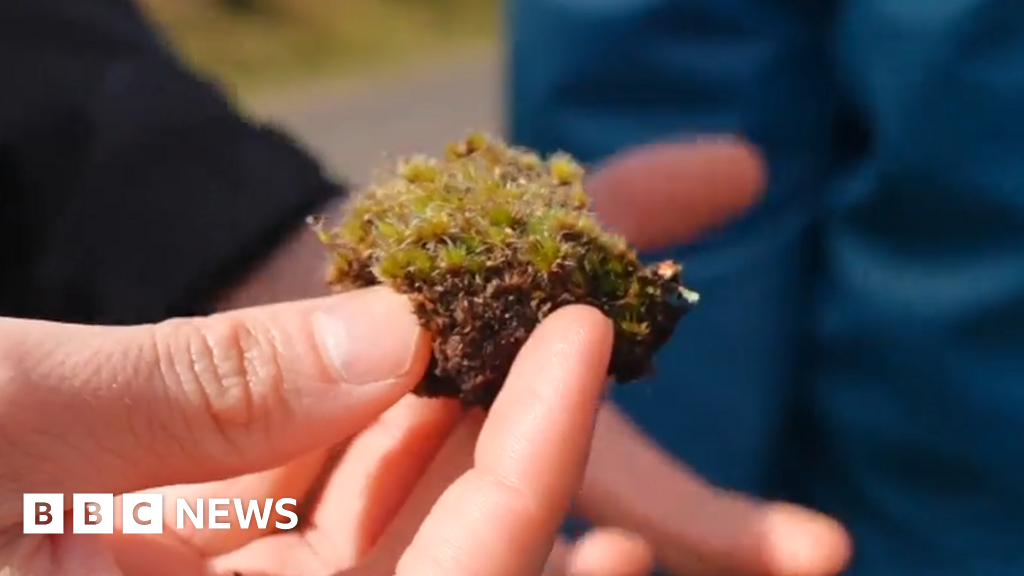
Table of Contents
A Natural Counter-Offensive
In the quiet undergrowth of the British countryside, a biological war is being waged. For decades, the heath-star moss—an aggressive invader likely arriving from the Southern Hemisphere in the 1940s—has systematically dismantled native ecosystems. By the 1990s, it had become ubiquitous, choking out indigenous species on everything from pristine sand dunes to urban tarmac.
But the tide may be turning. Dr. George Greiff, a researcher at the Amgueddfa Cymru museum in Cardiff, has identified a previously unknown species of fungus that is doing what human intervention has failed to do: killing the killer moss.
The discovery began four years ago on a cliffside on the Isle of Wight. Greiff noticed peculiar patterns of decay among the invasive moss, which he later described as “fairy rings of death.” While these brown rings of dead vegetation might seem insignificant to a casual hiker, to a botanist, they represent a critical shift in the ecological balance.
The Technical Puzzle of ‘Moss Die-Back’
Identifying the culprit was not a simple process of observation. The fungus, now termed “moss die-back,” required extensive DNA sequencing to be fully categorized. Under a microscope, the fungus appears as a candy-floss-like structure ballooning around the moss stems, eventually penetrating the cellular walls of the plant to dismantle it from the inside.
Interestingly, genetic analysis reveals that this fungus is a close relative of the ash die-back fungus, the pathogen responsible for the death of an estimated 80 million ash trees across the UK. While that relationship usually signals an ecological disaster, in this specific instance, the host-specificity appears to be a blessing. Greiff’s current analysis suggests the fungus primarily targets the heath-star moss, with only limited impact on one other species, suggesting it is a precision tool rather than a blunt instrument of destruction.
Restoring the Backbone of the Ecosystem
To understand why a fungus killing a moss matters, one must understand the role of bryophytes. The UK is home to over 1,000 types of moss, which serve as the foundation for rare temperate rainforests and carbon-sequestering peatlands. When the heath-star moss dominates a landscape, it creates a monoculture that excludes these native varieties, effectively erasing the habitat for countless insects, mollusks, and other plants.
In the Bannau Brycheiniog national park in south Wales, the impact of this new fungus is already visible. In the gaps left by the decaying invasive moss, baby heather plants are beginning to emerge. This natural succession is the primary goal of conservationists: the return of a complex, multi-layered biodiversity.
Biological Control vs. Human Intervention
The emergence of this fungus represents a rare instance of an environment “fighting back” without human assistance. Typically, managing invasive species requires resource-heavy interventions. For example, efforts to control the North American grey squirrel via contraceptives or the physical removal of Japanese knotweed are prohibitively expensive and often inefficient at scale.
“To have a natural biological control agent doing it for us is really valuable,” Greiff notes. The ability of a native species to adapt and target a non-native invader provides a scalable solution that human logistics simply cannot match.
At Amgueddfa Cymru, Dr. Nathan Smith is now utilizing the museum’s extensive archives—some dating back to the 1880s—to track the fungus’s history. By analyzing these legacy samples, the team hopes to determine exactly when the fungus emerged and how it evolved to exploit the heath-star moss’s vulnerabilities. For a nation with some of the most depleted nature in the world, this microscopic predator offers a macroscopic hope for habitat recovery.