The Geographic Divide: Why the Nikon Z30 Thrives in Japan While Struggling in the West
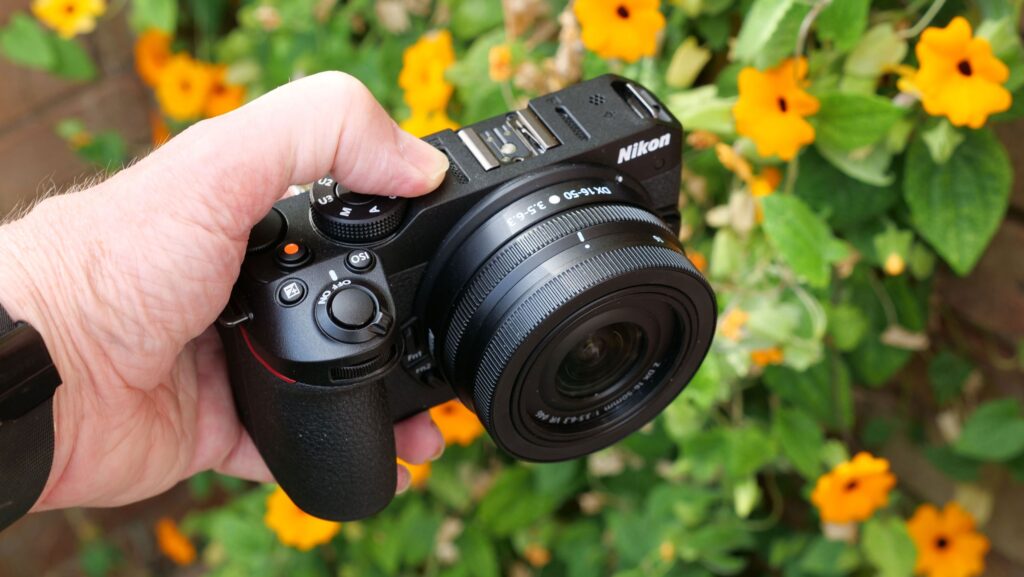
Table of Contents
A Tale of Two Markets
In the global camera market, success is rarely uniform. The Nikon Z30 serves as a primary case study in this divergence. While the device often lingers in the shadows of Western retail inventories and review cycles, it consistently appears on the BCN+ Ranking in Japan, maintaining a stronghold among East Asian consumers. This disparity isn’t merely a matter of branding, but a reflection of two fundamentally different philosophies regarding what a ‘compact’ camera should be.
For the Western consumer, the Z30 was marketed heavily as a vlogging tool. However, Nikon hit a strategic wall by omitting features that the US and UK markets now consider non-negotiable for content creation. The most glaring absence is the electronic viewfinder (EVF), a move Nikon justified by prioritizing a streamlined, vlogger-centric form factor. But for a device aimed at the ‘creator economy,’ the lack of a dedicated headphone port for real-time audio monitoring was a significant oversight.
Furthermore, the Z30 entered a crowded field where 4K 60p recording and in-body image stabilization (IBIS) were rapidly becoming the standard for mid-range APS-C sensors. Without these, the Z30 struggled to distinguish itself from the Nikon Z50, which offers nearly identical imaging specs but includes a viewfinder, making the Z50 a more versatile choice for those who still value traditional photography.
The Japanese Preference for ‘Small and Solid’
Shift the perspective to Japan, and the Z30’s value proposition changes entirely. There is a deeply ingrained imaging culture in Japan that prizes minimalism and physical ergonomics. In this context, the Z30 isn’t viewed as a ‘stripped-down’ vlogging camera, but as a highly efficient, interchangeable-lens tool. Its deep grip and robust build quality make it a favorite for street photographers who prioritize a secure hold over the luxury of an EVF.
Beyond the chassis, the Z30 punches above its weight in raw image quality. The 20.9MP APS-C sensor produces files that are remarkably pliable in post-production, benefiting from Nikon’s sophisticated color science. While modern trends push toward 40MP+ sensors, the Z30’s lower resolution is actually a technical advantage in specific scenarios. Larger photosites generally lead to better noise handling in low-light environments, and the 20MP threshold makes the camera less susceptible to blur caused by minute camera shakes.
The Z-Mount Ecosystem Advantage
One of the most overlooked aspects of the Z30 is its integration into the broader Z-series ecosystem. By utilizing the Z-mount, users have access to a professional-grade array of lenses that far surpass the quality of the fixed-lens compacts the Z30 is often compared to. This allows the Z30 to scale from a casual travel camera to a serious artistic tool simply by swapping glass.
The Cost-to-Performance Ratio
Economically, the Z30 remains an attractive entry point. Originally launching around $709, its current position on the used market makes it one of the most affordable ways to enter the mirrorless ecosystem without sacrificing build quality. For users who find the Nikon Z50 II too expensive or overly complex, the Z30 offers a streamlined experience that prioritizes the act of capturing the image over the act of menu-diving.
Ultimately, the Z30’s struggle in the West was a failure of positioning rather than a failure of engineering. It tried to be a vlogging camera in a market obsessed with specs, while in Japan, it succeeded by being a compact camera in a market obsessed with utility. For photographers who can forgo the viewfinder, the Z30 remains one of the most underrated APS-C tools currently available.


