The Gemini Vacuum: Google I/O 2026 Reveals a Pivot Toward Total AI Agent Autonomy
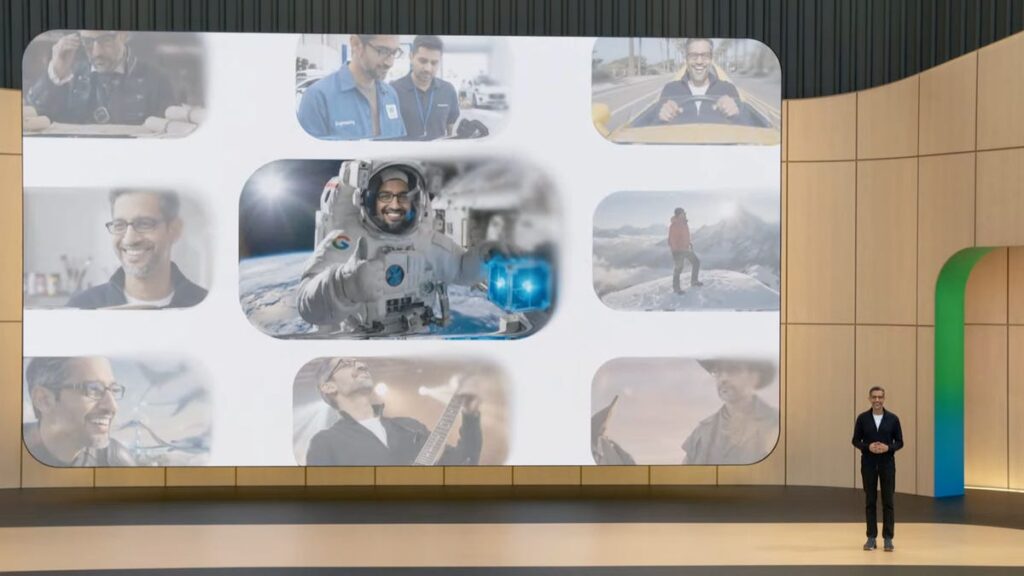
Table of Contents
The Era of the AI Agent
At Google I/O 2026, the narrative shifted from AI as a helpful assistant to AI as a surrogate. The centerpiece of the event was the unveiling of Gemini Omni and Gemini Spark, a suite of tools designed to move the company beyond the chat interface and into the realm of ‘agentic’ AI—systems that don’t just provide information, but execute complex tasks autonomously across the web.
From the surface, the demonstrations were polished. Google showcased a seamless world where Gemini handles the logistics of a block party, manages family calendars, and generates personalized shopping experiences without the user ever visiting a storefront. However, beneath the choreographed success stories lies a more disruptive reality: Google is increasingly building a closed loop where the AI interacts with the internet so the user doesn’t have to.
The ‘Ask YouTube’ Paradox
One of the most contentious reveals was Ask YouTube, a feature that allows Gemini to ingest video content and provide comprehensive summaries or specific answers to users. While this offers a convenience layer for the viewer, it creates a fundamental tension with the platform’s creators. By stripping the need to watch a video to get the answer, Google is effectively intercepting the traffic and attention that fuel the creator economy.
This is not an isolated incident. The new generative shopping hubs—which act as personalized agents handling storefront details—threaten to decouple brands from their direct customer relationships. When an AI agent handles the discovery and transaction, the visibility of the individual merchant is diminished, replaced by an algorithmic recommendation engine that prioritizes Google’s own ecosystem over the open web.
The Infrastructure Cost of Autonomy
Beyond the software, the physical toll of these advancements remains a silent but critical part of the conversation. The computational requirements for Gemini Omni’s real-time multimodal processing are staggering. The shift toward agentic AI requires a massive increase in inference power, which translates to higher energy and water consumption for the data centers supporting these models.
As Google pushes for these features to be integrated into every facet of the Android and Workspace ecosystems, the environmental externalities become harder to ignore. The company is betting on the efficiency of its next-generation TPU clusters, but the sheer scale of ‘always-on’ AI agents suggests a trajectory that may clash with global sustainability goals and local resource availability in data center hubs.
A Disconnect in Value
There was a palpable tension in the room during the developer keynote. While the stage was filled with high-energy pitches and AI-generated visuals, the implications for the workforce were stark. The current trajectory of Gemini is not just to assist developers, but to automate the very roles—coding, planning, and content curation—that the audience in attendance performs for a living.
Google’s pivot suggests a future where the company ceases to be a gateway to the web and instead becomes the web itself. By synthesizing information and executing tasks internally, Google reduces the incentive for users to click through to third-party sites. This ‘zero-click’ evolution, accelerated by Gemini’s agentic capabilities, risks turning the internet into a training set for a giant, proprietary intelligence that serves the user but starves the source.
As the event concluded, the overarching sentiment was one of clinical efficiency. Google has successfully built a technological marvel in Gemini, but in doing so, it has created a product that threatens the very ecosystem of creators, developers, and businesses that made Google’s own rise possible.