The Gemini Paradox: Google I/O 2026 Reveals a Future of Frictionless Utility and Human Displacement
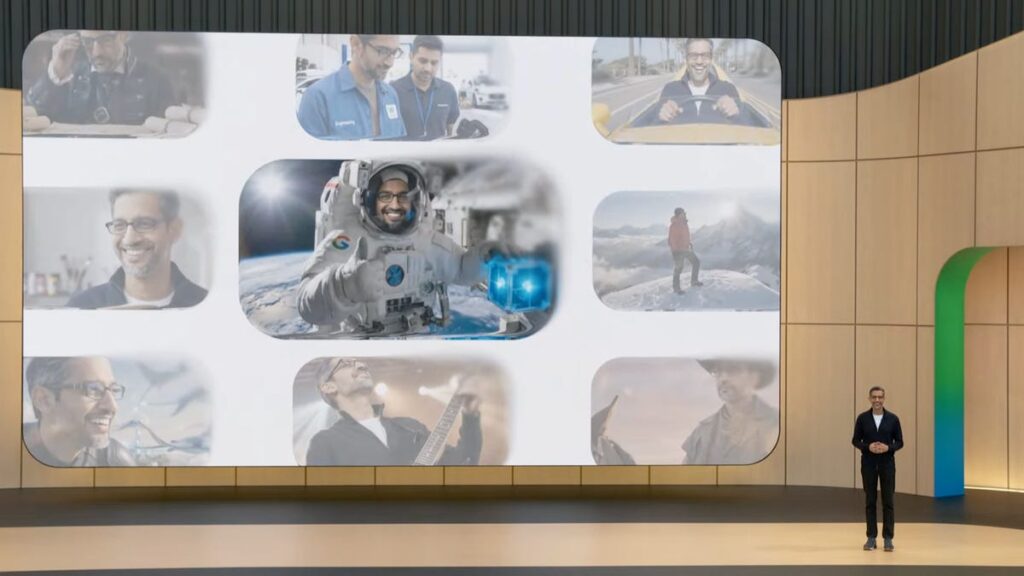
Table of Contents
The Era of the AI Agent
At Google I/O 2026, the company didn’t just announce new features; it signaled a fundamental shift in how it intends to mediate the human relationship with the internet. The centerpiece of the event was the aggressive expansion of the Gemini ecosystem, specifically the unveiling of Gemini Omni and Gemini Spark. These aren’t just chatbots; they are ‘agentic’ AI systems designed to act on a user’s behalf, moving from providing information to executing complex real-world tasks.
From an engineering perspective, the leap is impressive. Gemini Omni aims to collapse the distance between intent and action, handling everything from scheduling multi-city travel to coordinating block parties and managing shopping logistics through a centralized hub. However, the presentation—characterized by highly curated, AI-generated demos of a frictionless lifestyle—felt starkly disconnected from the current economic and social anxieties of the audience in attendance.
The Erosion of the Creator Economy
One of the most contentious reveals was ‘Ask YouTube,’ a feature that allows Gemini to parse, summarize, and synthesize video content without the user ever needing to click through to the original video. For the millions of creators who fuel YouTube’s ecosystem, this is a precarious development. By stripping the viewing experience down to a text-based summary, Google is effectively decoupling the value of the content from the creator’s ability to monetize it via ads or sponsorships.
This move mirrors a broader trend in generative AI search, where the “zero-click search” becomes the standard. When Gemini handles the storefront details and provides a personalized recommendation hub, the incentive for a user to visit a third-party shopping site or a niche blog vanishes. The resulting ecosystem is one where Google captures all the attention and data, while the original sources of information are relegated to being training data for the model that replaced them.
Infrastructure and the Invisible Cost
Beyond the software, the hardware requirements for these real-time, agentic models are staggering. The industry has seen a surge in the construction of massive AI data centers, and the environmental toll is becoming impossible to ignore. These facilities require astronomical amounts of electricity and water for cooling—resources often diverted from local communities already struggling with drought and rising energy costs.
While Google’s executives focused on the convenience of an AI that can rewrite reality by swapping people in and out of videos or planning a weekend without human input, the underlying reality is one of resource intensification. The compute power required to maintain a ‘personalized agent’ for every Google user is not just a technical challenge, but an ecological one.
A Disconnect in Vision
The atmosphere at I/O 2026 was an exercise in cognitive dissonance. On stage, the narrative was one of liberation—freeing humans from the drudgery of planning and searching. In the crowd, however, the sentiment was more cautious. As AI continues to move into the realms of coding, creative writing, and professional organization, the line between ‘productivity tool’ and ‘job replacement’ has blurred.
Google’s current trajectory suggests a future where the company doesn’t just organize the world’s information, but manages the world’s interactions. By positioning Gemini as the primary interface for our digital and physical lives, Google is building a wall between the user and the open web. The efficiency is undeniable, but the cost is a profound loss of agency and a precarious future for the digital labor force that built the internet in the first place.


