The Fujimori Dynasty: Keiko’s Fourth Presidential Bid and the Fight for Peru’s Order
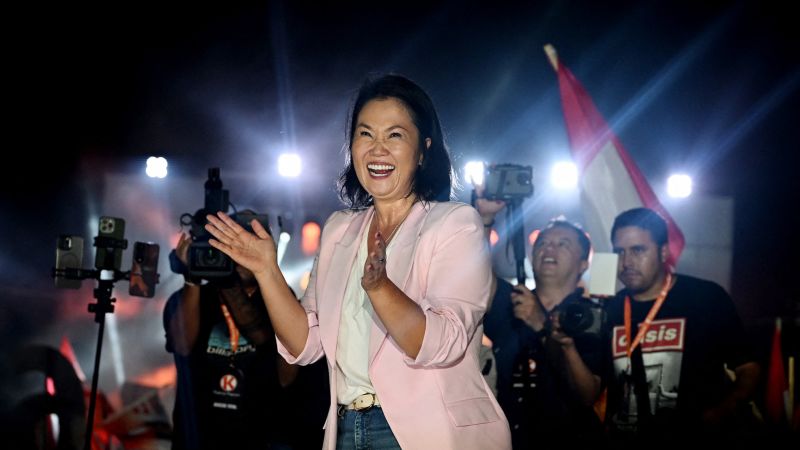
Table of Contents
A Political Cycle of Persistence
Keiko Fujimori is returning to the center stage of Peruvian politics for the fourth time, entering a high-stakes runoff election this Sunday. For the daughter of the late former President Alberto Fujimori, the path to the presidency has become a recurring loop of ambition and defeat. Having lost bids in 2011, 2016, and 2021, Fujimori now finds herself in a statistical dead heat—and potentially a slight lead—against leftist challenger Roberto Sánchez of the Juntos por el Perú party.
The stakes for this election extend beyond a simple change in leadership. Peru is currently navigating a profound institutional crisis, having cycled through eight different presidents in just one decade. This volatility has left a vacuum of authority and a public weary of the systemic corruption that has plagued both the right and the left.
The Evolution of a Candidate
Fujimori’s political identity was forged in the shadow of her father. At just 19, she stepped into the role of first lady in 1994 after her mother, Susana Higuchi, separated from Alberto Fujimori over government corruption. That early introduction to the global stage—most notably at a Summit of the Americas hosted by Bill Clinton—set the trajectory for a career defined by the ‘Fujimorismo’ brand.
However, the version of Keiko Fujimori appearing in 2026 is markedly different from the one who contested the 2021 runoff against Pedro Castillo. That campaign was defined by an aggressive, binary rhetoric: a battle between the defense of democracy and the threat of communism. It was a strategy that many analysts believe alienated the moderate center.
“I know that throughout my political life I have made mistakes. I learned from them, but I also came back stronger,” Fujimori stated during the final presidential debate. This admission of error is a departure from her previous posture. She is now projecting a more reserved, measured image, pivoting away from confrontation toward a platform of ‘order’—a keyword she used repeatedly to describe her vision for security and investment.
The Shadow of the Past and the Odebrecht Case
Despite her rebranding, the ghost of her father’s authoritarian legacy continues to mobilize the anti-Fujimori vote. Alberto Fujimori’s tenure (1990–2000) remains one of the most polarizing eras in Latin American history. While credited with stabilizing the economy and defeating the Shining Path insurgents, his regime was marred by systemic human rights abuses and corruption, leading to a 25-year prison sentence in 2009 before his death in 2024.
Keiko has faced her own legal battles. She spent 13 months in pretrial detention under investigation for allegedly receiving illegal campaign financing from the Brazilian construction giant Odebrecht. While a court declared the case null and void in January 2025—a move Fujimori characterized as the end of a decade of political persecution—the accusations of corruption remain a primary talking point for her opponents.
The Electoral Calculation
Julio Carrión, a professor of political science and international relations at the University of Delaware, suggests that Fujimori is making a calculated effort to shed her image as a purely reactionary candidate. By avoiding immediate accusations of fraud following the first round—unlike other right-wing candidates such as Rafael López Aliaga—she is attempting to signal a commitment to institutional stability.
The runoff is now a referendum on whether the Peruvian electorate prefers the conservative promise of ‘order’ over the leftist vision proposed by Roberto Sánchez. With crime and insecurity rising, the narrative has shifted from ideological purity to basic governance. For Keiko Fujimori, this fourth attempt is not just about power, but about whether the Fujimori name can finally transition from a symbol of division to a viable mandate for leadership.