The Final Keynote: Tim Cook’s Impending Departure and the High Stakes of WWDC 2026
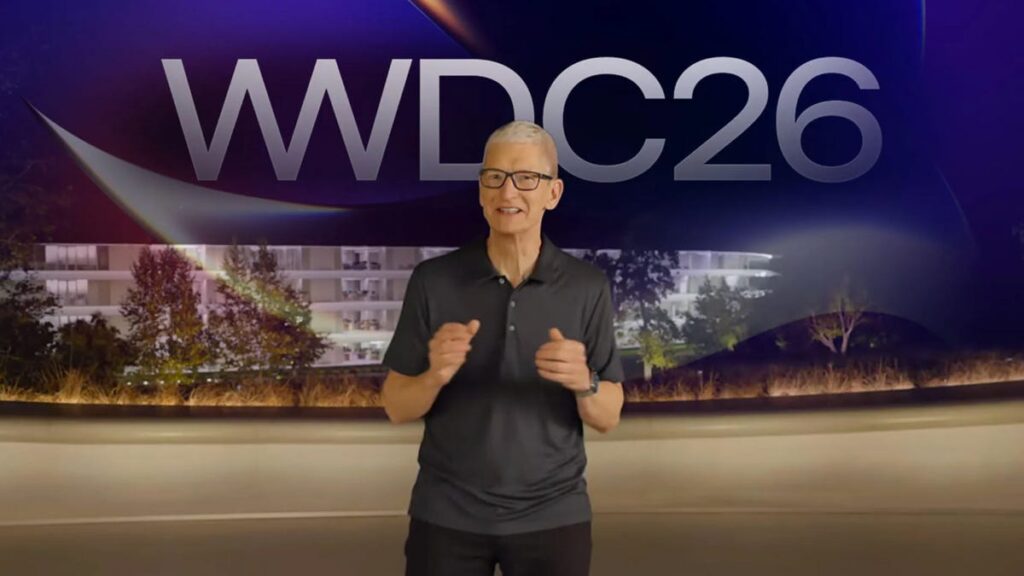
Table of Contents
A Symbolic Handover at Apple Park
In October 2011, Tim Cook stepped onto the stage for his first product launch as CEO, introducing the iPhone 4S. At the time, the transition from Steve Jobs was viewed with a mixture of curiosity and skepticism. Fifteen years later, Apple finds itself at another precarious leadership crossroads. WWDC 2026 is shaping up to be more than just a software showcase; it is the curtain call for the most successful financial era in the company’s history.
Reports indicate that Cook will formally step down in September, handing the leadership of the world’s most valuable company to John Ternus. While Apple typically manages leadership changes with clinical precision, the transition from Cook to Ternus represents a shift in operational philosophy. Ternus, primarily a hardware veteran, takes over a company that is currently pivoting its entire ecosystem toward generative AI—a transition that has been uncharacteristically rocky for the Cupertino giant.
“WWDC 2026 carries far more significance than a normal developer conference,” says Paolo Pescatore, an analyst at PP Foresight. “As this is Tim Cook’s final WWDC as CEO, it is as much a symbolic handover moment as a software showcase.” The core tension remains whether Ternus will make a public debut alongside Cook at the event or wait until the September iPhone launch to establish his own narrative.
The Siri Redemption Arc
If Cook has a lingering piece of unfinished business, it is Siri. Launched in 2011, Siri was the first widespread attempt at a digital assistant, but for over a decade, it remained a point of frustration for users. While Amazon’s Alexa and Google Assistant surged ahead in utility, Siri was hampered by Apple’s rigid privacy architecture and a lack of the reasoning capabilities that only modern Large Language Models (LLMs) can provide.
The announcement of Apple Intelligence at WWDC 2024 was supposed to be the turning point. However, the rollout has been plagued by delays, leaving a gap between the marketing promise and the user experience. This friction recently culminated in a $250 million settlement to resolve legal complaints alleging that Apple misled consumers regarding iPhone capabilities.
For Cook, the full deployment of a revamped, agentic Siri is not just a product update—it is a legacy project. Siri was the flagship of his early tenure, and seeing it finally function as a truly intuitive assistant would allow Cook to close the loop on a 15-year technological struggle. Industry insiders expect that the version of Siri unveiled this June will finally move beyond simple command-and-control triggers toward a system capable of complex on-device reasoning.
The Hardware Horizon
The timing of this transition is critical because the AI-powered Siri is the connective tissue for Apple’s rumored hardware roadmap. Reports suggest the company is eyeing a surge of new form factors over the next 12 months, including AirPods equipped with cameras and potentially a home-centric robotic iPad. None of these devices can succeed if the underlying intelligence is mediocre.
Ben Wood, chief analyst at CCS Insight, notes that Ternus is entering the role at a high-velocity moment. “If rumors are to be believed, there are a slew of new products to be announced over the next 12 months, which will give him a chance to start his tenure with a bang.” For Ternus, the hardware is his comfort zone, but the software—specifically the AI integration—will be the metric by which his first year is judged.
Cook has spent his tenure transforming Apple from a hit-product company into a services juggernaut and a trillion-dollar powerhouse. As he prepares to exit, the focus will likely remain on the products rather than the man. While he is expected to downplay the emotional weight of his departure, the arrival of a fully realized AI assistant would be the ultimate parting gift to the shareholders and the user base.


