The End of Planned Obsolescence? EU Battery Mandates Force a Hardware Pivot
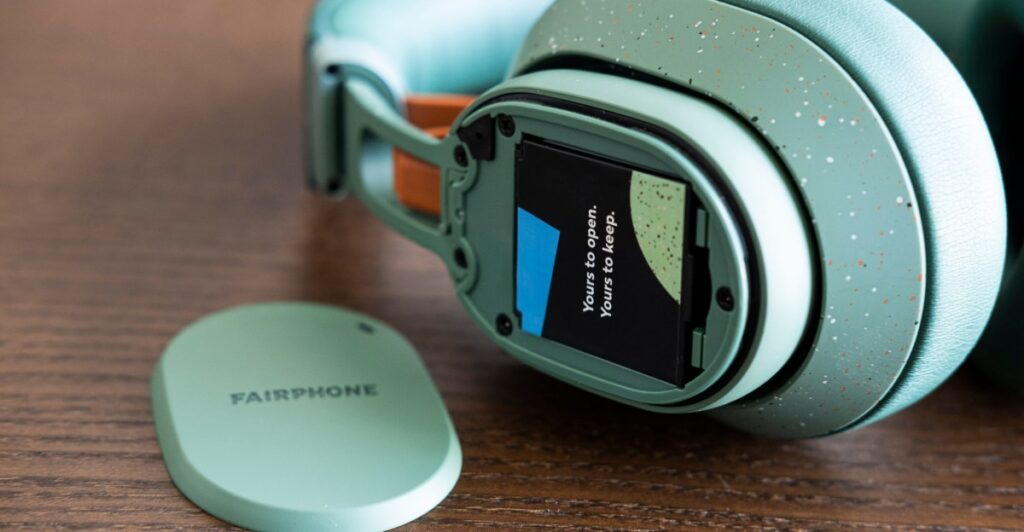
Table of Contents
The Legislative Push Toward Longevity
For over a decade, the consumer electronics industry has trended toward a ‘sealed-shut’ philosophy. Glue-heavy assemblies and proprietary screws have turned simple battery swaps into high-risk surgeries, often forcing users to discard perfectly functional devices once the lithium-ion cells inevitably degrade. That era is facing a hard deadline in Europe.
The European Union is implementing a two-pronged legislative attack on planned obsolescence. While Commission Regulation (EU) 2023/1670 already targets smartphones and tablets, the broader Regulation (EU) 2023/1542 is set to take effect next year. By February 18, 2027, almost every portable device sold in the EU—including headphones, e-readers, and gaming consoles—must feature batteries that users can remove and replace using basic, commonly available tools.
The mandate isn’t just about the physical act of removal. Manufacturers must also ensure that compatible spare batteries remain available for at least five years, effectively decoupling the lifespan of the battery from the lifespan of the device’s motherboard.
The Waterproof Loophole
Despite the broad scope, the legislation contains critical nuance—and a few significant loopholes. Smartphones and tablets operate under a separate, slightly more lenient set of rules. Under the current framework, if a manufacturer can prove a battery retains 83% capacity after 500 cycles (or 80% after 1,000) and the device maintains an IP67 waterproof rating, the battery only needs to be replaceable by professional technicians, not the end user.
This ‘waterproofing exemption’ has been a point of contention for advocates. The EU recently confirmed that these specific smartphone rules ‘prevail over’ the wider regulations, meaning the industry’s most profitable devices may avoid the most radical design changes if they can meet the chemistry and sealing benchmarks.
The Battle Over Wearables
The most contentious frontier is currently the wearable market. The EU is weighing proposed exemptions for smartwatches and fitness trackers, with manufacturers arguing that the extreme spatial constraints of a wrist-worn device make user-replacement dangerous or technically impossible. However, groups like Right to Repair Europe are pushing back, citing the Pixel Watch 4 as a proof of concept that modularity can exist even in miniature form factors.
Early Adopters and Industry Pivots
While some companies are lobbying for exemptions, others are already shifting their supply chains. The audio industry is providing an early glimpse of this transition. For years, user-replaceable batteries in over-ear headphones were a niche feature. Now, we are seeing a surge in adoption. Fender’s Mix headphones utilize a simple cushion-hidden access point, and Sennheiser’s Momentum 5 now allows for battery replacement via a standard Phillips-head screwdriver.
Fairphone continues to be the gold standard in this movement. Having integrated modularity from day one, the company’s Fairbuds and Fairphone 6 are already compliant with the incoming laws. Circular economy principles are no longer just a marketing pitch for niche brands; they are becoming a legal requirement for market entry.
“We have actually been a driving force behind these new EU regulations, shaping them by actively partaking in discussions and meetings to show the rest of the industry what is possible,” says Alon Brandt, Fairphone’s public relations manager.
Beyond the EU: A Fragmented Market?
The most pressing concern for global consumers is whether these design changes will migrate outside of Europe. Historically, tech companies have created region-specific hardware to meet local laws—a trend seen with the forced transition to USB-C. There is a distinct possibility that we will see a ‘European Edition’ of devices, such as the rumored Switch 2 or Amazon Kindle updates, featuring removable batteries, while North American and Asian markets continue to receive sealed units.
If Amazon’s internal code snippets regarding replaceable Kindle batteries and leaked images of the Xbox Elite 3 controller are any indication, the hardware shift is already happening in the R&D phase. The question is whether these companies will standardize the design globally to save on manufacturing costs, or if the ‘Right to Repair’ will remain a regional luxury.


