The Divergent Paths of Woz and Jobs: How the Apple II Sustained a Company While the Apple III Floundered
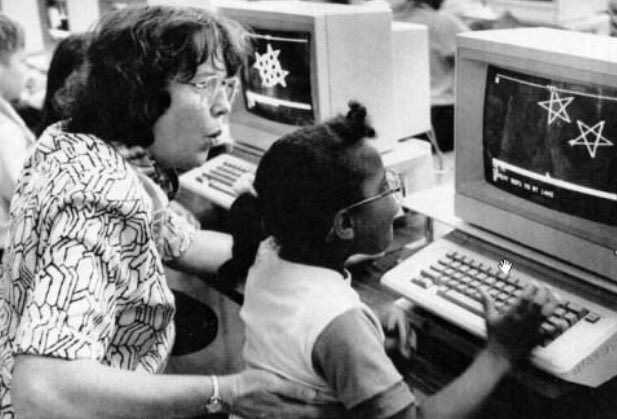
Table of Contents
The High of the IPO
By the dawn of 1980, Apple Computer had transitioned from a garage experiment into a legitimate market force. While the company had initially played catch-up to the Commodore PET and the Tandy/Radio Shack TRS-80, the Apple II eventually surged ahead, fueled largely by the release of VisiCalc. The spreadsheet software turned the Apple II from a hobbyist’s toy into a critical business tool, setting the stage for an IPO at the end of the year that minted hundreds of overnight millionaires.
However, the sudden influx of wealth and fame exposed a fundamental rift between the company’s two co-founders. Steve Wozniak and Steve Jobs viewed their success through entirely different lenses, leading to two very different trajectories within the company they built.
Wozniak’s Retreat from the Spotlight
For Steve Wozniak, the Apple II represented the pinnacle of his personal engineering goals. Having designed the Apple II Disk in a feat of technical brilliance, Wozniak found himself with little appetite for the corporate grind of management or scaling a business. His interests were fundamentally rooted in the act of creation, not the administration of a corporation.
This detachment became more pronounced after a brutal plane crash in 1981, which sidelined him for eighteen months. During his absence, Wozniak drifted away from the Apple ecosystem, attempting to finish a computer science degree at Berkeley and pouring millions into the ‘US’ music festival—a community-focused venture meant to counter the perceived individualism of the 1970s.
When he eventually returned to Apple in 1983, it was not as an executive, but as an engineer. He spent his final years at the company working on a 16-bit successor to the Apple II, though he often served more as a symbolic mascot for the engineering team than a driving force of product strategy. By 1985, Wozniak left Apple for good, pivoting toward a more quiet existence that included teaching computer skills in the Los Gatos School District.
The Apple III and the Cost of Ambition
While Wozniak retreated, Steve Jobs was hunting for his next ‘stroke of lightning.’ Driven by a desire to ‘make a dent in the universe,’ Jobs turned his attention to the Apple III, the intended successor to the II. As VP of Research and Development, Jobs pushed for a machine that would dominate the business sector, offering more memory, a built-in floppy drive, and 80-character display capabilities.
The project, led by staff scientist Wendell Sander, was rushed to market in late 1980 to bolster sales before the IPO. The result was a technical disaster. In a move that prioritized aesthetics over engineering, Jobs insisted on designing the external case before the internal hardware was finalized. This forced engineers to cram components into a space that couldn’t accommodate them, leading to circuit boards with wires spaced so closely that solder bridges caused widespread shorts.
Beyond the hardware failures, the Apple III suffered from a critical lack of software. VisiCalc remained the only major application available at launch. Furthermore, its backwards compatibility with the Apple II was flawed; users who had invested in 80-column display cards for their older machines found that these features didn’t work in emulation mode. Jobs had projected sales of 50,000 units in the first year; it took nearly three years to hit that mark.
The Invisible Success of the Apple IIe
Despite the failure of the Apple III and the early commercial struggles of the Lisa and Macintosh, Apple remained incredibly profitable. This was due to the surprising longevity of the Apple II series. Even as executives believed the platform was reaching the end of its life in 1981, it continued to carry the company’s balance sheet for another half-decade.
The 1983 release of the Apple IIe provided a crucial lifeline. While it offered visible improvements like a better keyboard and lower-case character support, its real victory was internal. Apple replaced Wozniak’s original off-the-shelf circuits with custom-built chips for input and memory. These proprietary components were significantly cheaper to manufacture at scale, allowing Apple to slash prices while maintaining high margins. By 1984, a full IIe system could be purchased for roughly $1,300, maintaining the company’s dominance in the home and education markets even as the high-end business bets failed.


