The Digital Erasure of Tyre: How Israeli Airstrikes are Targeting Lebanon’s Ancient Urban Hubs
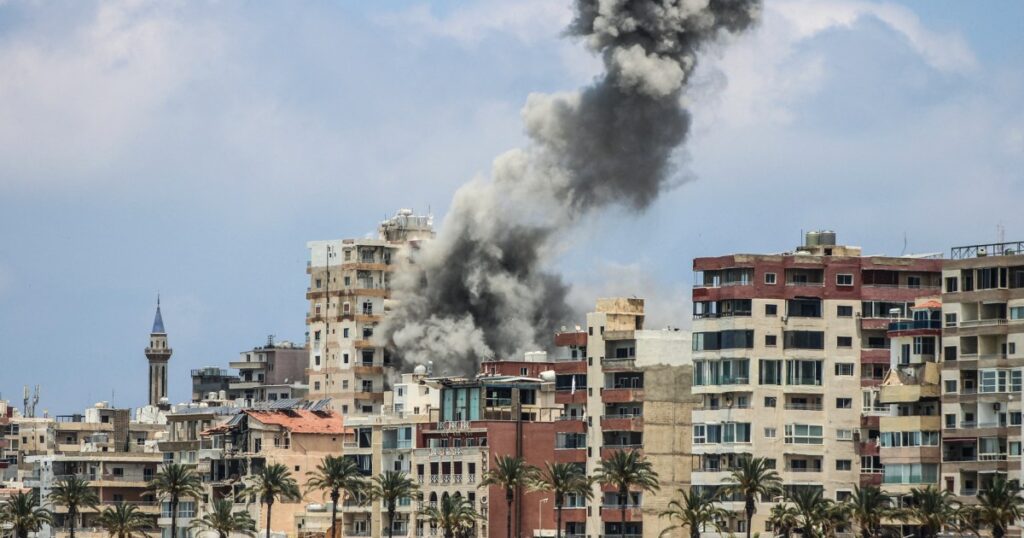
Table of Contents
The Erosion of a Safe Haven
For centuries, the city of Tyre has survived sieges by Alexander the Great and the Crusaders, but the current onslaught of Israeli airstrikes is introducing a new, systemic form of displacement. In the ancient city of Zouk Mosbeh and the surrounding districts of southern Lebanon, residents are facing a brutal binary: flee and become internal refugees, or remain and risk death by precision-guided munitions.
The crisis reached a critical tipping point this week as the Israeli military expanded its evacuation mandates to include Al Hara, the historic Christian quarter of Tyre. For years, Al Hara was viewed as a neutral sanctuary—a densely packed neighborhood characterized by its deep religious roots and a conspicuous absence of armed militants. Now, that perceived neutrality has evaporated.
“I never imagined leaving Al Hara,” Janette Barbour, a mother of three, told reporters. “It is a safe area. We are not armed.” Barbour’s experience mirrors a broader pattern in the region where residents of traditionally non-aligned quarters clung to the hope that their lack of political affiliation would shield them. However, the Israeli Defense Forces (IDF) maintain a different tactical perspective, asserting that Hezbollah uses the civilian cover of Al Hara to mask the launch of rockets and drones targeting northern Israel.
A War of Attrition on Infrastructure
The physical toll of the conflict is not merely measured in casualties, but in the total erasure of urban environments. In the district of Al Houch, the scale of destruction is near-total. Lily Hawila, a 29-year-old English teacher, previously repaired her home following a ceasefire in November 2024, only to find that the current wave of strikes has leveled her entire street.
This cycle of “repair and ruin” highlights the devastating impact of modern warfare on Lebanese civilian infrastructure. While the world knows Tyre as a UNESCO World Heritage site and a Mediterranean tourist hub, the current reality is one of shattered glass and collapsed concrete. The precision of modern strikes is often offset by the dense architecture of the city, where a single missile can compromise an entire block of residential housing.
The Human Cost of Tactical Necessity
The psychological strain of the evacuation orders has created a fragmented social structure. In neighborhoods like Al-Masaken, families are trapped in a revolving door of displacement. Sana Abou Zeid, a 50-year-old mother, describes a recurring cycle: fleeing to her children’s homes whenever an evacuation order arrives, only to return once the immediate threat subsides. This “temporary” existence has become the new permanent reality for thousands in southern Lebanon.
The tragedy of this strategy was underscored when Zeid received news during a report that her street had been hit, resulting in eight deaths. The speed at which civilian areas are transitioned from “safe zones” to “active combat zones” leaves little room for the logistics of evacuation, particularly for the elderly and those tied to local businesses.
In Al Hara, the economic stakes are as high as the physical ones. Many residents, including Barbour’s husband and son, have refused to leave their cafes and restaurants at the Tyre port. For these business owners, the loss of their livelihood is viewed as a fate nearly as catastrophic as the strikes themselves. As the conflict intensifies, the historic fabric of Tyre—both its physical stones and its social cohesion—is being systematically dismantled.


