The Death of the Social Graph: How Algorithmic Entertainment is Killing the ‘Social’ in Social Media
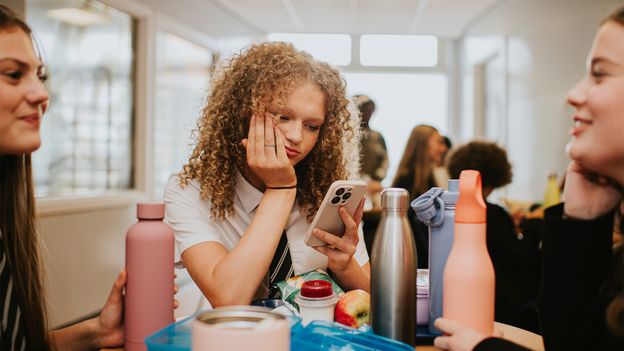
Table of Contents
The Pivot to Passive Consumption
For nearly two decades, the fundamental promise of social media was the ‘social graph’—a digital map of your real-world relationships. You followed people you knew, shared updates about your life, and consumed content from your immediate circle. But that architecture is collapsing. In its place, a new model has emerged: the entertainment hub.
The transition is most evident in the daily habits of users like Aurélia, a resident of the Paris suburbs. Despite having nearly 200 followers on Instagram, her feed is no longer a chronicle of her friends’ lives. Instead, it is a curated stream of interior design aesthetics, animal videos, and targeted advertisements for robot vacuums. “I practically don’t see any friends’ posts anymore,” she says. The incentive to post has vanished; when the algorithm prioritizes professional-grade content over personal updates, the average user’s photo of a coffee cup simply doesn’t move the needle.
This shift isn’t just a matter of user preference; it is a calculated business strategy. By prioritizing ‘unconnected content’—posts from accounts a user does not follow—platforms can maximize time-on-app and, by extension, ad inventory.
The Rise of the ‘Passive’ User
The data suggests a growing divide between those who create and those who merely watch. In the UK, an Ofcom report revealed a significant slide in active participation, with the percentage of users who actively post dropping from 61% to 49% year-over-year. In the US, Morning Consult data echoes this trend, showing that only 33% of users now post daily, while 57% use these platforms primarily for entertainment.
For Gen Z, the gap is even more stark. A staggering 74% of this demographic are now ‘passive’ users. For 16-year-old Kylian, a culinary student, the appeal is the ‘bubble.’ He spends his time on TikTok and YouTube watching strangers, rarely posting himself. “I like looking at videos more than photos or messages,” he explains. The social network has effectively become a personalized television channel.
Vanessa Lalo, a Paris-based clinical psychologist specializing in online behavior, suggests this is partly a defense mechanism. The permanency of the digital footprint and the pressure to compete with professional creators have made public posting a high-risk, low-reward activity. “Some don’t want the exposure to criticism,” Lalo notes, “or the feeling that their post will seem poor alongside all the professional content.”
The Great Fragmentation
As the ‘town square’ of Facebook and Instagram becomes a broadcast gallery, genuine social interaction is migrating. We are witnessing a bifurcation of the internet: big platforms for discovery and entertainment, and encrypted messaging apps for actual socialization.
According to social media consultant Matt Navarra, author of the Geekout Newsletter, this split is fundamentally changing how we interact. “Big platforms like Instagram and TikTok are becoming more about entertainment and discovery. WhatsApp is becoming the place people go to actually be social,” Navarra explains. This migration to private groups and direct messages creates a challenge for tech giants: these intimate spaces are far harder to monetize than a public feed filled with sponsored content.
The Burden on Small Business
This algorithmic shift has created an existential crisis for small businesses. For years, a local bakery or florist could rely on a loyal following of local customers to see their updates. Now, Meta’s AI system for unconnected recommendations means that being ‘followed’ is no longer a guarantee of visibility.
To survive, small business owners are being forced to evolve. They can no longer just be proprietors; they must be presenters, video editors, and trend analysts. The ‘organic reach’ that once fueled local entrepreneurship has been replaced by a demand for high-production storytelling. If a local café can’t produce a viral-style Reel, they risk becoming invisible to the very community they serve.
As platforms continue to refine their AI to predict exactly what will keep a user scrolling, the original definition of ‘social media’ is becoming a historical curiosity. The industry has moved from connecting people to connecting people with content—and the difference is profound.


