The Collapse of FCAS: Why Europe’s Sixth-Generation Fighter Jet Project Failed
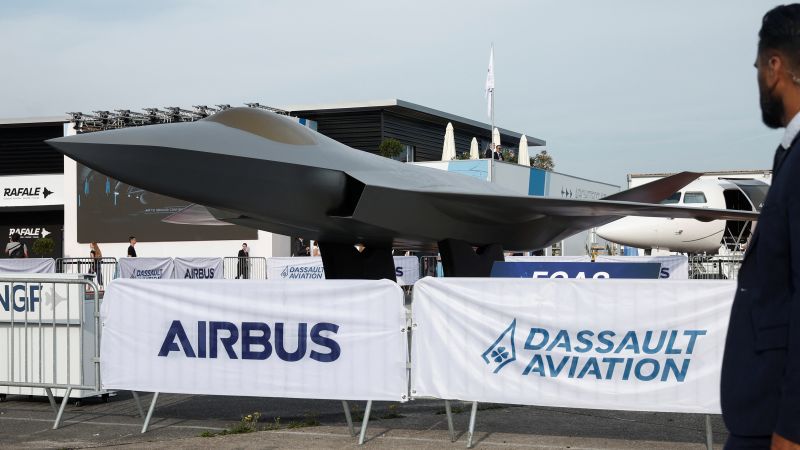
Table of Contents
The Industrial Divorce of the Future Combat Air System
The ambition was clear: create a sovereign European aerospace powerhouse capable of challenging the dominance of the Lockheed Martin F-35. The project, known as the Future Combat Air System (FCAS), was designed to be the crown jewel of Franco-German military cooperation. However, the official collapse of the manned fighter element of this 100-billion-euro venture confirms a long-suspected reality—industrial interests and divergent military philosophies can outweigh political willpower.
For years, the FCAS was presented as a strategic necessity for a continent navigating an increasingly volatile security environment. But the project suffered from a fundamental contradiction. France, via Dassault Aviation, sought a multi-role aircraft rooted in its history of strategic autonomy and nuclear deterrence. Germany, represented by Airbus, leaned toward a more traditional air-superiority model, mirroring its history of multinational consortia like the Eurofighter Typhoon.
- The Financial Stake: An estimated €100 billion investment was at risk.
- The Industrial Conflict: A clash between the proprietary, secretive design culture of Dassault and the collaborative, consortium-based approach of Airbus.
- The Strategic Gap: A 2040 delivery timeline that proved obsolete in the face of rapid advancements in drone warfare and AI.
A Fundamental Clash of Military Philosophies
To understand why the FCAS fighter failed, one must look at the operational DNA of the French and German air forces. France operates under a doctrine of strategic autonomy. From the Mirage series to the current Rafale, Dassault Aviation has perfected the “multi-role” fighter—a plane capable of switching from air-to-air combat to deep-strike nuclear missions within a single sortie.
Retired French General Michel Yakovleff, former deputy commander of NATO forces in Europe, notes that the French Air Force typically provides broad, flexible requirements, allowing Dassault to engineer the technical compromises. This agility has historically allowed France to field advanced aircraft faster and more cost-effectively than its peers.
Germany, conversely, has not produced a domestic jet since World War II. Its experience is rooted in shared development. The Panavia Tornado and the Eurofighter Typhoon were products of compromise across multiple borders. Berlin’s vision for the FCAS was less about a specific “French-style” multi-role capability and more about a highly specialized interceptor, with some German officials even questioning the necessity of a manned pilot in the cockpit of a sixth-generation system.
The ‘Combat Cloud’ and the Survival of the System
While the physical airframe is dead, the FCAS was never just about a plane. It was envisioned as a system of systems. This includes the “Combat Cloud”—a high-speed data network designed to synthesize intelligence from satellites, ground sensors, and aircraft in real-time—and “Remote Carriers” (drone wingmen).
Combat Cloud is defined as a decentralized, AI-driven network that allows pilots and commanders to share a unified tactical picture, automating target identification and prioritizing threats across a vast battlespace.
Defense analyst Per Erik Solli of the Norwegian Institute of International Affairs argues that these elements may actually be more valuable than the jet itself. In modern aerial warfare, the platform (the plane) is becoming secondary to the network (the data). A sixth-generation fighter is less a dogfighter and more a “command ship” that manages a swarm of autonomous drones. If France and Germany can salvage the software and the drone components, the project may not be a total loss.
Why the Timeline Failed the Reality Test
When FCAS was launched in 2017, a 2040 delivery date seemed acceptable. However, the geopolitical landscape shifted violently. The invasion of Ukraine and the rising tensions in the Indo-Pacific have accelerated the need for immediate capabilities. A plane delivering in 15 years is a luxury that European capitals can no longer afford.
The US F-35 Lightning II already provides the integrated sensor fusion that FCAS promised to invent. While Europe wanted to avoid total dependence on US technology, the sheer speed of the US development cycle has left European efforts looking like legacy projects before they even left the drawing board.
What This Means for European Defense
The collapse of the joint fighter marks a shift toward fragmented procurement. We can expect France to double down on a domestic successor to the Rafale, maintaining its sovereign industrial base. Germany, lacking that infrastructure, will likely increase its reliance on the US F-35 or seek a new, less ambitious partnership with other EU nations.
Ultimately, this failure exposes the “sovereignty paradox”: Europe wants a unified defense front but cannot agree on who owns the intellectual property of the tools used to defend it.
Technical Comparison: Sixth-Gen Ambitions vs. Current Reality
| Feature | FCAS Goal (Sixth-Gen) | Current State (F-35/Rafale) | The Gap |
|---|---|---|---|
| Manning | Optional/AI Integrated | Manned Only | High: AI autonomy is still nascent |
| Networking | Combat Cloud (Distributed) | Link 16 (Centralized) | Medium: Latency and interoperability issues |
| Wingmen | Loyal Wingman Swarms | Experimental / Limited | High: Coordination of autonomous swarms |
| Stealth | Next-Gen Broadband Stealth | VLO (Very Low Observable) | Low: Iterative improvement |
Frequently Asked Questions
Will Europe still buy the F-35?
Yes. In fact, the failure of the FCAS fighter makes the F-35 the only viable short-term option for many European nations that require stealth and sensor fusion capabilities immediately.
What happened to the 100 billion euro budget?
Much of the funding was earmarked for research and development (R&D). While the fighter airframe is cancelled, funds will likely be redirected toward the AI-driven combat cloud and drone technologies.
Can France build a jet alone?
France is the only European nation with the full-stack industrial capability to design and build a frontline fighter from scratch, thanks to Dassault’s history with the Mirage and Rafale programs.
Is the FCAS project completely dead?
No. Only the manned fighter element has collapsed. The “Combat Cloud” and the unmanned drone wingmen components are still being discussed as viable separate projects.
How does this affect NATO?
It reinforces the US as the primary provider of high-end aerospace technology, potentially reducing Europe’s leverage in strategic discussions regarding the division of defense costs.