The Beirut Red Line: How Iran’s Proxy Defense is Derailing US-Led Peace Efforts
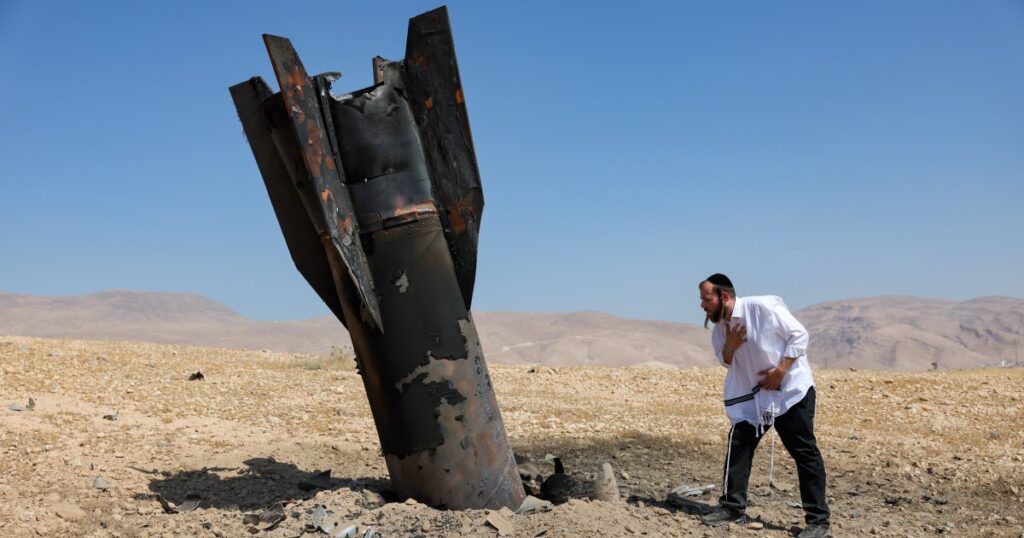
Table of Contents
A Strategic Pivot in the Levant
The fragile architecture of diplomacy between Washington, Tehran, and Jerusalem has hit a critical breaking point. Overnight Sunday, Iran launched its first direct missile strikes against Israel in two months, effectively signaling that the ‘red line’ regarding the Lebanese capital, Beirut, is no longer a diplomatic warning but a military trigger.
For months, US negotiators have attempted to decouple the broader US-Iran conflict from Israel’s localized military operations in southern Lebanon. However, Tehran’s latest kinetic response suggests that this separation is a Western fantasy. By launching missiles in direct retaliation for Israeli raids on Beirut’s southern suburbs, Iran has fundamentally tethered any potential peace framework to the survival and sovereignty of its primary regional proxy, Hezbollah.
The Failure of US Assurances
The escalation follows a period of intense diplomatic friction. Despite explicit assurances from the US last week that Israel would refrain from targeting the Lebanese capital—provided Hezbollah ceased its strikes on northern Israel—the Israeli Defense Forces (IDF) proceeded with raids on Beirut. This breach of trust provided the IRGC with the pretext needed to move from proxy warfare to state-on-state aggression.
In a statement following the strikes, the Islamic Revolutionary Guards Corps (IRGC) framed the operation as a warning, asserting that any repeated aggressions would result in broader responses encompassing “all American-Zionist targets in the region.” The response from Israel was swift and severe, with retaliatory strikes hitting Tehran on Monday, despite reports that President Donald Trump had cautioned Prime Minister Benjamin Netanyahu against further escalation.
The tension between the White House and the Israeli government was laid bare when President Trump told the Financial Times, “I call the shots… he [Netanyahu] doesn’t call the shots.” While Trump later urged both parties to stop “shooting” via a Truth Social post, the tactical reality on the ground suggests that the strategic initiative has shifted.
Inverting the ‘Forward Defense’ Doctrine
Historically, Iran’s regional strategy relied on “forward defense”—the use of a network of proxies, including the Houthis in Yemen and militias in Iraq and Syria, to project power and deter Israel without risking a direct confrontation with the Iranian state. This model allowed Tehran to maintain plausible deniability while bleeding its adversaries through asymmetric warfare.
However, current events indicate a reversal of this logic. Rob Geist Pinfold, an international security lecturer at King’s College London, notes that Iran is no longer using proxies to shield the state; instead, it is using the state’s full military apparatus to shield its proxies. This shift is born of necessity. If Tehran appears unable to protect Hezbollah—its most capable and strategically vital ally—the credibility of its entire “unity of fronts” strategy collapses.
Negar Mortazavi, founder of The Iran Podcast, argues that this is a deliberate move to force Washington’s hand. “Tehran’s message is: Together in war, together in peace,” Mortazavi told Al Jazeera, suggesting that Iran will not sign a peace deal that leaves its regional allies vulnerable to unilateral Israeli action.
The Humanitarian Toll and the Ceasefire Farce
The conflict in Lebanon, which reignited on March 2 following Hezbollah’s retaliation for the killing of Supreme Leader Ayatollah Ali Khamenei, has seen a devastating human cost. Lebanon’s Health Ministry reports at least 3,613 deaths and over 11,000 injuries, with more than one million people displaced as Israel occupies nearly one-fifth of the country.
While a US-mediated ceasefire nominally began on April 17, it has existed in name only. Repeated Israeli incursions and strikes in Beirut have rendered the agreement moot in the eyes of Hezbollah leadership. Naim Qassem, the leader of Hezbollah, recently dismissed a newly proposed conditional ceasefire negotiated in Washington as a “farce,” vowing that strikes on northern Israel will continue until the bombing of Lebanon ceases.
As the cycle of retaliation continues, the prospect of a comprehensive regional agreement fades. By transforming Lebanon into the primary leverage point for its survival, Iran has ensured that no peace deal with the US can be completed without first resolving the bloody stalemate in the Levant.