The Battle of the ‘Pill’ Cams: DJI and Insta360 Are Redefining POV Videography
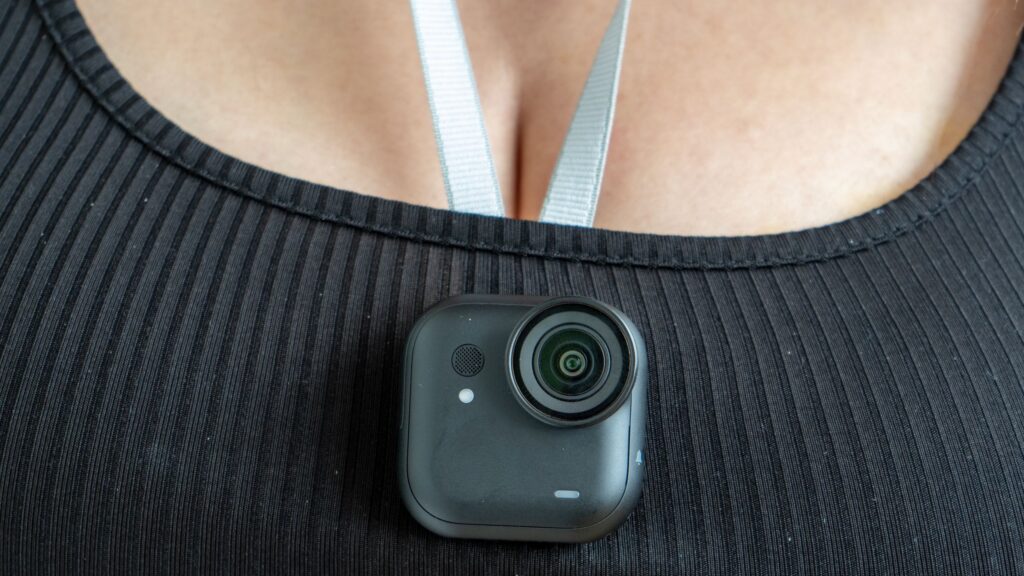
Table of Contents
The Shift Toward ‘Invisible’ Capture
For years, the action camera market was dominated by the ‘boxy’ form factor—rugged, heavy, and often cumbersome to mount. While GoPros remain the industry standard for extreme sports, a new sub-category of ‘pill cameras’ has emerged, prioritizing discretion and seamless integration into a user’s daily life. These wearable POV cameras are designed for a specific type of creator: the vlogger who wants high-fidelity footage without the psychological barrier of a large lens pointed at their subject.
The core appeal of these devices lies in their magnetic mounting systems. By moving away from bulky clamps and towards magnetic pendants and hat clips, the friction of capturing a ‘moment’ is virtually eliminated. However, shrinking a camera to the size of a thumb creates a brutal engineering trade-off between battery life, sensor size, and thermal management.
Insta360 Go Ultra: The Stabilization King
The Insta360 Go Ultra attempts to solve the inherent limitations of small sensors by utilizing a 1/1.28-inch image sensor—slightly larger than most of its direct competitors. This allows for a respectable performance in mixed lighting, where smaller POV cams typically succumb to heavy digital noise. The hardware is centered around a detachable camera module that pops out of an ‘Action Pod,’ which features a 2.5-inch folding touchscreen for framing and playback.
In real-world testing, the Go Ultra’s stabilization remains the benchmark. Its horizon-balancing mode effectively removes the ‘head bob’ common in POV footage, making the video feel cinematic rather than dizzying. The inclusion of a twistable magnetic pendant is a subtle but critical ergonomic win, allowing users to adjust the vertical angle of the shot without removing the device from their clothing.
DJI Osmo Nano: The Colorist’s Choice
While Insta360 focuses on the ‘magic’ of stabilization, the DJI Osmo Nano is clearly aimed at the prosumer and creative editor. The standout feature here is the support for 10-bit recording in D-Log M. For users who color-grade their footage in post-production, this provides a level of dynamic range and color flexibility that was previously nonexistent in this form factor.
The Osmo Nano also pushes the envelope on frame rates, offering 4K at 120fps for high-quality slow motion. While this high-frame-rate mode disables some of the more aggressive digital stabilization, the 4K60p mode remains remarkably steady. The device pairs with a ‘Multifunctional Vision Dock’ featuring a crisp 1.9-inch OLED touchscreen, which provides better color accuracy for checking shots than the larger LCDs found on competing pods.
Comparison of Core Specifications
| Feature | Insta360 Go Ultra | DJI Osmo Nano | |
|---|---|---|---|
| Max Resolution | 4K 60fps | 4K 120fps | |
| Sensor Size | 1/1.28-inch | Compact High-Res | |
| Color Depth | Standard | 10-bit D-Log M | |
| Primary Mount | Magnetic Pendant | Magnetic Lanyard/Suction | |
| Screen | 2.5″ Folding Touchscreen | 1.9″ OLED Touchscreen |
The Battery Bottleneck
The primary compromise across this category remains power. When detached from their respective pods or docks, these cameras operate on a limited internal charge—often hovering around the 30-minute mark for continuous recording. This transforms the ‘pod’ from a mere accessory into a critical piece of infrastructure, acting as both a remote control and a fast-charger.
We are also seeing the rise of alternative POV forms, such as Meta’s collaboration with Ray-Ban, which integrates cameras directly into eyewear. While these offer an even more natural perspective, they lack the versatile mounting options and raw image quality of a dedicated tool like the Go Ultra or Osmo Nano.
For those who need the most stable, ‘invisible’ footage for social media, the Insta360 ecosystem is currently the most intuitive. However, for creators who view the camera as a raw data capture tool to be polished in DaVinci Resolve or Premiere Pro, the DJI Osmo Nano’s technical specifications make it the superior instrument.


