The Anti-AI Bet: How One Engineer Built a Sustainable Business on ‘Old School’ Web Basics
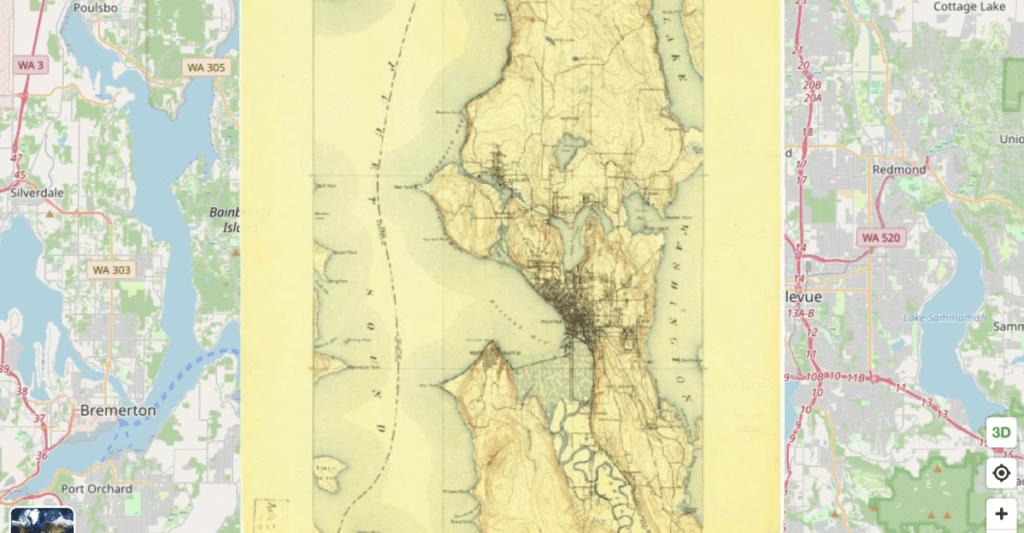
Table of Contents
A Departure from the ‘Blank Check’ Era
In 2022, Craig Campbell found himself at a crossroads common to high-level Silicon Valley engineers. Having just sold an e-commerce tool designed for Shopify merchants, Campbell was an attractive target for venture capitalists. The timing coincided with the initial explosion of generative AI, and the offers were aggressive. According to Campbell, investors were essentially offering ‘blank checks’ to launch another venture, provided it aligned with the prevailing AI hype cycle.
Instead of chasing the trend, Campbell pivoted toward a deeply personal interest: metal detecting. What began as a hobbyist’s quest to find artifacts by overlaying historical records onto modern geography evolved into Past Maps, a specialized research tool that allows users to fade between historical maps—sourced from entities like the US Geological Survey—and contemporary digital maps.
The transition from a side project shared on Reddit to a sustainable business highlights a growing tension in the current tech landscape. While the industry is obsessed with Large Language Models (LLMs) and autonomous agents, Campbell bet on the ‘old school web’—the idea that providing a specific, high-utility tool for a dedicated niche can create a viable business without the need for massive capital injections.
Winning the SEO Game in the Age of SGE
For many digital publishers, the rise of Google’s Search Generative Experience (SGE) and ‘zero-click’ searches is a nightmare. When AI provides the answer directly on the search results page, users have less reason to click through to the source. However, Past Maps has bucked this trend, growing from 20,000 monthly active users to over 300,000 in three years.
Campbell’s success isn’t based on gaming the algorithm with low-quality content, but on a strategy of data ‘explosion.’ By tagging and structuring historical data in a way that search engines can index specifically—such as abandoned mine sites in a specific county or the original layout of a family church—he captured highly specific, long-tail search intent. This approach transforms the website from a mere gallery into a functional research destination.
This organic growth has allowed the business to remain lean. Rather than relying on the volatile ad-tech ecosystem—which was recently scrutinized by the DOJ in its 2025 ruling against Google’s search monopoly—Campbell opted for a subscription model. Users can access basic features for free, but deep research requires a $9 weekly pass or a $52 annual subscription. This creates a predictable revenue stream that, while not matching the astronomical exits of VC-backed startups, provides a stable income comparable to a mid-level engineering role at Meta.
Integrating AI Without Losing the Product
Despite his skepticism toward the AI ‘gold rush,’ Campbell isn’t a Luddite. He has integrated AI into the operational side of Past Maps to eliminate the friction of running a solo enterprise. He utilizes a local agent model on his desktop to handle first-line customer triage. This system runs hourly, scans his Gmail, filters spam, and drafts responses for his approval.
The efficiency gain is stark: Campbell reports that his customer service workload has dropped from several hours a day to roughly ten minutes. The agent can even initiate refund and cancellation requests through Stripe, leaving Campbell only the final step of auditing and approving the transaction.
More interestingly, Campbell is attempting to push the boundaries of AI within the product itself. He is currently developing an Optical Character Recognition (OCR) tool specifically for historical maps. Standard OCR tools often fail when faced with the eccentricities of early cartography—curved text following rivers or erratic spacing. Campbell found that while modern LLMs provide better reasoning for these complex layouts, they still require a ‘human spark’ to guide the experimentation process.
By treating AI as a precision tool for efficiency rather than the core value proposition, Campbell has carved out a profitable anomaly in the modern internet: a business that thrives on the very things the rest of the valley is moving away from.