The Anti-AI Bet: How a Meta Engineer Found Profit in the ‘Old School Web’
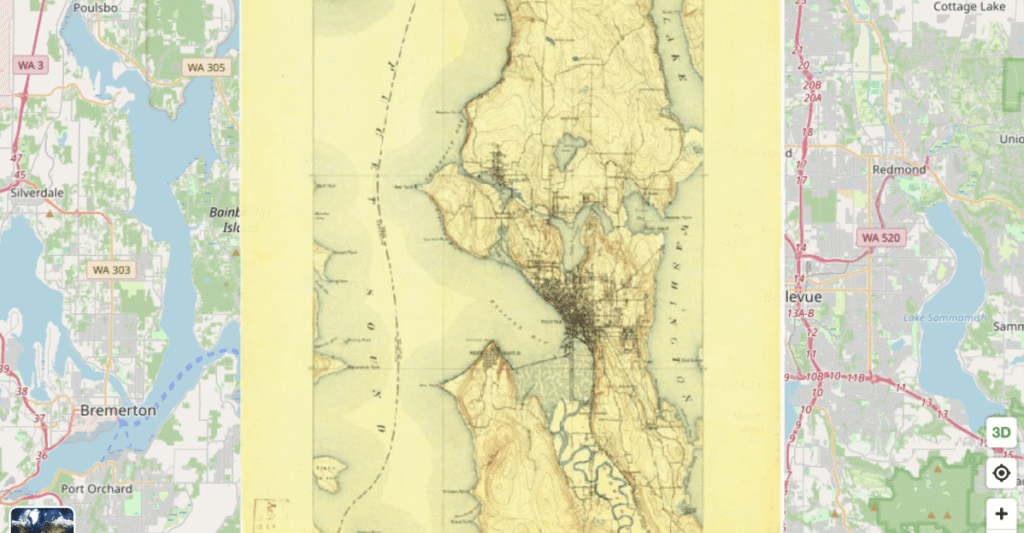
Table of Contents
A Divergence from the AI Hype Cycle
In 2022, the venture capital landscape was essentially a gold rush for anything labeled ‘AI.’ For Craig Campbell, a former Meta engineer and seasoned founder, the temptation was overwhelming. Having just sold an e-commerce tool designed for Shopify merchants, Campbell found himself with a rare level of leverage: investors were offering him ‘blank checks’ to launch his next venture.
Instead of chasing the generative AI boom, Campbell decided to build a website. Specifically, he built Past Maps, a specialized tool that allows users to overlay historical maps onto modern geography, adjusting opacity to track how landscapes have shifted over decades or centuries. It was a bet on the ‘old school web’—the idea that providing high-utility, niche information to a dedicated audience could still be a viable business model in an era of algorithmic consolidation.
From Metal Detecting to a Monthly Subscription
The genesis of Past Maps wasn’t a market analysis, but a hobby. Campbell began developing the tooling to aid his interest in metal detecting, using the maps to pinpoint the modern-day locations of vanished structures and forgotten trails. After sharing his progress with other enthusiasts on Reddit, he realized that the demand for these visual historical records extended far beyond treasure hunting.
Today, the platform serves a diverse user base, ranging from genealogists tracing ancestral homes to researchers mapping defunct oil wells. The technical core of the site relies on publicly available data, such as records from the US Geological Survey, but the value lies in Campbell’s proprietary interface that makes this data navigable and intuitive.
The growth has been organic and substantial. According to Campbell, active monthly users grew from 20,000 in the first year to over 300,000 by year three. While he admits the financial upside is lower than what a VC-backed AI startup might promise—comparing his current earnings to that of a mid-level (E4) engineer at Facebook—the business is sustainable and owned entirely by him and his wife.
Winning the SEO War in a Post-Monopoly Era
The success of Past Maps is largely a result of a strategic approach to organic search. At a time when many publishers are fearing the ‘Zero Click’ era—where AI-generated summaries in search results prevent users from ever visiting a website—Campbell found a loophole in high-intent, niche queries.
By meticulously tagging maps and creating dedicated pages for specific historical locations, such as abandoned mine sites or old county churches, he created a ‘data explosion’ that Google’s crawlers could easily index. This created a virtuous cycle: as the site provided specific answers to rare queries, its authority grew, driving more traffic.
To avoid the volatility of the ad-tech market—particularly following the 2025 DOJ ruling that labeled Google an illegal monopoly—Campbell bypassed traditional display ads. Instead, he implemented a tiered subscription model. Users can explore the site for free, but deeper access requires a $9 weekly pass or a $52 annual subscription. This pivot ensures a predictable revenue stream that isn’t dependent on fluctuating CPMs or algorithm shifts.
Integrating AI Without Losing the Human Element
Despite his skepticism of the ‘AI-first’ business trend, Campbell has integrated a local agent model into his operational workflow to manage the overhead of a small team. He utilizes a local LLM on his desktop that triages his Gmail every hour, filtering spam and drafting responses to service requests.
This automation has reduced his customer service workload from several hours a day to roughly ten minutes. Even complex tasks, such as processing refund and cancellation requests through Stripe, are handled by the AI, which queues the action for Campbell’s final approval.
His current technical challenge involves the ‘nightmare’ of historical cartography. Traditional Optical Character Recognition (OCR) fails on old maps because labels often curve along rivers or overlap in inconsistent fonts. Campbell is currently experimenting with LLMs to apply reasoning to these visual artifacts, though he maintains that a ‘human spark’ of experimentation is still required to make the technology work for the nuances of 19th-century mapmaking.


