The AI Tax: DDR5 Memory Prices Surge as Manufacturing Constraints Bite
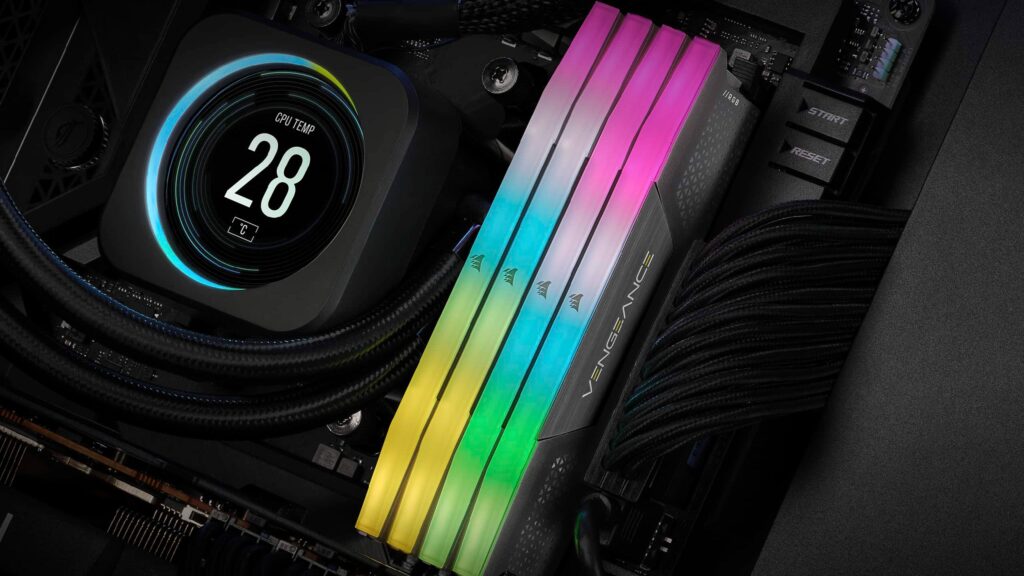
Table of Contents
The End of the ‘Budget’ Build
For years, RAM was the component PC builders could largely ignore—a commodity that typically trended downward in price, allowing enthusiasts to allocate more of their budget toward GPUs and CPUs. That era has officially ended. According to recent data from PCPartPicker, the entry point for a 32GB DDR5 kit has now climbed to $374.97, a staggering increase for a capacity that was routinely available for under $100 just a short while ago.
The current market is no longer operating on standard consumer demand cycles. Instead, the industry is grappling with an ‘AI tax.’ As hyperscalers and AI startups race to build out massive clusters of HBM (High Bandwidth Memory) and high-capacity DDR5 for LLM training, the manufacturing capacity at the wafer level is being cannibalized. This isn’t just a temporary supply chain hiccup; it is a fundamental shift in how memory is prioritized in the factory.
A Market in Flux
The pricing volatility has reached a point where ‘average’ street prices have become almost meaningless. While a handful of promotional kits from brands like Silicon Power are keeping the floor at roughly $375, mainstream options from Corsair or Crucial are frequently clearing the $400 mark. For those attempting to move up to 64GB—which is increasingly necessary for high-end productivity and simulation gaming—the cost has ballooned to nearly $680.
Even the ‘compromise’ route is becoming untenable. 16GB kits, once the baseline for budget builds, are now fetching around $200 at retailers like B&H Photo. When the cost of a basic memory kit rivals the price of a mid-range motherboard, the economic viability of the custom-built PC is called into question.
The Long-Term Forecast
The most concerning signal for consumers comes from the top of the supply chain. SK hynix, one of the three dominant DRAM manufacturers globally, has issued warnings that these manufacturing constraints are likely to persist through 2030. This suggests that the industry is not merely dealing with a shortage of finished sticks, but a deficit in the raw capacity to produce the silicon required to meet both AI and consumer needs.
This trend is spilling over into other components. SSD price tracking reveals a similar trajectory, with some drives that once sat at a $38 price point now trading for $200. The overarching theme of the current hardware cycle, evidenced by the lack of pricing transparency at events like Computex 2026, is an industry that is hesitant to set MSRPs because the floor continues to rise.
Industry Counter-Moves
Hardware giants are attempting to mitigate the fallout, though their solutions vary. AMD is leaning into its legacy and value-driven hardware, recently announcing the return of the Ryzen 7 5800X3D and the introduction of the 7700X3D to provide high-performance gaming options that don’t require the most expensive new-gen platforms.
Intel has been more blunt about the crisis. In a recent communication, the company warned that ‘something has to give’ regarding memory pricing. Intel has hinted at extending the lifecycle of legacy products, specifically those utilizing DDR4, to give users a cheaper, albeit slower, alternative to the DDR5 price spike. For the average gamer, the move back to DDR4 might be the only way to keep a total build cost under a thousand dollars in the current climate.


