The AI Engineer’s Paradox: Why the Creators of LLMs May Be the First to Be Replaced
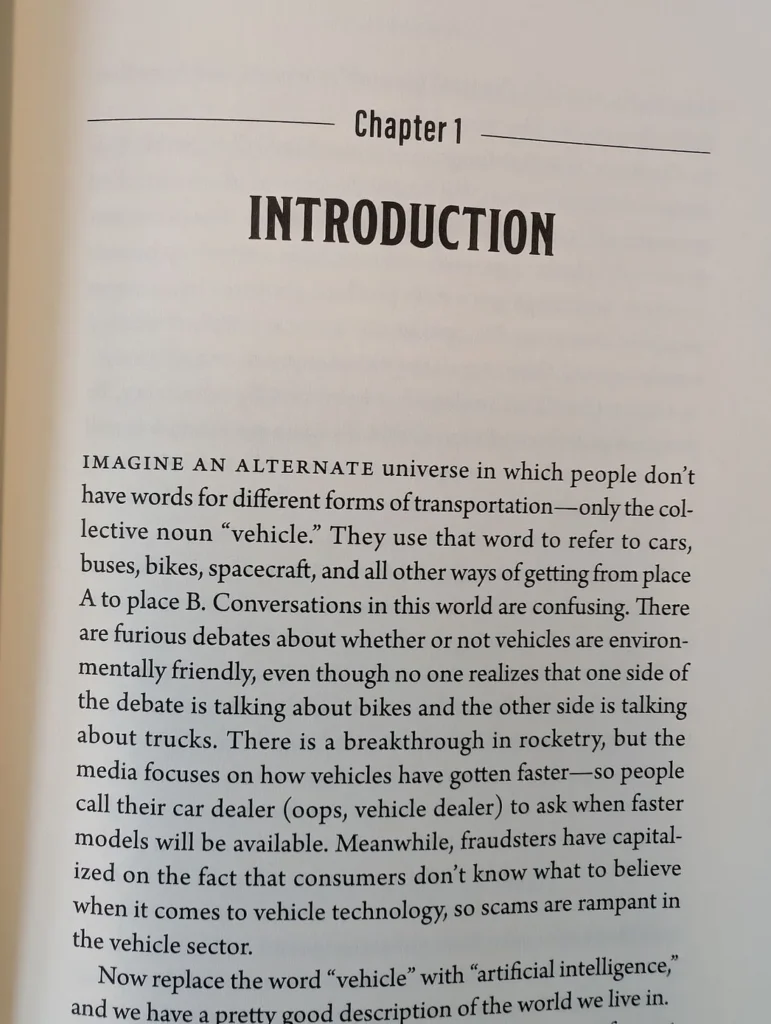
Table of Contents
The Illusion of the ‘Safe’ Job
In the current tech discourse, there is a prevailing narrative that while general software developers should worry about automation, AI engineers are safe. The logic is simple: the person building the tool cannot be replaced by the tool. However, this perspective ignores a fundamental shift in how artificial intelligence is being developed and deployed.
For many in the field, the title ‘AI Engineer’ has become a catch-all term, masking a vast divide in technical requirements. As noted in the analysis of AI’s current state—echoing themes found in Arvind Narayanan and Sayash Kapoor’s work on ‘AI Snake Oil’—the term ‘AI’ is used to describe everything from the transformer-based architecture of GPT-4 to the simple A* pathfinding algorithms used in video game NPCs. One is a billion-parameter neural network; the other is classical search logic. They are fundamentally different disciplines, yet they are marketed under the same umbrella.
The Cannibalization of Niche Specializations
Historically, AI was a fragmented landscape of specializations. A Computer Vision engineer focused on convolutional neural networks (CNNs) to process imagery, while a recommender systems expert built complex heuristic models to drive social media feeds. These roles required deep, domain-specific knowledge and bespoke tailoring for every project.
That era of hyper-specialization is rapidly closing. We are seeing a trend where foundation models are ‘cannibalizing’ these niche branches. A prime example is the recent trajectory of Meta’s vision models, such as DINO, which demonstrate a capacity for versatile, high-performance tasks with minimal annotation. When a plug-and-play general model can outperform a hand-tailored solution with a fraction of the effort, the economic incentive to hire a specialist engineer vanishes.
This shift transforms the AI engineer from a researcher and architect into an API integrator. When the ‘intelligence’ part of the engineering is outsourced to a giant model provided by Big Tech, the role shifts toward simple implementation. In this environment, the value proposition of the AI engineer is eroded far more quickly than that of the general software developer.
The Integration Gap
While the specialized AI researcher may find their market shrinking, the general software engineer remains tethered to a critical necessity: integration. An AI model, no matter how capable, does not exist in a vacuum. It requires a software ecosystem—databases, user interfaces, security layers, and cloud infrastructure—to be useful.
Software developers are currently the bridge between a raw model and a functional product. Until AI agents can autonomously conceptualize and deploy a full-stack application that meets complex business requirements without human oversight, the generalist developer possesses a layer of job security that the niche AI engineer may have already lost.
The Concentration of Talent
The likely outcome is a bifurcated market. The highest level of AI research and development will likely concentrate within a few massive entities—Google, OpenAI, Meta, and Anthropic—where the computational resources necessary to build foundation models exist. For the rest of the industry, tailored AI solutions will become a luxury, replaced by efficient, general-purpose API calls.
For those currently calling themselves AI engineers, the risk isn’t necessarily that a robot will take their desk, but that their specific technical expertise is being absorbed into the very models they help maintain. The expertise that once took a decade to master is now being delivered as a service, effectively automating the engineer out of the loop.