The AI Backlash: DuckDuckGo Sees Surge in Installs as Google’s ‘Force-Fed’ Search Overhaul Repels Users
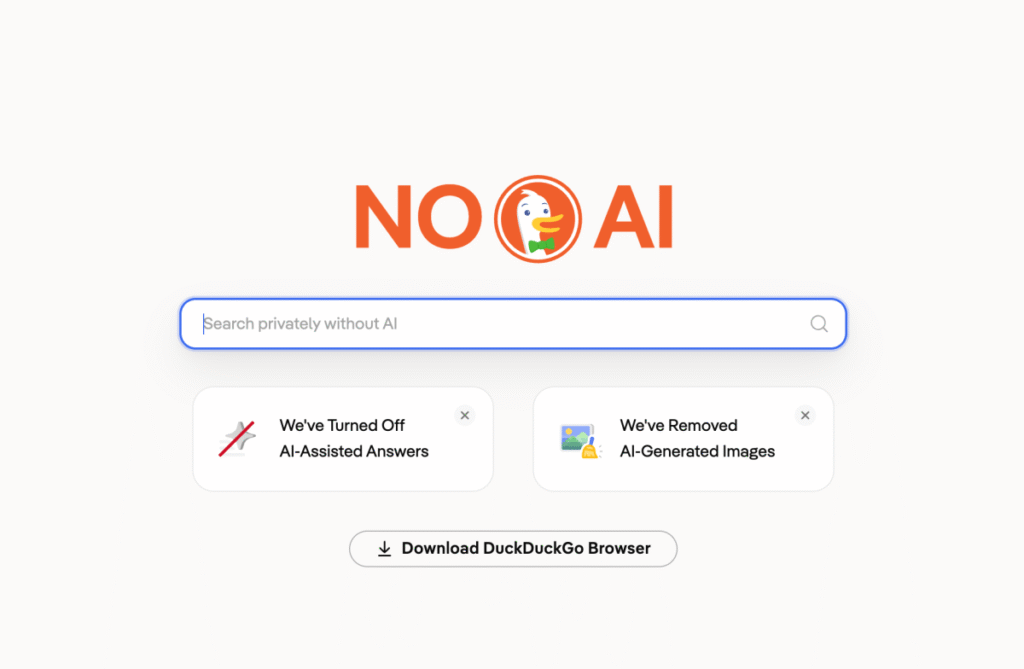
Table of Contents
The Friction of Forced Intelligence
For years, Google has maintained a near-monolithic grip on the global search market, largely through default distribution agreements and a refined algorithm that users simply trusted. But that relationship is fraying. As Google aggressively pivots from a list of blue links to an AI-driven agent experience, a growing segment of the internet is reacting not with curiosity, but with fatigue.
The shift became palpable following Google’s latest developer conference, where the company detailed a vision of search that is less about navigating the web and more about receiving synthesized answers. While the company frames this as efficiency, critics and users describe it as a loss of agency. In some cases, the AI Overviews have proven counterproductive, overcomplicating simple queries or surfacing hallucinatory data, effectively breaking the basic utility of a search engine.
This friction has created a sudden, measurable opening for DuckDuckGo. The privacy-centric search engine, which has historically struggled to penetrate more than 2% of the U.S. market, is seeing a surge of users who aren’t necessarily looking for a new feature set, but rather the absence of one.
By the Numbers: A Migration to Minimalist Search
According to internal data released by DuckDuckGo, the company saw a marked increase in U.S. app installs between May 20 and May 25, with a week-over-week average growth of 18.1%. The peak occurred on May 25, when installs jumped by 30.5% compared to the previous week. The trend was even more pronounced on iOS, where the average growth hit 33%, peaking at nearly 70%.
Perhaps the most telling metric is the traffic to noai.duckduckgo.com, a dedicated portal that disables all AI-assisted answers and generated images by default. Visits to this specific page saw average weekly growth of 22.7%, peaking at 27.7% on May 24. This suggests that the migration isn’t just about switching browsers, but a deliberate attempt to return to a pre-generative era of search.
“Google is force-feeding AI with no way to opt out,” DuckDuckGo CEO Gabriel Weinberg said in a statement. Weinberg, who previously testified during Google’s 2023 antitrust trial regarding the harms of exclusive default contracts, argues that Google’s results are deteriorating because the company is prioritizing LLM synthesis over traditional indexing.
The Paradox of Choice
DuckDuckGo is navigating a delicate balance. While it is capturing the “AI-refugee” crowd, the company is not anti-AI; it is pro-choice. Through its Duck.ai platform, the company offers a privacy-first interface to several leading models, including Anthropic’s Claude and OpenAI’s GPT-5 mini. The key differentiator is the plumbing: DuckDuckGo strips user IP addresses before requests hit the model providers and ensures conversations aren’t used for training.
This creates an interesting dichotomy. On one hand, DuckDuckGo is promoting a “No AI” zone for those who want the web as it was. On the other, its AI Image Filter—which removes synthetic media from results—and Search Assist are among its most popular features. According to Kamyl Bazbaz, DuckDuckGo’s chief communications and policy officer, the common thread isn’t a hatred of the technology, but a demand for control.
The surge is particularly notable for occurring over the Memorial Day weekend, a period where search traffic typically dips. Instead of a seasonal slump, DuckDuckGo saw sustained growth, suggesting that the frustration with Google’s interface has reached a tipping point for a specific subset of power users and privacy advocates.
Google has not yet officially commented on the specific shift in user installs toward its competitor, but the trend highlights a growing divide in the digital experience: the tension between the “agentic” web and the traditional index.