The $30 Billion Backlog: Why US Arms Sales to Taiwan Are Stalling
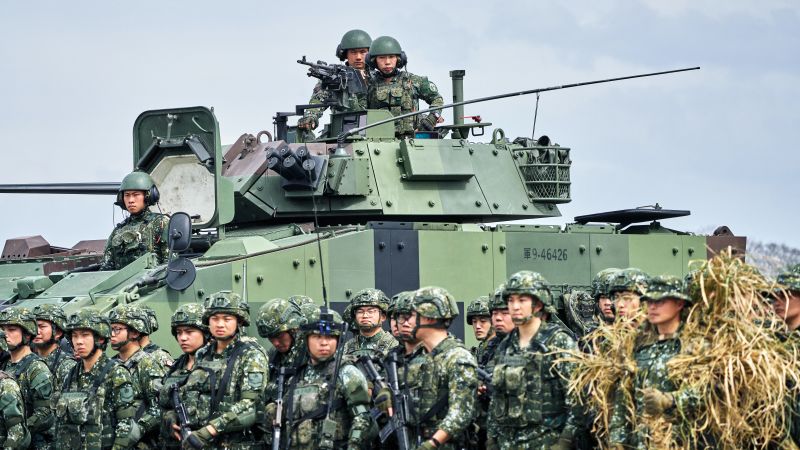
Table of Contents
A Negotiating Chip or a Logistics Failure?
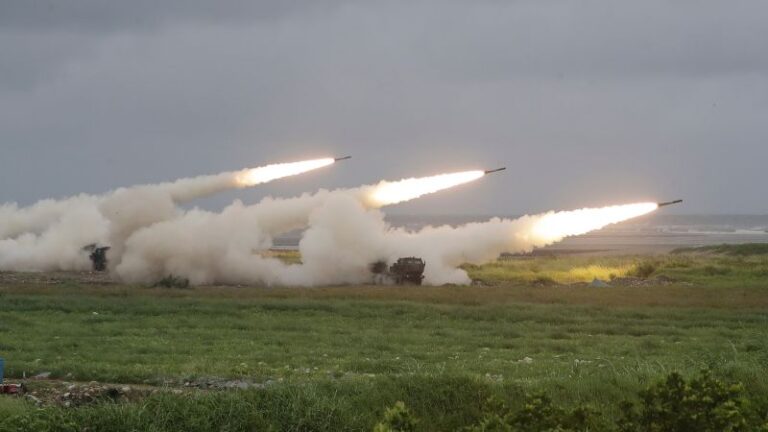
The friction between Washington and Beijing has found a new center of gravity: the production line. While the geopolitical rhetoric surrounding Taiwan remains high, a quieter, more systemic crisis is unfolding in the form of a nearly $30 billion backlog of undelivered US weapons systems destined for Taipei.
The tension spiked recently following a summit between President Donald Trump and Chinese leader Xi Jinping. Trump has reportedly delayed the signing of a $14 billion arms package approved by Congress, explicitly describing the deal as a “very good negotiating chip” for his dealings with Xi. This transactional approach to defense contrasts sharply with the stance of the Pentagon; acting US Navy Secretary Hung Cao suggested the delays are less about diplomacy and more about resource allocation, noting a need to ensure sufficient stockpiles for potential conflicts with Iran.
For Taiwan, this discrepancy creates a dangerous ambiguity. While Taipei’s Defense Ministry claims it has received no formal notification of delays, the numbers tell a different story. According to the Taiwan Security Monitor (TSM) project at George Mason University, the gap between a signed contract and a delivered weapon is widening, leaving the island in a state of strategic vulnerability.
The Legal Friction of the Taiwan Relations Act
To understand why these sales are such a flashpoint, one must look back to 1979. When the Carter administration shifted diplomatic recognition from Taipei to Beijing, it ended a formal mutual defense treaty. In response, the US Congress passed the Taiwan Relations Act (TRA), which mandates that the US provide Taiwan with “arms of a defensive character” to maintain self-defense capabilities.
Beijing views this as a violation of the spirit of a 1982 joint communique, which suggested a gradual reduction in arms sales. However, Washington has consistently rejected the idea that this was a binding commitment with a hard expiration date. This legal gray area ensures that every new shipment of missiles or jets is seen by China not as a defensive measure, but as a provocation.
The Production Gap: From Abrams Tanks to F-16s
The reality of modern defense procurement is that a signature on a piece of paper does not equal a weapon on the ground. Most high-end military hardware is not “off-the-shelf”; it is built to order, often competing with the US military’s own requirements.
The delivery timelines have become increasingly erratic. For instance, while a 2024 order for ALTIUS-600M loitering munitions was fulfilled in 21 months, an order for 108 Abrams tanks placed in 2019 took nearly seven years to complete. Even more critical are the F-16 fighter jets ordered in 2019, which are only now entering the production and flight testing phases.
| System | Order Year | Delivery Status | Timeline |
|---|---|---|---|
| Abrams Tanks | 2019 | Completed | 81 Months |
| ALTIUS-600M Munitions | 2024 | Completed | 21 Months |
| F-16 Fighter Jets | 2019 | In Production | Ongoing |
The Shift Toward Asymmetric Warfare
The frustration over these delays is fueling a pivot in Taiwan’s internal military philosophy. There is a growing consensus that relying on “big-ticket” items—expensive platforms like destroyers and heavy tanks that take years to build and are easily targeted—may be a flawed strategy against China’s massive military scale.
This has led to the rise of the “porcupine strategy.” The goal is to shift procurement toward cheap, mobile, and easy-to-produce asymmetric weaponry. By prioritizing sea mines, man-portable missiles, and autonomous drones over monolithic platforms, Taiwan aims to make the cost of an invasion prohibitively high, regardless of whether a specific batch of US-made jets arrives on time or is held up as a diplomatic pawn.