The 2026 Alexa Ecosystem: Navigating the Noise in a Saturated Smart Home Market

Table of Contents
Beyond the Voice Assistant: The State of the Alexa Ecosystem
Since its 2014 debut, Amazon Alexa has transitioned from a novelty AI experiment into the connective tissue of the modern smart home. By 2026, the platform has surpassed 100,000 compatible devices, a scale that dwarfs most competitors. However, this ubiquity has created a distinct problem for consumers: a marketplace saturated with low-quality, third-party ‘white label’ hardware that promises seamless integration but often delivers unstable connectivity and poor security.
The challenge for the modern user is no longer finding a device that works with Alexa, but finding a device that is actually worth the counter space. As Amazon pushes its revamped ‘Alexa+’ intelligence layer—which aims to move the assistant from reactive commands to proactive automation—the hardware requirements have shifted. We are seeing a move away from simple speakers toward multi-protocol hubs that support Matter, Thread, and Zigbee.
The New Baseline: Echo Dot Max and the Hub Transition
The Echo Dot Max represents a strategic pivot for Amazon. While previous iterations of the Dot were designed as disposable, budget-friendly entry points, the Max attempts to solve the two biggest complaints about the line: thin audio and fragmented connectivity. By incorporating larger drivers, the Max manages to fill medium-sized rooms without the muddy bass typical of small-form speakers. While it remains a mono system, the jump in acoustic fidelity is a necessary evolution to keep users from migrating to high-end audio brands.
More critical, however, is the internal hardware. The Echo Dot Max serves as a native hub for Matter and Thread. For years, the Alexa experience was marred by the need for proprietary bridges—small plastic boxes that connected specific light bulbs or plugs to the cloud. By baking these protocols directly into the speaker, Amazon has removed a significant layer of friction, making the ‘smart’ part of the home actually feel seamless.
High-Utility Integration: Ecobee and Fire TV Cube
When looking for devices that provide genuine information gain in a household, the Ecobee Smart Thermostat Premium stands out. Unlike basic thermostats that act as simple switches, the Ecobee leverages Alexa as a built-in interface. The ‘Follow Me’ feature is a prime example of functional intelligence; by utilizing remote room sensors, the system identifies which areas of the home are actually occupied and shifts HVAC priority accordingly. This isn’t just about convenience; it’s a tangible energy-saving mechanism that justifies its premium price point.
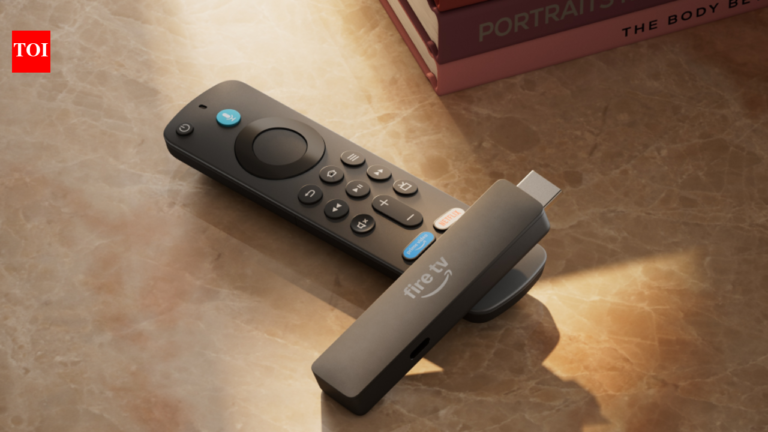
In the living room, the Fire TV Cube continues to occupy a different tier than the ubiquitous Fire TV Sticks. The Cube’s value proposition isn’t just the faster processor—though the reduced input lag is noticeable during navigation—but its role as an entertainment orchestrator. Because it functions as a full Alexa speaker and hub, it can trigger complex routines. A single voice command can simultaneously dim the Hue lights, power on the OLED panel, and launch a streaming app, effectively turning the TV into the central nervous system of the room.
The Audiophile’s Compromise: Sonos Era 100
For those who find the Echo’s audio insufficient, the Sonos Era 100 provides the necessary bridge between high-fidelity audio and voice control. The Era 100 integrates Alexa without sacrificing the acoustic engineering Sonos is known for. The inclusion of Trueplay technology allows the speaker to map the room’s acoustics and adjust the EQ in real-time, a level of sophistication that Amazon’s first-party hardware still struggles to match.
While the Era 100 lacks the comprehensive hub capabilities of the Echo Dot Max, its strength lies in its openness. With AirPlay support and a USB-C expansion port for Ethernet or 3.5mm input, it caters to a user base that wants the convenience of a voice assistant but refuses to compromise on soundstage or connectivity options.