TechCrunch Disrupt 2026: How to Navigate the Startup Battlefield 200 Application Process
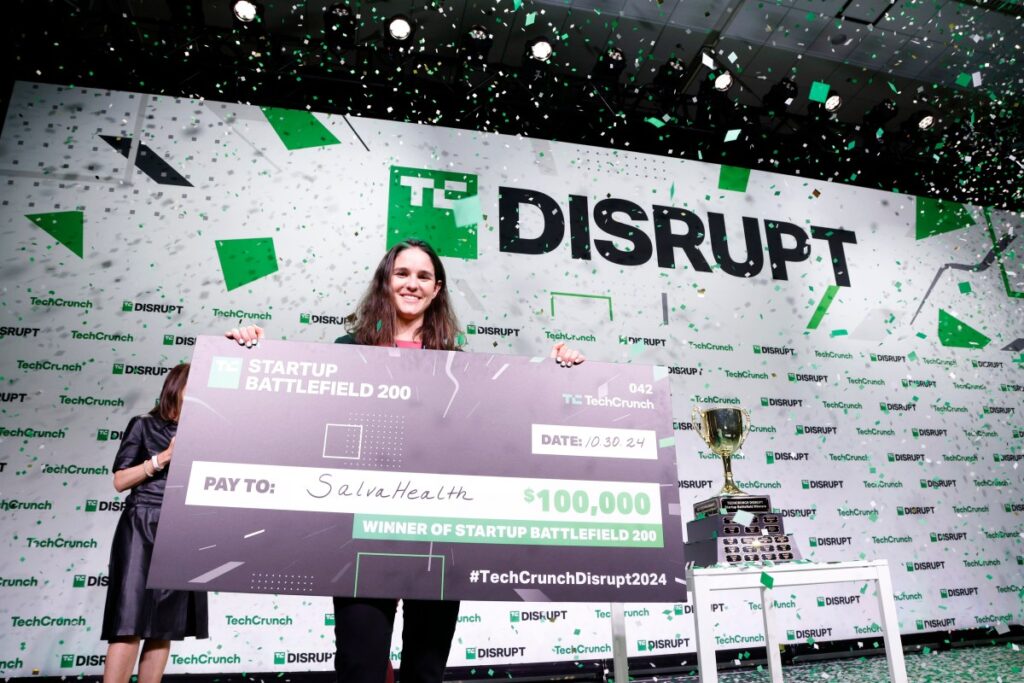
Table of Contents
For early-stage founders, the distance between being a “stealth mode” project and a global industry disruptor often comes down to a single moment of high-leverage visibility. The Startup Battlefield 200 is designed to be that moment. With the application window officially closing on June 8 at 11:59 p.m. PT, the urgency for founders to finalize their submissions is peaking. This isn’t merely another pitch competition; it is a curated gateway to the Disrupt Stage at TechCrunch Disrupt 2026, hosted at San Francisco’s Moscone West this October.
- Hard Deadline: All applications and nominations must be submitted by June 8, 11:59 p.m. PT.
- Financial Incentive: One winning startup will receive $100,000 in equity-free funding.
- Eligibility: Primarily targets bootstrapped, pre-seed, and seed-stage companies with a working MVP.
- Historical Reach: Alumni have collectively raised over $32 billion and achieved 250+ exits.
The Mechanics of the Startup Battlefield 200
Startup Battlefield 200 is an elite competitive pipeline where TechCrunch filters thousands of global applicants to find the 200 most promising early-stage companies. Unlike traditional accelerators that may take a percentage of equity in exchange for mentorship, Battlefield focuses on visibility and validation. The primary goal is to move a company from the periphery of the tech ecosystem to a position where it is “impossible to ignore.”
The process begins with a rigorous review by the TechCrunch editorial and curation team. Once selected, founders are integrated into a high-pressure environment where they must pitch live before a panel of seasoned venture capitalists, industry analysts, and media representatives. The stakes are high: while the $100,000 prize is the headline, the real value lies in the concentrated density of decision-makers present at Moscone West.
Who Qualifies? Understanding the Eligibility Threshold
One of the most frequent points of confusion for applicants is whether their company is “too old” or “too new” to apply. TechCrunch has explicitly stated that they are seeking bold early-stage startups. This typically translates to companies in the following stages:
- Bootstrapped: Companies funded by the founders’ own capital, demonstrating strong organic growth.
- Pre-Seed and Seed: Those who have recently closed a small round or are currently seeking their first institutional check.
- Series A (Select Cases): While the focus is on early stages, Series A startups in capital-intensive sectors (such as biotech, hard-tech, or advanced robotics) may qualify if their vision remains disruptive enough to justify the stage.
Crucially, a working Minimum Viable Product (MVP) is a non-negotiable requirement. Idea-stage companies without a tangible product or a proven prototype rarely make the cut, as the judges require evidence of execution capability, not just a theoretical vision.
Quantifying the “Battlefield Effect”
To understand the value of the Startup Battlefield, one must look at the historical data. The program has served as a launchpad for some of the most ubiquitous tools in the modern digital economy. Companies like Dropbox, Discord, Mint, Fitbit, and Trello all passed through this ecosystem during their infancy.
| Metric | Impact Value |
|---|---|
| Total Alumni Funding Raised | $32 Billion+ |
| Total Successful Exits | 250+ |
| Top Acquirers | Google, Microsoft, Amazon, Uber, Salesforce |
These numbers underscore a critical reality of the current venture capital market: signal strength. In an era where AI-generated startups are flooding the market, a “stamp of approval” from the TechCrunch curation team acts as a powerful signal to investors that a company has passed a preliminary layer of due diligence.
Strategic Implications for Founders
For a founder, entering the Startup Battlefield 200 is not just about the chance to win a cash prize. It is about market positioning. When a startup pitches on the Disrupt stage, they are essentially performing a public stress test of their value proposition.
The practical implications include:
- Rapid Feedback Loops: Receiving immediate, public critique from top-tier VCs can help founders pivot their messaging or product strategy before their next major funding round.
- Customer Acquisition: The event attracts thousands of industry professionals, many of whom are potential early adopters or B2B clients.
- Media Narrative Control: Securing coverage in TechCrunch or other attending publications allows a company to define its own narrative rather than letting the market guess its purpose.
The Risk of the Public Pitch
It is important to note that pitching on a global stage is not without risk. A poorly executed pitch or a product demo that fails live can create a negative first impression. However, most experienced founders view this as a negligible risk compared to the potential upside of a viral moment or a serendipitous meeting with a lead investor from a firm like Sequoia or Andreessen Horowitz.
Navigating the Application Process
With only days remaining, founders should avoid the temptation to rush a generic application. The TechCrunch team reviews every submission, meaning quality outweighs quantity. A winning application typically emphasizes three things: the problem, the unique solution, and the traction.
Avoid vague claims like “we are the Uber of X” or “our AI will change everything.” Instead, focus on specific metrics: how many users are on the MVP, what is the MoM (Month-over-Month) growth, and exactly why the current industry incumbents are unable to solve the problem the startup is tackling.
Pro Tip: If you are not a founder but know a high-potential company, the nomination process is a viable route. Nominations are often viewed as a secondary validation of a startup’s potential, as they come from an external observer who recognizes the company’s value.
Frequently Asked Questions
What is the exact deadline for the Startup Battlefield 200?
The deadline is June 8, 11:59 p.m. PT. It is highly recommended to submit at least 24 hours in advance to avoid potential technical issues caused by high traffic on the submission portal.
Is the $100,000 prize money equity-free?
Yes. The $100,000 awarded to the winner is equity-free, meaning TechCrunch does not take a percentage of the company’s ownership in exchange for the funds.
Can a company apply if they have already raised a Series A?
Generally, the competition targets pre-seed and seed stages. However, Series A startups in sectors that require significant capital—such as deep tech, aerospace, or biotech—may still qualify for review.
What happens if my startup is selected but I cannot travel to San Francisco?
The Disrupt Stage is a live event at Moscone West. While some elements of Disrupt may have hybrid components, the Battlefield competition is designed as a live, in-person experience. Founders should plan for travel to San Francisco in October.
Do I need a finished product to apply?
You do not need a fully commercialized product, but you must have a working MVP (Minimum Viable Product). Purely conceptual pitches without a functional prototype are unlikely to be selected.
The Verdict on the Opportunity
The current fundraising environment is notoriously difficult for early-stage founders. The “easy money” era of 2021 has been replaced by a demand for efficiency, sustainable growth, and genuine technical innovation. In this climate, the Startup Battlefield 200 provides a strategic advantage by condensing months of networking into a few days of high-intensity exposure.
Whether the goal is the $100,000 prize or simply the visibility required to close a seed round, the window closes on June 8. For those building category-defining technology, this is the most direct path to the center of the tech ecosystem.