Starcloud Bets on Starlink Laser Mesh to Power Orbital AI Data Centers
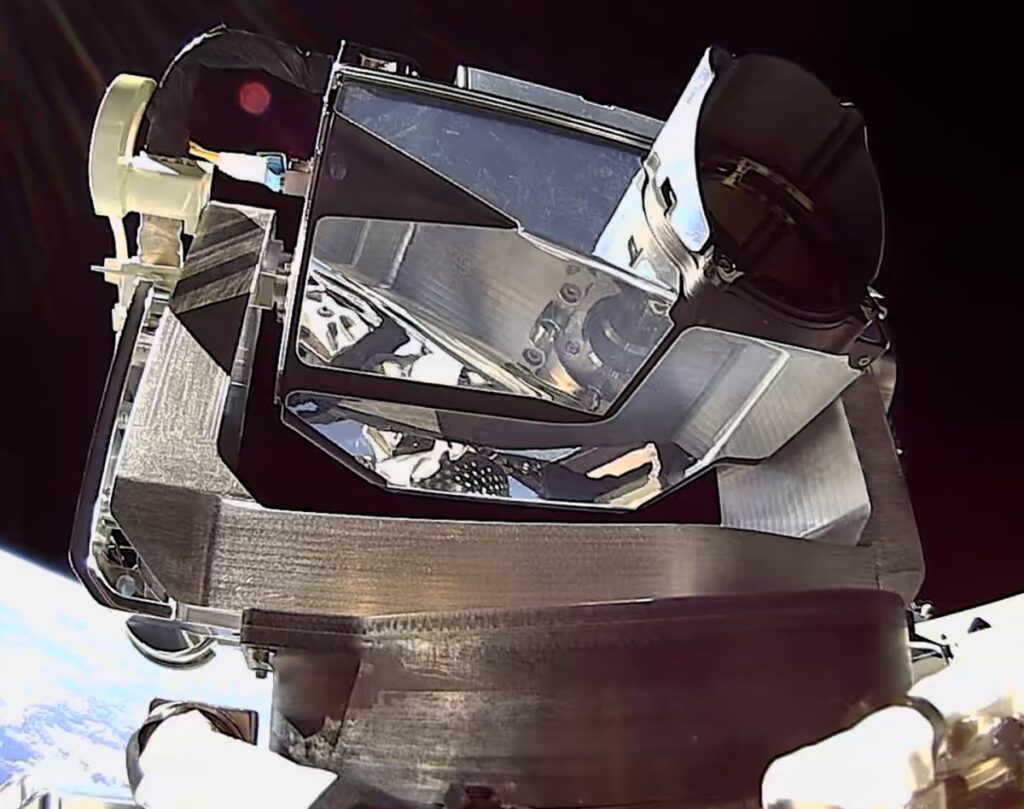
Table of Contents
The Move to Off-World Compute
The race to move high-performance computing into Low Earth Orbit (LEO) just gained a significant networking backbone. Starcloud, the Redmond, Washington-based startup aiming to build a massive constellation of orbital data centers, has signed a contract with SpaceX to integrate Starlink’s optical laser terminals into its fleet. This move effectively turns the Starlink mesh network into a global data-relay system, allowing Starcloud to bypass the traditional, often congested bottleneck of ground-based stations.
The deal includes more than 50 Starlink Mini Lasers, enough to equip at least 25 satellites with dual terminals. While this represents only a fraction of Starcloud’s ambitious long-term vision of 88,000 orbital nodes, it establishes the critical communication architecture needed for the company’s immediate rollout. By leveraging SpaceX’s existing laser-link infrastructure, Starcloud can transmit processed data across the vacuum of space at high speeds before beaming it down to a specific terrestrial point, drastically reducing latency for real-time applications.
Scaling Power for AI Workloads
The transition from proof-of-concept to commercial viability begins in January with the launch of Starcloud-2. Slated for a Falcon 9 ride, this 450-kilogram spacecraft is a quantum leap over the 60-kilogram Starcloud-1 demonstrator launched last November. The most critical metric here is power: Starcloud-2 is designed to generate roughly eight kilowatts, a 100-fold increase that allows it to run actual commercial cloud workloads.
This capacity is specifically targeted at the AI boom. Infrastructure provider Crusoe is already listed as an early customer, and the company maintains partnerships with heavyweights like Nvidia, AWS, and Google. The logic is simple: by moving AI inference and training to orbit, companies can theoretically escape the crushing land, water, and energy constraints that plague terrestrial mega-data centers.
The Starship Factor and the 200kW Vision
While Falcon 9 handles the near-term deployments, the true scale of Starcloud’s ambition rests on SpaceX’s Starship. The company is planning Starcloud-3, a three-ton behemoth capable of 200 kilowatts of power. This class of satellite is intended to be the primary workhorse for heavy AI training workloads. CEO Philip Johnston has indicated that Starship could be ready for customer payloads by mid-to-late 2028, though he notes the company can “tread water” in the interim by deploying smaller Starcloud-2 units for edge-computing and defense payloads.
The technical specs of the Starlink terminals—providing up to 25 gigabits per second (Gbps) over distances of 4,000 kilometers—might seem modest compared to fiber-optic cables on Earth. However, for a 200-kilowatt orbital node, this ratio of connectivity-per-watt is highly efficient. It allows Starcloud to focus its internal engineering on the much harder problems: thermal management in a vacuum, radiation-hardened computing, and massive power generation.
A Crowded Orbit of Compute
Starcloud isn’t the only entity eyeing the Starlink mesh. Vast’s Haven-1 commercial station and Muon Space’s Halo satellites are also integrating these laser links. More interestingly, SpaceX itself has signaled plans for up to a million orbital data centers by 2028. This creates a curious competitive dynamic where Starcloud is paying its primary launch and networking provider to build a competing infrastructure.
According to Johnston, the two companies are targeting different segments. While SpaceX will likely prioritize internal workloads for xAI and Tesla, Starcloud is positioning itself as an “energy-as-a-service” and infrastructure provider for third-party enterprises. To fund this scale-up, sources indicate Starcloud is currently seeking at least $200 million in new capital, which would further bolster the $1.1 billion in funding the company secured in March.