Spotify Introduces Podcast Clipping to Combat the ‘Long-Form’ Discovery Gap
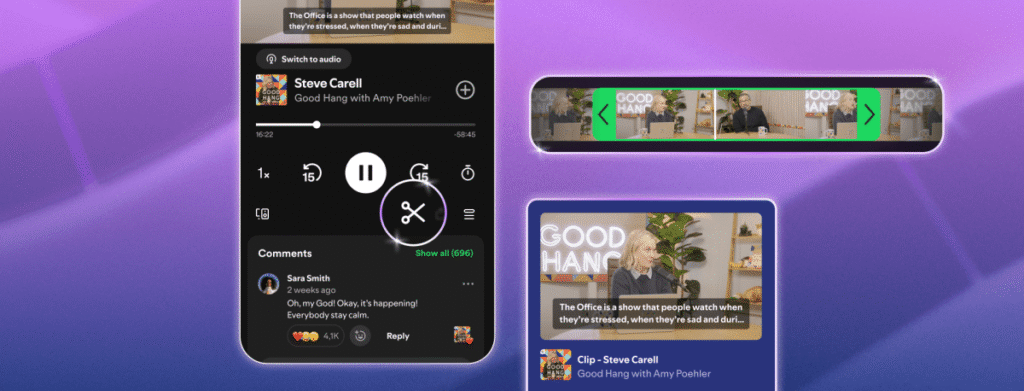
Table of Contents
A new tool for the era of the ‘CEO Podcast’
Spotify is attempting to solve a fundamental friction point in audio consumption: the difficulty of sharing a specific, nuanced point from a three-hour conversation. Starting Wednesday, the platform is rolling out a dedicated clipping tool that allows users to isolate, trim, and share specific segments of podcast episodes directly from the mobile app.
The feature manifests as a scissors icon within the “Now Playing” view. Once activated, users can carve out a specific window of audio, preview the segment to ensure the timing is precise, and then distribute it via social media or direct messaging. While Spotify has previously allowed users to share links to specific timestamps, those links often required the recipient to navigate the full episode manually. The new clipping mechanism creates a more contained, digestible piece of content that functions more like a TikTok or an Instagram Reel, but for audio.
This update arrives at a pivotal moment for the media landscape. We are currently seeing a massive shift in how high-profile figures—particularly AI executives and tech founders—communicate. Traditional press junkets and rigorous journalistic interviews are increasingly being replaced by long-form podcast appearances. These formats allow guests to control the narrative and expand their reach, but they often bury the lead in hours of conversational filler.
By enabling users to ‘clip’ the most critical moments, Spotify is essentially decentralizing the editing process. The audience, rather than the producer, now decides which 30-second soundbite is the “headline,” potentially accelerating the speed at which news breaks from long-form audio sources.
From Chapters to Clips
The move toward modular audio isn’t random; it’s a response to user behavior. Earlier this year, Spotify introduced “Chapters,” allowing creators to break episodes into labeled segments. According to company data, these chapters are now being saved and added to playlists over 2 million times per month, signaling a strong appetite for non-linear podcast consumption.
The clipping tool builds on this momentum. While chapters provide a map of the episode, clips allow for the extraction of the value. For the average listener, this means a way to curate a personal archive of insights. For creators, it provides a powerful organic marketing engine. A well-placed clip on X (formerly Twitter) or LinkedIn can act as a high-conversion funnel, driving listeners back to the full episode once a provocative or insightful point has been established.
Integration and Availability
Saved clips are not just for sharing; they are integrated into the user’s Spotify Library. This allows listeners to build their own “highlight reels” of podcasts, effectively turning a passive listening experience into an active research tool.
The feature is rolling out globally to both free and Premium users on mobile devices. While the tool is available now, Spotify noted that availability will expand across more shows over time as the system integrates with various hosting providers and creator settings.
As the boundaries between audio, social media, and short-form video continue to blur, Spotify is positioning itself as more than just a player—it’s becoming a distribution hub for the fragmented way we now consume information.