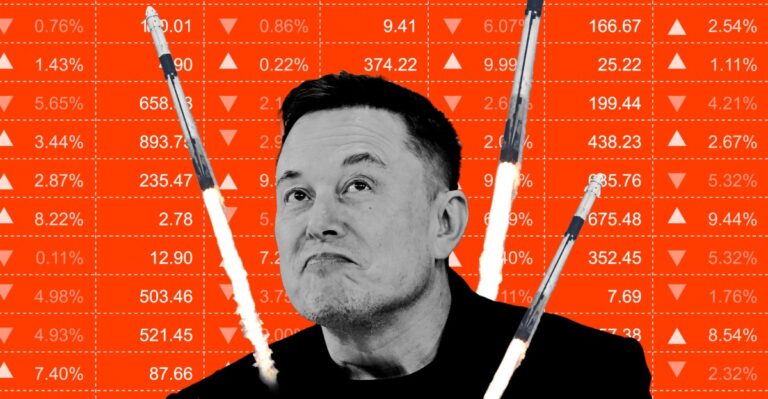
SpaceX Quietly Adds Water Scarcity to IPO Risk Factors as AI Ambitions Scale
Table of Contents
The Hidden Cost of Compute
In the race to build the world’s most powerful AI infrastructure, the most critical resource isn’t always a H100 GPU or a gigawatt of power. Sometimes, it is simply water. SpaceX has quietly updated its IPO filings to include a specific warning to prospective investors: the company’s ability to scale its data centers is now tethered to the availability of water.
The amended filing, submitted Monday, signals a pivot in how the company views the bottlenecks of artificial intelligence. While previous iterations of the document focused heavily on the scarcity of power at economically feasible prices and the logistical nightmares of construction timelines, the new language elevates water to a primary risk factor. This update is particularly significant given that the entity now encompasses the operational footprint of xAI, Elon Musk’s AI venture, which requires massive compute clusters to train next-generation models.
A New Bottleneck in Site Selection
Deep within the “risk factors” section—the part of a prospectus where companies legally shield themselves by listing everything that could possibly go wrong—SpaceX now explicitly states that water access is a “critical consideration” in how it selects, develops, and operates its data centers. This is a candid admission of the physical toll AI takes on local environments.
Data centers generate immense heat, and while air cooling is common, the highest-density AI workloads often require liquid cooling or evaporative cooling systems that consume millions of gallons of water daily. SpaceX warns that drought conditions, regulatory restrictions, or simple competition with local municipalities for water resources could not only increase operating costs but could fundamentally limit the company’s ability to expand its infrastructure.
The filing notes that if water becomes unavailable or too expensive, the company may be forced to implement “alternative cooling techniques,” which are often more costly to install and less efficient to operate, potentially eating into the margins of its AI services.
The SEC’s Influence
It remains unclear why water was omitted from the initial filing, but the timing suggests a nudge from regulators. SpaceX is currently in the pre-IPO window, a period characterized by a back-and-forth exchange of “comment letters” between the company and the Securities and Exchange Commission (SEC). These letters are used by the SEC to demand more transparency or clarification on specific business risks.
While these letters aren’t public until after the IPO is finalized, the sudden addition of detailed water-scarcity language suggests that the SEC may have questioned the company on the sustainability and scalability of its cooling strategy. By adding this language, SpaceX is effectively telling investors that the physical environment—specifically the climate-driven reality of water scarcity—is now a material risk to the company’s valuation.
More Than Just Water
The water warnings weren’t the only notable changes in the amended document. SpaceX also disclosed that it is earmarking up to 5% of the stock being sold in the IPO for employees and close associates of executives, a move designed to align incentives and reward early loyalty.
More intriguing for market analysts is the addition of language regarding the potential issuance of a “significant” number of shares in future transactions. While standard in many filings, in the context of Elon Musk’s ecosystem, this is widely interpreted as a hedge for a potential future merger or strategic alignment with Tesla. Such a move would create dilution for existing shareholders but could theoretically consolidate the compute and robotics arms of Musk’s empire under a single financial umbrella.
As the company moves toward a public listing, the shift in focus from purely “energy and chips” to “energy and water” reflects a broader industry realization: the virtual world of AI is strictly limited by the physical constraints of the planet.