Space Force Shifts Focus to Ground Resilience With New Network of Distributed Operations Centers
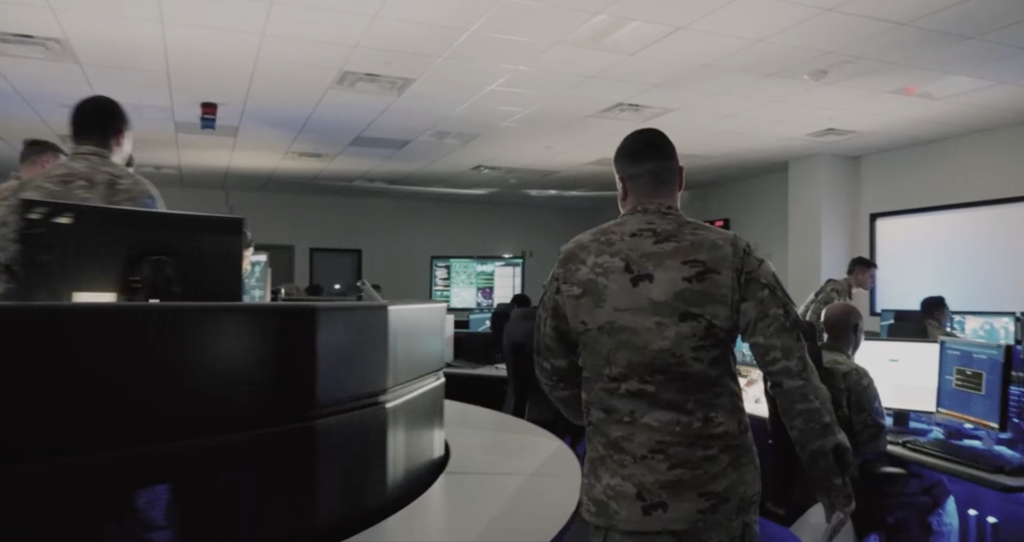
Table of Contents
Beyond the Satellites: The Fight for Ground Control
When discussing the U.S. Space Force’s massive $71 billion budget request for fiscal 2027, the conversation usually centers on the ‘kit and widgets’—the high-orbit missile-warning satellites and the sprawling constellations of low Earth orbit (LEO) sensors. But according to Brig. Gen. Christopher Fernengel, director of plans and programs at Space Force headquarters, the hardware is only as effective as the infrastructure that controls it.
Speaking at the State of the Space Industrial Base conference in Albuquerque, New Mexico, Fernengel highlighted a strategic pivot toward what the service calls ‘resilient operations centers.’ The goal is a fundamental architectural shift: moving away from a few centralized, high-value command hubs that serve as single points of failure, and moving toward a distributed network of nodes across the United States.
The logic is grounded in a stark reality of modern warfare. In recent conflicts, including tensions involving Iran, space operations centers have already emerged as primary targets. Military planners are operating under the assumption that any future peer-level conflict will involve a simultaneous onslaught of kinetic missile strikes, sophisticated cyber incursions, and electronic warfare aimed not at the satellites themselves, but at the ground stations that tell them where to look and what to do.
The Blueprints for Distribution
The prototype for this new era of command and control is the Consolidated Space Operations Facility at Schriever Space Force Base in Colorado. Spanning 200,000 square feet, the facility represents the scale of ambition the Space Force has for its ground game. The service intends to replicate this model, envisioning as many as 10 such centers nationwide.
Budget documents for 2027 already allocate approximately $1 billion for the first four operations centers. Beyond the Colorado hub, proposed sites include Redstone Arsenal in Alabama, Kirtland Air Force Base in New Mexico, and Grand Forks Air Force Base in North Dakota. These facilities are not mere administrative offices; they are designed to support critical missions including the Proliferated Warfighter Space Architecture (PWSA), advanced sensing, targeting, and high-speed data transport.
This geographic dispersion isn’t just about surviving a missile strike. It’s a workforce strategy. The Space Force plans to add roughly 2,800 military personnel and 2,000 civilians in 2027. By establishing permanent operations hubs at bases that currently lack space infrastructure, the service can build regional communities of ‘Guardians.’ This allows personnel to develop their careers without the constant need to relocate to a handful of centralized hubs just to find an available assignment.
Hardening the Electromagnetic Edge
The strategic necessity for this move was underscored by Operation Epic Fury, where space capabilities were targeted and destroyed for the first time in a documented operational setting. That event served as a proof-of-concept for adversaries, demonstrating that the ‘high ground’ of space is inextricably linked to the vulnerability of the ground.
To counter this, the 2027 budget also prioritizes tactical operations centers specifically dedicated to space-based electronic warfare. These centers, split between domestic and overseas locations, will handle the battle management of electromagnetic warfare missions, ensuring that the U.S. can maintain communication and signal dominance even when the spectrum is contested.
By weaving together distributed command centers and tactical electronic warfare hubs, the Space Force is attempting to evolve from a service that manages assets into a resilient combat force capable of absorbing a hit and continuing the mission.


