Sony Targets High-End Indian Market with BRAVIA 7II, Betting on True RGB Precision
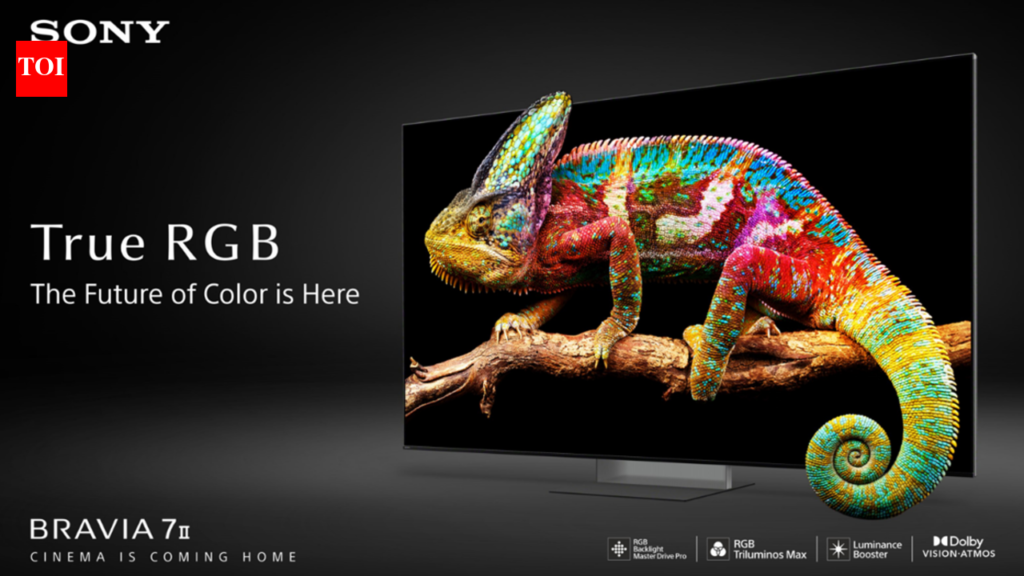
Table of Contents
A Strategic Pivot Toward Color Accuracy
Sony has officially expanded its premium television portfolio in India with the launch of the BRAVIA 7II. While the Indian smart TV market has recently been flooded with aggressive pricing from budget brands, Sony is doubling down on the high-fidelity segment, positioning the 7II as a bridge between mass-market LED panels and the ultra-premium Master Series.
The centerpiece of the 7II is the implementation of what Sony calls “True RGB” technology. In a market where many mid-range panels rely on white sub-pixels or filtered LEDs to achieve brightness, True RGB aims to deliver a wider color gamut and more precise chromaticity. For the end user, this translates to a noticeable reduction in the ‘neon’ oversaturation often found in cheaper 4K sets, offering a more cinematic, director-led color grade that mimics professional monitors.
The Hardware: Mini-LED and the XR Engine
Under the hood, the BRAVIA 7II leverages an evolved version of Sony’s XR Cognitive Processor. Unlike standard AI upscaling, which often adds artificial sharpening or ‘halos’ around objects, the XR engine focuses on focal point analysis—mimicking how the human eye perceives depth and detail. This is paired with a sophisticated Mini-LED backlight system that allows for tighter dimming zones, significantly curbing the ‘blooming’ effect common in previous generation high-brightness LED TVs.
The panel’s brightness levels are designed to compete directly with high-end OLEDs, but without the inherent risk of permanent burn-in—a key selling point for Indian consumers who frequently use their TVs for gaming or as background displays for news channels with static tickers.
Integration into the Modern Living Room
Beyond the glass, Sony is leaning heavily into the gaming ecosystem. The BRAVIA 7II arrives with dedicated ‘Game Menu’ features, specifically optimized for the PlayStation 5. This includes Auto HDR Tone Mapping and a reduced input lag that puts it in direct competition with LG’s C-series and Samsung’s Neo QLED line.
On the software side, the unit continues to run Google TV, though Sony has layered its own interface refinements over the stock Android experience. This ensures a smoother transition between streaming apps and the TV’s internal settings, avoiding the sluggishness that often plagues smart TVs after a year of firmware updates.
Market Positioning and Availability
The BRAVIA 7II is entering a crowded landscape. While the price point reflects Sony’s premium branding, the company is betting that the combined allure of the True RGB panel and the brand’s historical reliability in the Indian market will outweigh the lower cost of competing Chinese brands. The series is expected to be available in multiple screen sizes, catering to both compact urban apartments and larger home cinema setups.
As the industry shifts toward higher peak brightness and more sustainable panel technologies, the 7II represents Sony’s attempt to prove that LED technology, when refined with Mini-LED and precise color science, can still hold its own against the OLED tide.