Silicon Valley’s Nuclear Bet: Can SMRs Solve the AI Power Crunch?
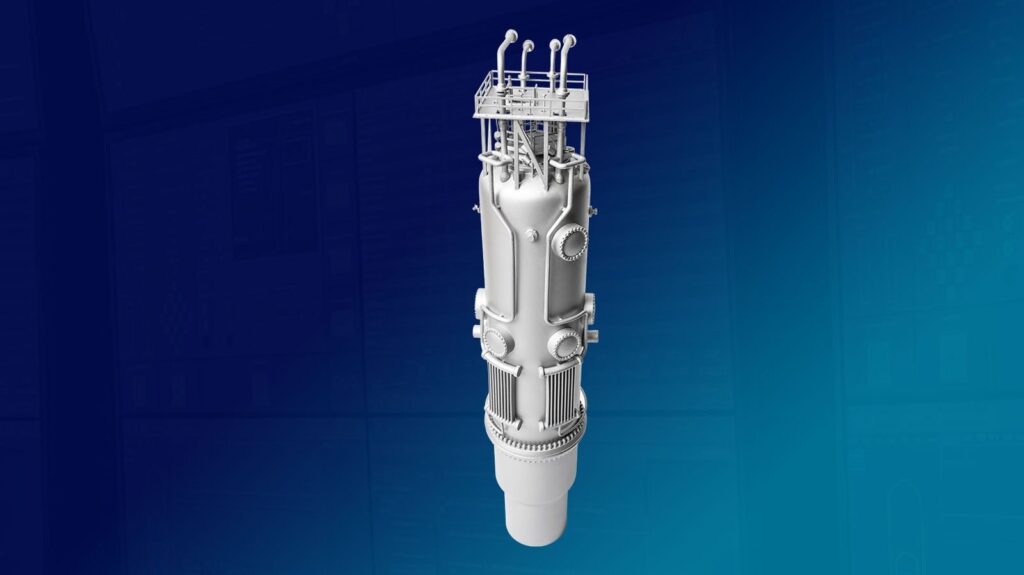
Table of Contents
The New Nuclear Architecture
For decades, the American nuclear industry has been defined by the ‘mega-project’—massive, multi-billion dollar plants plagued by decades of delays and astronomical cost overruns. But as the energy demands of artificial intelligence push the national grid toward a breaking point, a different approach is emerging. The U.S. government and a contingent of Silicon Valley billionaires are placing their bets on Small Modular Reactors (SMRs).
Unlike traditional gigawatt-scale plants, SMRs are designed to be fabricated in factories and shipped to sites for assembly. This modularity is the core of the promise: lower upfront capital requirements and faster deployment. The Trump administration has signaled a aggressive pivot toward this technology, aiming for 400 gigawatts of nuclear capacity by 2050, backed by a $900 million investment fund and a push for expedited regulatory approvals.
Fueling the AI Surge
The urgency isn’t just about climate targets; it’s about compute. The hyperscale data centers operated by Amazon, Google, and Meta are consuming electricity at a rate that wind and solar—intermittent by nature—cannot reliably satisfy. This has created a strange alliance between the federal government and tech oligarchs. Sam Altman and Bill Gates have poured significant capital into the sector, recognizing that the path to AGI (Artificial General Intelligence) requires a baseline of carbon-free, 24/7 power that only nuclear can provide at scale.
Recent regulatory wins suggest the momentum is building. On May 18, 2026, the Nuclear Regulatory Commission (NRC) reported that the Dow and X-Energy project in Texas would have “no significant” environmental impact. For an industry that has spent years bogged down in licensing purgatory, this is a critical signal that the path to deployment is clearing.
The Technical Spectrum: Water, Gas, and Salt
SMRs are not a monolithic technology; they are categorized by how they manage the heat of the nuclear reaction. The most mature are light water reactors, which mirror traditional plant physics but at a smaller scale. However, the industry is moving toward more exotic designs to increase efficiency:
- High-Temperature Gas Reactors: Utilizing graphite moderators and helium coolant, these are geared toward industrial heat production.
- Molten Salt Reactors: Using liquefied salts for both cooling and moderation, which are prized for their stability.
- Sodium-Cooled Reactors: These use liquid metal to achieve higher energy density and more efficient fuel consumption.
Advocates argue that these designs are inherently safer due to “passive safety” features—systems that rely on gravity or natural convection to cool a reactor if power fails, rather than relying on pumps and human intervention.
The Gap Between Promise and Power
Despite the optimism, the U.S. is currently trailing. While the Energy Information Administration (EIA) lists 36 active SMR development projects as of April 2026, not a single commercial SMR is currently operational on American soil. Global leadership presently belongs to Russia and China, with the KLT-40S and HTR-PM projects already active.
Critics point to the ghost of the NuScale project in Idaho, which collapsed after costs surged to nearly three times those of wind and solar alternatives. There is also the unresolved issue of nuclear waste; some data suggests SMRs may actually produce more waste per megawatt than their larger counterparts, creating a long-term storage headache that hasn’t been solved.
Military and Lunar Ambitions
While the commercial sector struggles with viability, the U.S. military is moving faster. The Air Force and Army have set targets to open SMR plants by 2027 and 2030, respectively. The Navy’s pursuit of microreactor prototypes, announced in August 2025, shows a push for energy independence in remote theater operations. This military-industrial pipeline may serve as the actual proof-of-concept the commercial industry needs to attract cautious institutional investors.
Whether these reactors can scale fast enough to keep the lights on for the next generation of AI clusters remains the central question. The technology is no longer hypothetical, but the transition from a factory blueprint to a humming power grid is a leap the U.S. has yet to successfully make.


