Senua’s Saga: Hellblade 2 Analysis — Pushing the Limits of Cinematic Psychosis
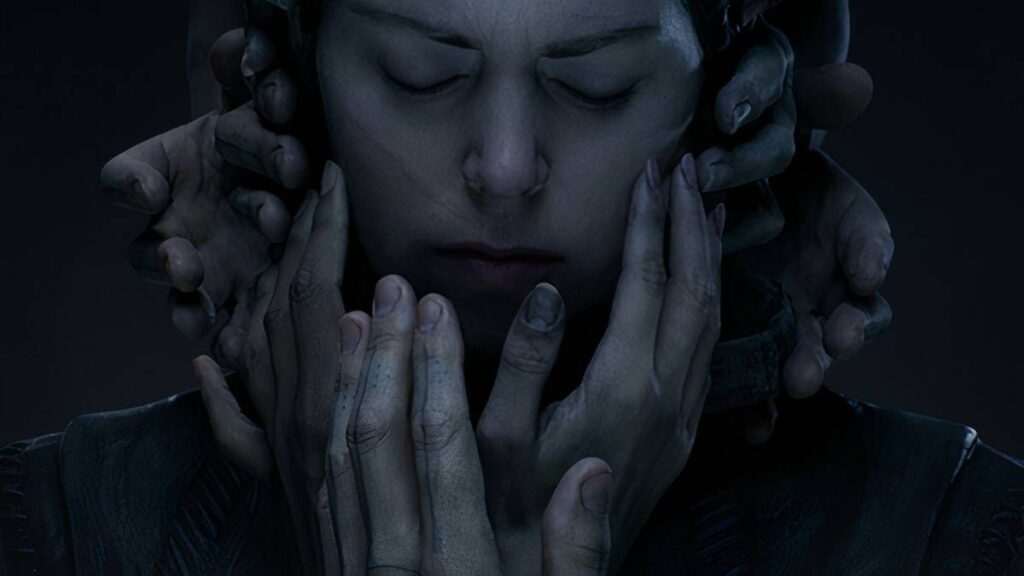
Table of Contents
When Ninja Theory first released Hellblade: Senua’s Sacrifice in 2017, it wasn’t just a game; it was a proof-of-concept for how auditory and visual storytelling could simulate the experience of psychosis. Now, Senua’s Saga: Hellblade 2 arrives not as a traditional sequel, but as a technical evolution. By leveraging Unreal Engine 5 and meticulously scanned Icelandic landscapes, the game moves away from the ‘puzzle-platformer’ elements of the first title toward something closer to a playable film.
- Hyper-Realistic Fidelity: Built on Unreal Engine 5, utilizing Nanite and Lumen for unprecedented environmental detail.
- Psychological Depth: Continued collaboration with neuroscience experts to accurately depict auditory hallucinations.
- Narrative Shift: A move toward a more linear, cinematic experience with a reduced emphasis on traditional combat loops.
- Accessibility: Launched as a day-one title on Xbox Game Pass, targeting high-end Xbox Series X and PC hardware.
The Technical Architecture: Unreal Engine 5 and Photogrammetry
The most immediate impact of Senua’s Saga: Hellblade 2 is its visual fidelity. Ninja Theory has leaned heavily into photogrammetry—the process of taking thousands of high-resolution photos of real-world objects and landscapes to create 3D models. This is particularly evident in the recreation of 10th-century Iceland. Unlike the first game, which felt like a stylized interpretation of the North, Hellblade 2 feels tangible.
The integration of Unreal Engine 5 (UE5) is the core driver here. Through the use of Nanite, the game renders millions of polygons without the traditional ‘pop-in’ or LOD (Level of Detail) shifts that plague open-world titles. The result is a world where the grit of the volcanic ash and the moisture on the basalt rocks feel physically present. Lighting is handled via Lumen, providing dynamic global illumination that reacts in real-time to the oppressive, overcast skies of the Icelandic highlands.
The Role of Motion Capture and Facial Animation
Beyond the environments, the performance capture for Senua is a significant leap forward. The nuance in Melina Thelonious’s performance is captured through high-fidelity facial scanning, allowing the game to convey internal conflict without a single word of dialogue. This ‘micro-expression’ technology is critical because Senua’s journey is internal. The gap between what she sees and what the player sees is bridged by her facial reactions, creating a layer of trust between the player and the character.
Simulating Psychosis: The Science of Sound
One of the most authoritative aspects of the Hellblade series is its commitment to accuracy in portraying psychosis. Ninja Theory didn’t just guess; they worked with academics from the University of Warwick and people living with the condition. In Senua’s Saga: Hellblade 2, this is manifested through binaural audio.
Binaural recording mimics the way human ears perceive sound in a 3D space. For the player, this means the ‘Furies’—the voices in Senua’s head—don’t just sound like background noise; they sound as if they are whispering directly into your ear, shifting from left to right, often contradicting the visual information on screen. This creates a state of cognitive dissonance that mirrors the disorientation of a psychotic episode.
“The goal wasn’t to create a ‘horror’ game, but to create a ‘simulation’ of a mindset. The audio is the primary tool for that simulation.” — Insights from Ninja Theory’s technical briefings.
Gameplay Evolution: From Challenge to Experience
Critically, Hellblade 2 deviates from the gameplay loop of its predecessor. The first game featured environmental puzzles and a relatively consistent combat system. The sequel, however, doubles down on the ‘cinematic’ aspect. Many sequences are highly choreographed, focusing more on the visceral feeling of a struggle than the strategic mastery of a combat system.
The combat remains brutal and grounded. Every swing of the sword carries weight, and the impact of the blows is felt through haptic feedback on the Xbox controller. However, the reduction in puzzle density has led to a divide in player reception. While some praise the seamless flow of the narrative, others argue that the ‘game’ part of the experience has been diminished in favor of the ‘film’ part.
Combat Mechanics and Storytelling
Every encounter in the game is designed to tell a story. Instead of fighting waves of generic enemies, Senua’s battles are often manifestations of her internal trauma or direct confrontations with the tyrannical forces of the Viking age. The combat isn’t about ‘leveling up’—there are no XP bars or loot drops here—but about surviving the immediate, crushing pressure of the moment.
What This Means for the Industry
The existence of Senua’s Saga: Hellblade 2 signals a broader trend in the AAA space: the rise of the ‘Prestige Experience.’ Much like the shift toward narrative-driven titles like The Last of Us or God of War, Ninja Theory is pushing for a form of interactive art that prioritizes atmosphere and emotional resonance over mechanical complexity.
For developers, this game serves as a benchmark for the capabilities of Unreal Engine 5. It proves that photorealistic environments can be coupled with intimate, character-driven stories to create a sense of presence that was previously impossible. For players, it means the line between ‘watching a movie’ and ‘playing a game’ continues to blur, challenging our definitions of what a ‘game’ should actually be.
| Feature | Hellblade: Senua’s Sacrifice (2017) | Senua’s Saga: Hellblade 2 (2024) |
|---|---|---|
| Engine | Unreal Engine 4 | Unreal Engine 5 |
| Visual Approach | Stylized realism | Photogrammetry / Nanite |
| Audio | Binaural / Stereo | Advanced Spatial Audio / 3D Binaural |
| Structure | Puzzle-centric exploration | Cinematic linear narrative |
Critical Analysis: The Trade-off Between Fidelity and Agency
One cannot discuss Hellblade 2 without addressing the tension between visual fidelity and player agency. To achieve this level of detail, Ninja Theory has limited the player’s ability to deviate from the path. The world is a series of exquisitely crafted corridors. While this ensures that the player never misses a crucial cinematic beat or a technical marvel, it can occasionally lead to a feeling of passivity.
However, the game argues that the experience is the product. By removing the friction of complex navigation or tedious puzzles, the player is forced to stay locked into Senua’s perspective. This is an intentional design choice. Psychosis is not a world of choice and freedom; it is a world of claustrophobia and perceived inevitability. In this sense, the linear structure of the game is a narrative tool as much as it is a technical limitation.
Frequently Asked Questions
Is Hellblade 2 a full-fledged sequel or an expansion?
It is a full standalone sequel that continues Senua’s journey. While it shares the same DNA as the first game, it is a distinct experience with a new story arc set in Viking Iceland.
Do I need to play the first game to understand the second?
While Senua’s Saga: Hellblade 2 is accessible on its own, playing the original Senua’s Sacrifice is highly recommended. The emotional weight of the sequel relies heavily on the character development and trauma established in the first title.
What are the system requirements for the PC version?
The game is demanding due to UE5. For a smooth experience at 4K, a high-end GPU (RTX 30-series or 40-series) is recommended. It supports DLSS and FSR to help maintain frame rates amidst the dense geometry.
How does the game handle the representation of mental health?
The developers consulted with medical professionals and individuals with lived experience of psychosis to ensure that the auditory hallucinations and visual distortions are grounded in reality rather than trope-heavy horror.
Is Hellblade 2 available on platforms other than Xbox?
The game is primarily available on Xbox Series X|S and Windows PC. It is a key title for the Xbox Game Pass library.
Ultimately, Senua’s Saga: Hellblade 2 is a testament to where the intersection of technology and psychology can lead. It doesn’t try to be the most ‘fun’ game in the traditional sense, but it is undoubtedly one of the most evocative. Whether you are a tech enthusiast interested in the capabilities of Unreal Engine 5 or a player seeking a profound narrative journey, Hellblade 2 stands as a daring experiment in digital empathy.