Sennheiser Momentum 5 Wireless: A Quietly Powerful Iteration That Finally Tackles ANC
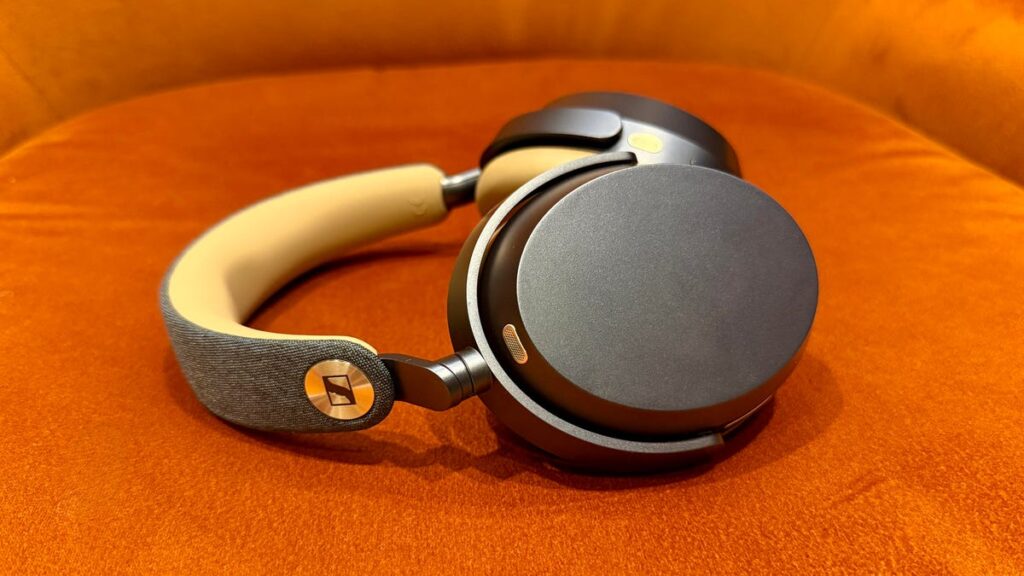
Table of Contents
The Familiar Face of an Audiophile Upgrade
Sennheiser has a history of prioritizing sonic fidelity over flashy iterations, a philosophy that is on full display with the new Momentum 5 Wireless. At first glance, the Momentum 5 looks almost identical to its predecessor, the Momentum 4. It retains the same 290-gram plastic chassis and the muted, utilitarian aesthetic that some critics called ‘mundane’ upon the Momentum 4’s release in 2022. However, looking past the exterior reveals a strategic shift: Sennheiser is no longer content with just sounding the best; they are now fighting for the crown of the best noise-canceling experience.
Priced at $400—a $50 increase over the Momentum 4’s launch price—the Momentum 5 attempts to bridge the gap between a dedicated music listener’s tool and a frequent traveler’s essential. While it doesn’t reinvent the wheel in terms of industrial design, the internal refinements suggest a product aimed at long-term sustainability and technical precision.
ANC: Closing the Gap with Sony and Bose
The most significant hardware evolution is found in the microphone array. Sennheiser has doubled its sensor count, moving from four microphones in the Momentum 4 to eight in the Momentum 5 (four per earcup). This hardware bump transforms the Active Noise Canceling (ANC) from a ‘helpful addition’ to a legitimate competitor. While the industry gold standards—the Sony WH-1000XM6 and Bose QuietComfort Ultra—still hold a slight edge in erasing high-frequency chatter and sudden erratic noises, the Momentum 5 is far more effective at silencing the low-end drone of airplane engines and office HVAC systems.
For the first time, Sennheiser has created a flagship that doesn’t force the user to choose between an accurate soundstage and a quiet environment. The ANC is now ‘good’ across the board, even if some mid-range frequencies still occasionally bleed through during heavy urban commutes.
The Audiophile Edge and Connectivity
Where the Momentum 5 continues to outperform its rivals is in pure audio delivery. The headphones provide a detailed, accurate sound profile with a tightly controlled bass response that avoids the ‘muddy’ quality often found in consumer-grade ANC headphones. The introduction of spatial audio with head tracking adds a layer of immersion that was missing in previous generations, making it a more viable option for movie watching and modern gaming.
A critical addition for the power user is the user-replaceable battery, a move that addresses a growing concern regarding e-waste in the premium audio market. The battery life remains a powerhouse, claiming up to 57 hours on a single charge, which comfortably outlasts most competitors in the space.
For those seeking higher fidelity, Sennheiser offers the HDB 630 as a step-up model ($500). While the HDB 630 features upgraded drivers for refined sound, it interestingly offers weaker noise cancellation than the Momentum 5. The real value for audiophiles, however, lies in the BTD 700 USB-C dongle ($60). This accessory enables ‘lossless’ Bluetooth streaming up to 24-bit/96kHz via aptX Adaptive, bypassing the limitations of standard Bluetooth codecs on devices like Google Pixel or Samsung Galaxy phones that don’t natively license aptX.
Usability and Refinements
The user experience remains largely consistent with the touch-capacitive controls of the Momentum 4, which remain responsive and intuitive. One notable change is the power sequence; users must now manually press the power button to activate the headphones. This is a welcome change for those who found the Momentum 4’s automatic ‘out-of-case’ pairing to be overly aggressive.
Sennheiser also addressed a minor but persistent annoyance by slimming down the carrying case. The new case is more compact and features a carved-out handle on the back, making it significantly more portable than the bulky shells accompanying the HDB 630.
Despite these wins, the Momentum 5 isn’t without flaws. Voice-calling performance remains a weak point, often struggling to isolate the speaker’s voice in windy environments compared to the surgical precision of Apple’s AirPods Max 2. Furthermore, the lack of a chassis redesign might make the $50 price hike a tough pill to swallow for returning customers.


