Seismic Failure: 7.8-Magnitude Quake in Southern Philippines Exposes Infrastructure Vulnerabilities
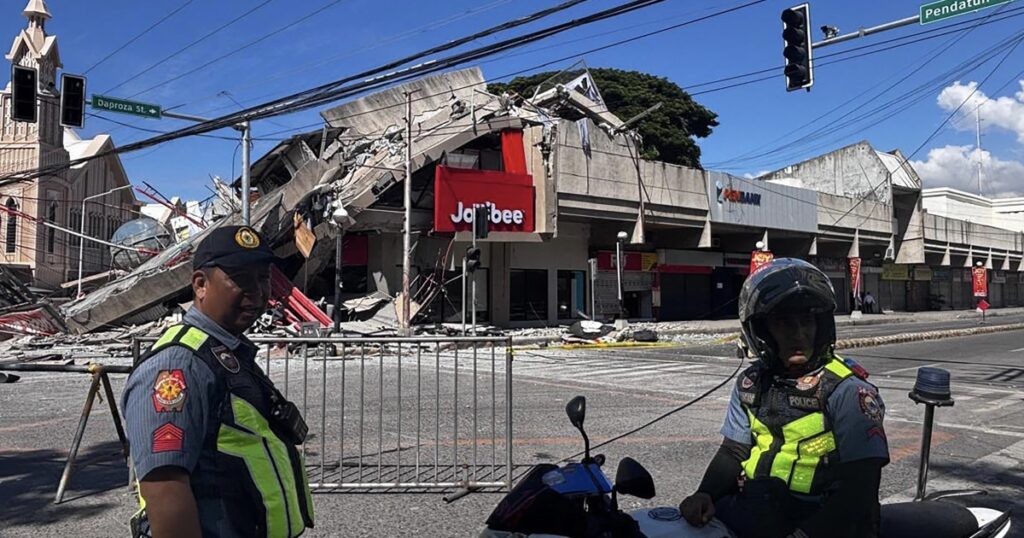
Table of Contents
A Sudden Shift in Mindanao
The southern Philippines was thrust into chaos Monday morning as a massive 7.8-magnitude earthquake struck off the coast of Mindanao. The seismic event, centered approximately 32 kilometers southwest of Maasim in Sarangani province, resulted in at least 12 confirmed deaths and more than 200 injuries. While the immediate human toll is devastating, the event has reignited a technical debate regarding the resilience of urban infrastructure in one of the world’s most disaster-prone corridors.
The quake struck at 7:37 a.m., a timing that coincided with the reopening of public schools following the summer break. This overlap created a high-risk scenario where hundreds of students were gathered for morning flag-raising ceremonies. In General Santos, a critical port city and tuna export hub, the impact was most acute. Regional director of the Office of Civil Defense, Rod Sosmeña, reported that seven deaths occurred in the city alone, with several buildings partially collapsing and a vital access bridge sustaining dangerous structural cracks.
The Gap in Seismic Resilience
The failure of a two-story school in General Santos—where authorities are still searching for missing students—points to a recurring issue in regional construction: the gap between theoretical building codes and actual implementation. While the Philippines has updated its National Building Code to account for the volatile nature of the Pacific Ring of Fire, the reality on the ground often involves ‘soft-story’ constructions or non-engineered masonry that cannot withstand the lateral forces of a 7.8-magnitude event.
Teresito Bacolcol, director of the Philippine Institute of Volcanology and Seismology (PHIVOLCS), noted that early video evidence shows buildings failing in ways that suggest systemic structural weaknesses. The collapse of a four-story office building housing a DZRH radio provincial station further underscores how commercial structures in secondary cities may not be meeting the rigorous seismic standards required for such high-magnitude shocks.
Tsunami Telemetry and Regional Alerts
Beyond the shaking, the quake triggered a 1-meter (3-foot) tsunami, putting coastal communities in Sultan Kudarat and Sarangani on high alert. The event tested the regional integration of the Pacific Tsunami Warning Center and local monitoring agencies. Within five hours, the threat had largely subsided, but the detection of 83-centimeter waves near Indonesia’s Sulawesi island and warnings issued for Sabah, Malaysia, highlight the interconnected nature of the region’s seismic sensors.
The discrepancy in initial depth readings—with PHIVOLCS reporting 33 kilometers and the U.S. Geological Survey citing 55 kilometers—is a common occurrence in the immediate aftermath of a quake. These variations typically stem from different triangulation methods and the time required for global seismic networks to synchronize data. However, for emergency responders, these early technical fluctuations can complicate the initial assessment of the ‘danger zone’ for tsunami inundation.
Logistical Paralysis
The economic impact was felt immediately as General Santos International Airport suspended operations, canceling 17 domestic flights. In a city that serves as a logistics lynchpin for the tuna industry, the cracking of key bridges and the closure of air corridors create a bottleneck for the delivery of emergency aid and the movement of commerce.
President Ferdinand Marcos Jr. has stated that the national government is mobilizing resources to ensure Mindanao is not left behind in the recovery process. Yet, the event serves as a stark reminder that for the Philippines, disaster mitigation is not just about emergency response, but about the technological upgrade of the built environment to survive the inevitable shifts of the earth’s crust.


