Scientific Censorship or Code of Conduct? ADA Ousts Researchers for Distributing Peer-Reviewed Editorial
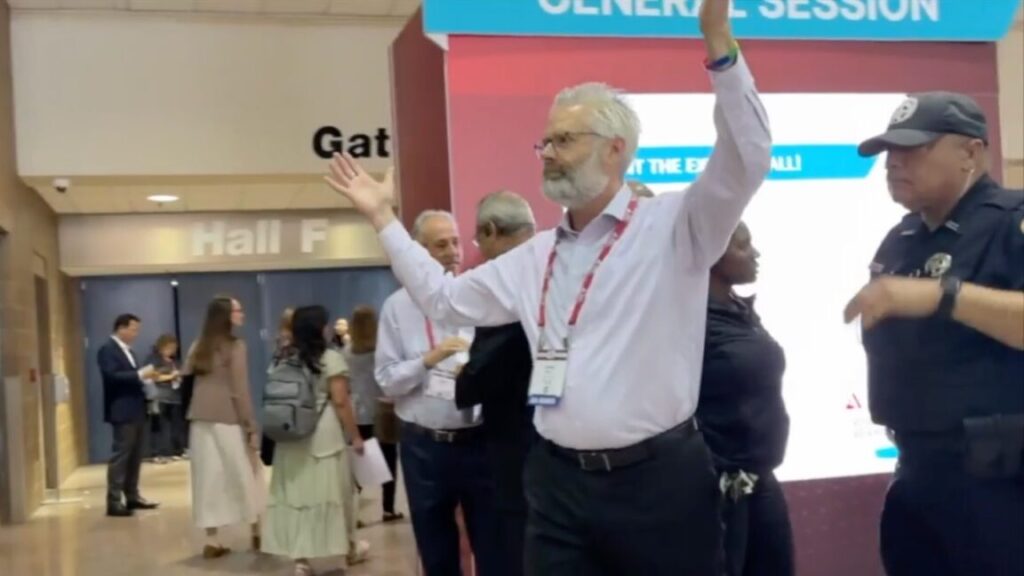
Table of Contents
Security Escorts and Stripped Lanyards in New Orleans
The annual meeting of the American Diabetes Association (ADA) in New Orleans was meant to be a summit of clinical innovation and data sharing. Instead, it became a flashpoint for a heated debate over academic freedom and institutional censorship after five prominent scientists were forcibly removed from the conference center on Friday.
The incident centered on the distribution of reprints from an editorial published on April 29 in Diabetes Care, the ADA’s own flagship journal. The piece, which sharply criticized the Trump administration’s approach to scientific research and funding, was being handed out by the researchers outside a session where NIH director Jay Bhattacharya was scheduled to speak. Although Bhattacharya ultimately cancelled his appearance—with another NIH official stepping in—the security response remained swift.
Among those ejected was Steven Kahn, a professor of medicine at the University of Washington and the editor-in-chief of Diabetes Care. Kahn, who co-authored the editorial in question, found himself in the surreal position of being banned from a conference hosted by the organization that publishes his journal.
The Friction Between Protest and Professionalism
The removal was not a quiet affair. Aaron Kelly, a pediatrics professor at the University of Minnesota and one of the five ousted researchers, described a scene of physical coercion to MedPage Today. “They physically grabbed us, forced us out of the conference center, and now are telling us we can no longer attend this meeting,” Kelly stated. “They’re taking our lanyards. It really has come to this in America. Censorship is real.”
The ADA has defended the move as a matter of policy rather than politics. In a statement to the press, the ADA media team claimed the scientists violated the organization’s established code of conduct. According to the association, the attendees were given multiple opportunities to stop their behavior before security intervened.
The ADA’s code of conduct explicitly prohibits “disorderly or disruptive conduct such as protesting,” requiring all attendees to behave in a professional manner free from “intimidation.” However, the definition of “disruption” is now the center of a growing controversy. Video evidence of the encounter suggests the researchers were not shouting or blocking entrances, but were instead engaging in the traditional academic practice of distributing literature to peers.
A Journal at Odds With Its Publisher
The tension appears to have existed long before the New Orleans conference. Kahn noted that when the editorial was originally published in April, ADA leadership insisted on adding a disclaimer stating that the association was not involved in the development or writing of the article. This move effectively distanced the organization from the views of its own editor-in-chief.
The editorial itself serves as a call to arms for the medical community. The authors argued that the “spiraling fall” of the U.S. as a leader in healthcare innovation is being driven by internal political machinations and budget cuts. “We can no longer afford complacency and fear,” the piece reads. “Now is the time to recognize and fight to reverse” the current trajectory of federal research.
The Digital Aftermath
While the ADA succeeded in removing the scientists from the physical premises, the move triggered a textbook example of the Streisand Effect. Reports of the ejections spread rapidly across X (formerly Twitter) and BlueSky, driving a massive surge in page views for the original editorial. What began as a targeted distribution of physical papers evolved into a global digital conversation about the autonomy of scientists within large professional organizations.
As of the latest reports, Kahn has written to the ADA seeking re-admittance, noting that he is not only an attendee but is slated to chair a session and speak at the event. The ADA has yet to confirm if any of the five researchers will be allowed back into the venue.


