Samsung’s $2,000 Galaxy Fold faces early durability crisis as reviewer screens fail
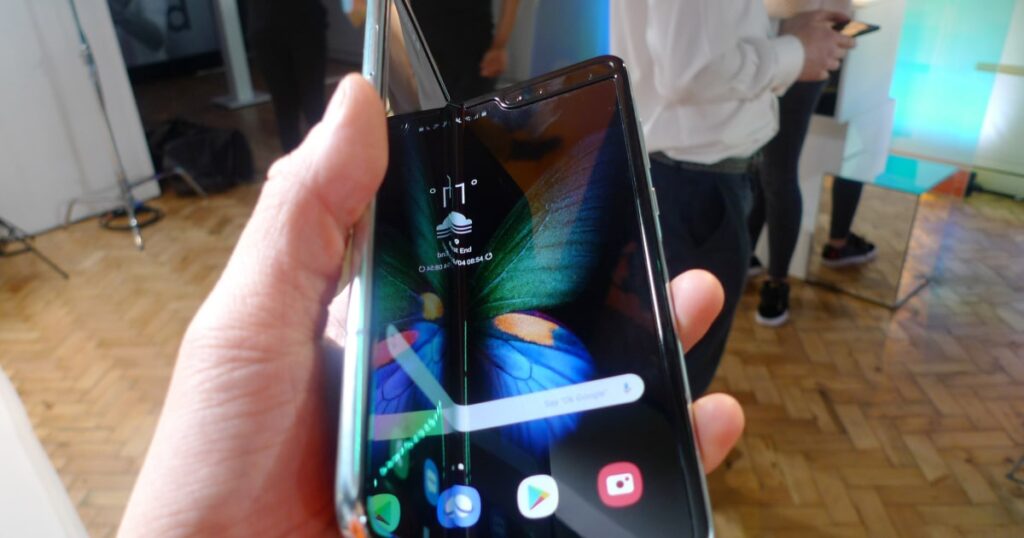
Table of Contents
The High Price of First-Gen Folding
Samsung is attempting to pivot the entire smartphone form factor with the Galaxy Fold, a device that promises the utility of a tablet in the pocket of a phone. But as the device nears its April 26 U.S. launch, a troubling pattern is emerging among the journalists tasked with testing it: the screens are failing.
Reports from several high-profile tech reviewers indicate that the internal displays are flickering, turning black, and in some cases, becoming entirely unresponsive within just 48 hours of use. For a device retailing at $1,980, these failures aren’t just technical glitches—they are potential dealbreakers for early adopters.
The Protective Layer Controversy
Early in the rollout, a point of contention emerged regarding the screen’s protective film. Some journalists reported that removing a thin, plastic-like layer from the display led to immediate malfunctions. Samsung clarified that this layer is not a shipping protector to be discarded, but a critical component of the screen’s structural integrity designed to prevent scratches and degradation.
However, the “user error” explanation doesn’t cover all the failures. Reporters from The Verge and CNBC have reported screen collapses despite leaving the protective film intact. In a video demonstration provided by CNBC’s Todd Haselton, the left side of the internal display was seen intermittently flashing while the right side remained completely dead, rendering the device effectively unusable after only two days of standard operation.
Engineering Promises vs. Real-World Stress
Samsung has staked its reputation on the Fold’s longevity, claiming the hinge and screen can withstand 200,000 folds—roughly 100 opens and closes per day for five years. On paper, this suggests a level of durability that matches or exceeds traditional slab phones. In practice, the gap between lab testing and the chaotic environment of a journalist’s review cycle is proving wide.
The failure of the internal OLED panel is particularly concerning because the Fold’s primary value proposition is its seamless transition from a narrow cover screen to a bisected internal tablet. If the crease or the panel itself is susceptible to failure under normal use, the $1,980 price tag becomes a gamble on hardware stability.
A Company Haunted by the Note 7
This hardware instability comes at a sensitive time for Samsung. The company is still operating in the shadow of the 2016 Galaxy Note 7 disaster, where critical battery failures led to spontaneous combustions and a global recall of millions of units. While a flickering screen is not a fire hazard, the optics of a flagship product failing shortly after launch evoke memories of a quality control breakdown.
In a statement, Samsung acknowledged the reports of screen failures and noted that it would “thoroughly inspect these units in person to determine the cause of the matter.” The company is now tasked with proving that these incidents are isolated anomalies in a small batch of review units rather than a systemic flaw in the folding glass technology.
As the April 26 release date approaches, the industry is watching to see if Samsung will adjust its warranty terms or issue a preemptive warning to consumers. For now, the Galaxy Fold remains a daring piece of engineering that is currently struggling to prove it is durable enough for the real world.


