Samsung’s $2,000 Folding Gamble Hits Early Durability Wall
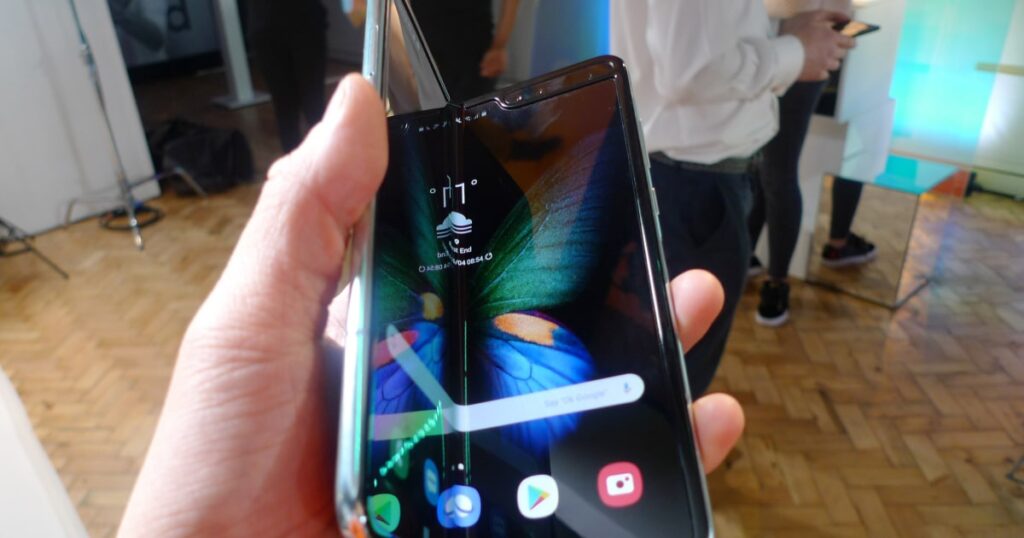
Table of Contents
A Costly First Impression
Samsung is betting heavily on the future of foldable displays, but the debut of the Galaxy Fold is proving to be a volatile affair. Despite a staggering $1,980 price tag, several early review units sent to journalists and tech analysts have reportedly suffered catastrophic screen failures within days of first use.
The reports are not isolated incidents. Multiple outlets, including The Verge and CNBC, have documented displays that began flickering, developed black spots, and eventually ceased functioning entirely. For a device positioned as a luxury productivity tool, the phrase “completely unusable”—as described by CNBC reporter Todd Haselton—is a damaging label to carry just ahead of the official April 26 U.S. launch.
The Protective Layer Controversy
The initial friction centered on a thin, plastic-like protective film covering the inner display. In the early stages of the rollout, some journalists reported that removing this layer coincided with the screen’s failure, leading to suggestions that user error was the primary culprit. Samsung later clarified that this layer is not a shipping protector to be discarded, but a structural necessity designed to prevent scratches on the flexible substrate.
However, that explanation fails to account for units that broke despite the film remaining intact. Reporters from both CNBC and The Verge noted that their devices developed dead zones and intermittent flashing on the internal screen without any one-off trauma or improper handling. A video produced by CNBC shows a stark contrast: the left side of the display flashing violently while the right remains unresponsive, suggesting a failure in the flexible OLED circuitry or the hinge mechanism’s interaction with the panel.
The Engineering Gap
On paper, Samsung’s confidence in the device is absolute. The company claims the screen is rated for 200,000 folds—roughly 100 folds per day for five years. But there is a significant delta between laboratory stress tests and the unpredictable nature of real-world usage, where dust, temperature shifts, and varying pressure points come into play.
The Galaxy Fold attempts a difficult architectural feat: merging a standard smartphone form factor with a tablet-sized interior. The result is a bisected screen with a visible crease. While the crease is a known aesthetic trade-off, the actual failure of the pixels and the underlying electronics points to a deeper stability issue that Samsung has yet to fully explain.
Shadows of the Note 7
For Samsung, the stakes here are more than just financial. The company is still haunted by the 2016 Galaxy Note 7 disaster, where battery defects led to devices catching fire and a total global recall. While a flickering screen is hardly as dangerous as a combustion event, the pattern is unsettlingly familiar: a rushed push to define a new product category resulting in quality control lapses that hit the headlines before the general public can even buy the hardware.
Samsung has officially acknowledged the reports, stating it will “thoroughly inspect these units in person to determine the cause of the matter.” Whether these are isolated “lemon” units from a pre-production batch or a systemic flaw in the folding architecture remains to be seen, but for a device costing nearly two thousand dollars, the margin for error is non-existent.