Samsung Floods Indian Market With 72 New ‘Vision AI’ TVs, Betting Big on Micro RGB
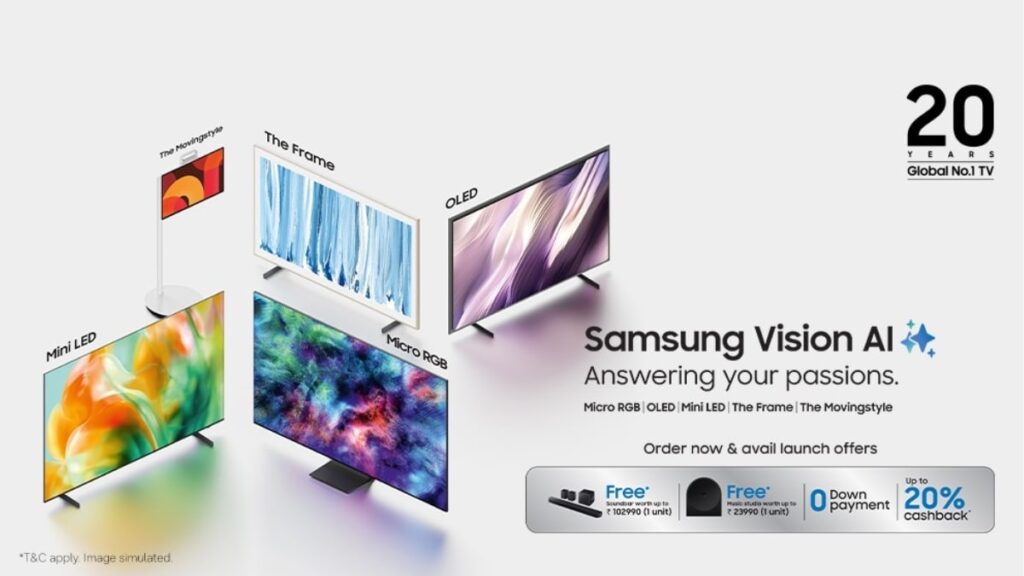
Table of Contents
A Massive Volume Play for the Indian Living Room
Samsung isn’t just updating its catalog for the 2026 cycle in India; it’s attempting to saturate the market. On Wednesday, the South Korean giant unveiled a staggering 72 new television models, a move that signals an aggressive push to maintain dominance in one of the world’s fastest-growing consumer electronics markets. The sheer scale of the rollout—spanning Micro RGB, OLED, Neo QLED, and the lifestyle-centric ‘The Frame’—suggests Samsung is trying to hedge its bets across every possible price bracket, from entry-level UHD sets to ultra-premium luxury displays.
The centerpiece of this offensive is the Vision AI Companion (VAC). While AI-upscaling has been a staple of high-end TVs for years, Samsung is now pivoting toward ‘contextual intelligence.’ The VAC is designed to move beyond simple resolution bumps, focusing instead on content personalization and real-time environmental adaptation. By integrating these features across a wider array of screen sizes and price points, Samsung is effectively democratizing its AI stack, ensuring that even mid-range buyers get a taste of the software capabilities previously reserved for the 8K flagship tier.
The Micro RGB Gamble
Perhaps the most significant technical shift in this lineup is the introduction of Micro RGB technology to the Indian market. Unlike standard OLEDs, which rely on organic compounds that can degrade over time, or Mini-LEDs, which use a backlight to illuminate small clusters of pixels, Micro RGB aims for the ‘holy grail’ of display tech: the precision and brightness of LEDs with the per-pixel control of OLED.
This is a strategic move to capture the ‘ultra-premium’ segment. By pricing the Micro RGB range starting at Rs. 1,24,990, Samsung is positioning this as a direct competitor to high-end home cinema installations. The technical challenge has always been scalability and cost, but bringing this to India indicates that Samsung believes the local appetite for luxury tech is now sufficient to support these margins.
Pricing and Segment Strategy
The pricing structure reveals a calculated effort to block competitors—particularly Chinese brands like Xiaomi and TCL—from gaining a foothold in the mid-to-low tiers. By keeping the UHD entry point at Rs. 36,990, Samsung remains accessible, while the Neo QLED (starting at Rs. 52,990) and Mini LED (starting at Rs. 42,990) options target the value-conscious enthusiast.
| Series | Starting Price (INR) | Primary Target |
|---|---|---|
| Micro RGB | 1,24,990 | Ultra-Premium / Enthusiast |
| OLED | 1,14,990 | Cinematic / Gaming |
| The Frame | 56,990 | Interior Design / Lifestyle |
| Neo QLED | 52,990 | High-End General Purpose |
| Mini LED | 42,990 | Mid-Range Performance |
| UHD | 36,990 | Entry Level / Mass Market |
The ‘The Frame’ series, starting at Rs. 56,990, continues to be Samsung’s strongest play in the lifestyle category, blending the line between art and hardware. However, the real story here is the software. The Vision AI Companion will likely act as the glue holding these diverse hardware specs together, promising a unified user experience whether you’re on a budget UHD screen or a Micro RGB monster.
The AI Narrative Shift
By branding this as the ‘Vision AI’ lineup, Samsung is shifting the conversation away from hardware specs—like nits of brightness or refresh rates—and toward experience. In a market where hardware specs have largely plateaued, the software layer is the only place left to innovate. The goal is to make the TV a proactive hub rather than a passive screen. If the VAC can successfully automate picture settings and content curation without feeling intrusive, Samsung will have created a significant moat that is harder to replicate than simply adding more LEDs to a panel.