Samsung Floods Indian Market with 72 New TV Models, Betting Big on Micro RGB
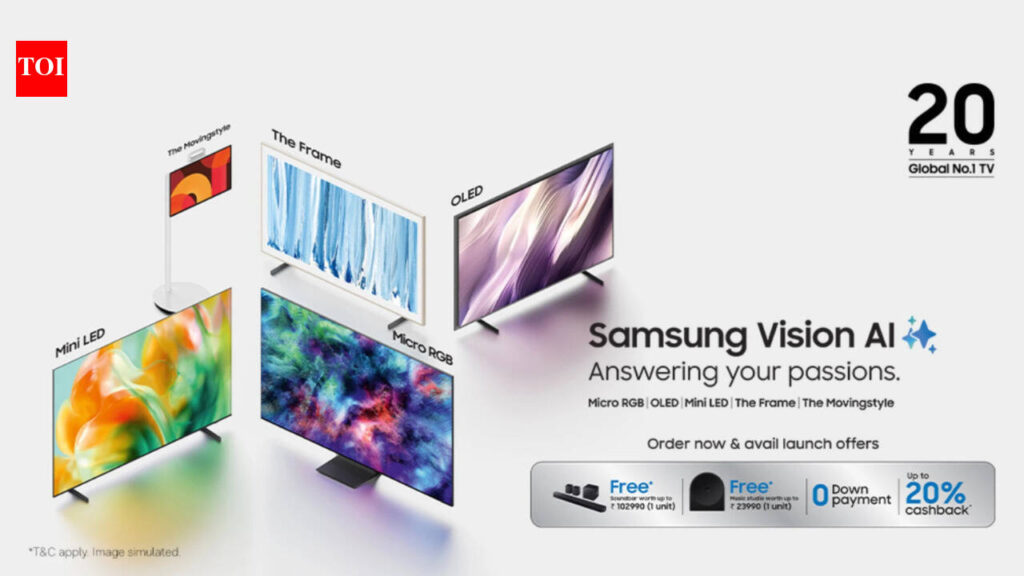
Table of Contents
A Massive Push for Premium Display Tech
Samsung has officially unveiled its 2026 television portfolio for the Indian market, opting for a strategy of sheer volume and technological diversity. The company is launching 72 distinct models, a move that signals an aggressive attempt to capture every possible consumer segment—from budget-conscious homeowners to high-end cinephiles and gaming enthusiasts.
The crown jewel of the announcement is the introduction of Micro RGB. While Samsung has toyed with MicroLED technology in limited, ultra-premium installations for years, the 2026 push in India suggests a move toward making this tech more accessible to the luxury consumer. Unlike standard OLEDs, which rely on organic compounds that can degrade, Micro RGB utilizes non-organic LEDs that act as their own light source, promising significantly higher brightness levels and a complete absence of burn-in risks.
The Battle Between OLED and Neo QLED
While Micro RGB takes the spotlight, the bulk of the lineup remains centered on the ongoing tension between Samsung’s QD-OLED and Neo QLED series. The Neo QLED models continue to leverage Mini LED backlighting, which allows for tighter control over contrast and blooming—a perennial issue in larger LED screens. This year, Samsung is focusing on the efficiency of the Quantum Matrix Technology Pro, aiming to squeeze more luminance out of the panels without increasing power consumption.
On the other side, the OLED offerings are designed to compete directly with LG’s dominance in the black-level game. By integrating Quantum Dots into their OLED panels, Samsung is attempting to solve the traditional brightness deficit associated with self-emissive displays, providing a color volume that remains vivid even in brightly lit Indian living rooms.
Scaling for the Indian Living Room
The sheer variety of the 72-model rollout is not accidental. Samsung is diversifying screen sizes to match the evolving architecture of Indian homes. While 55-inch and 65-inch panels remain the volume drivers, there is a noticeable increase in 75-inch and 85-inch options, reflecting a trend toward “home cinema” setups as urban housing evolves.
Beyond the hardware, the 2026 lineup is deeply integrated with the latest iteration of Tizen OS. The company is leaning heavily into AI-driven upscaling, using neural processors to bring low-resolution cable TV content up to 4K or 8K standards—a critical feature in a market where linear television and satellite broadcasts still hold significant sway over streaming apps.
The Gaming Angle
For the gaming community, the 2026 series doubles down on variable refresh rate (VRR) and low-latency modes. Most of the high-end models now support 144Hz refresh rates, catering specifically to the growing population of PC gamers and the upcoming generation of consoles. The integration of the Gaming Hub remains a centerpiece, allowing users to stream cloud games without the need for a dedicated console.
With such a vast array of choices, the challenge for Samsung will be guiding consumers through the alphabet soup of Micro RGB, Neo QLED, and QD-OLED. However, by flooding the market with every possible configuration, Samsung is effectively attempting to preempt any competitive moves from Sony or LG in the region.


