Samsung Floods Indian Market With 72 New TV Models, Betting Big on Micro LED and Neo QLED
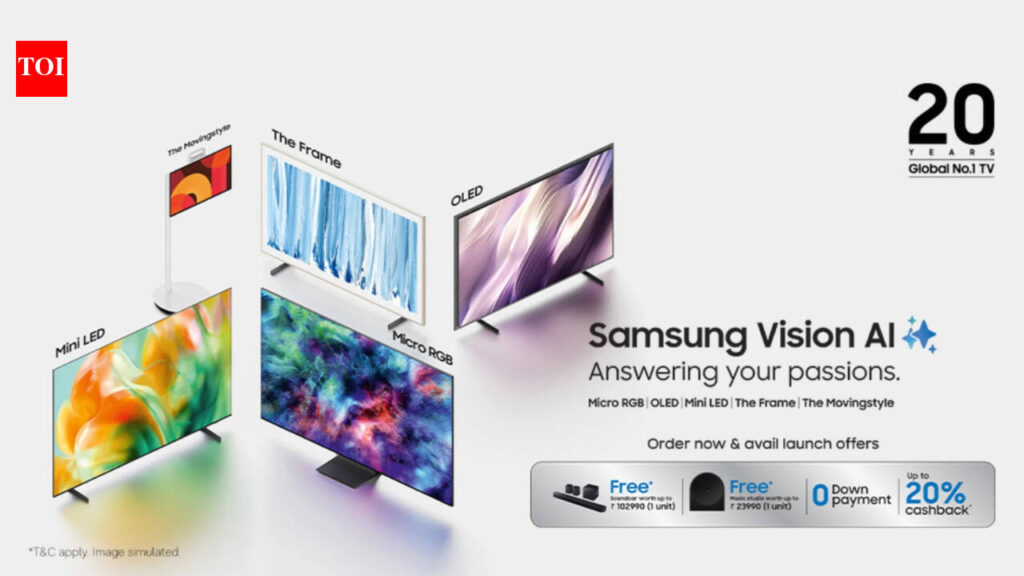
Table of Contents
A Massive Push for High-End Displays
Samsung has officially unveiled its 2026 television portfolio for the Indian market, opting for a strategy of sheer volume and technological diversity. The company is launching a staggering 72 different models, ranging from entry-level 4K sets to ultra-premium displays that push the boundaries of current luminance and color accuracy.
The centerpiece of this expansion is the aggressive push of Micro LED technology. While previously reserved for the ultra-wealthy or massive commercial installations, Samsung is attempting to scale Micro LED more effectively in 2026. Unlike OLED, which relies on organic compounds that can degrade over time, Micro LED uses inorganic gallium nitride pixels. This allows the sets to reach significantly higher peak brightness levels without the risk of permanent burn-in, a critical selling point for the gaming and high-ambient-light living rooms common in Indian urban homes.
The Hierarchy of Panels: OLED vs. Neo QLED
While Micro LED grabs the headlines, the bulk of the 72-model rollout focuses on the ongoing battle between Samsung’s OLED and Neo QLED lineups. The 2026 OLED series focuses heavily on QD-OLED (Quantum Dot OLED) panels, which aim to solve the traditional brightness limitations of standard OLEDs by using a blue light source and quantum dot converters to produce more vibrant reds and greens.
Simultaneously, the Neo QLED range continues to refine the use of Mini LEDs. By using thousands of microscopic LEDs for backlighting instead of a few dozen large ones, Samsung has managed to tighten local dimming zones. This results in deeper blacks and higher contrast that rivals OLED, while maintaining the blinding brightness necessary for HDR10+ content in bright rooms.
Technical Specifications and Diversification
The 72-model sprawl isn’t just about panel tech; it’s about sizing and accessibility. The lineup includes an unprecedented number of large-format screens, with 75-inch, 85-inch, and even 98-inch options appearing across multiple tiers. This reflects a broader trend in the Indian consumer electronics market where the ‘living room cinema’ experience is replacing traditional smaller screens.
On the software side, the 2026 models are integrated with a revamped Tizen OS. The latest iteration focuses heavily on AI-driven upscaling, utilizing NPU (Neural Processing Unit) enhancements to bring low-resolution cable TV content closer to 4K quality in real-time. This is a strategic move for India, where a significant portion of content is still delivered via standard-definition set-top boxes.
Navigating the Competitive Landscape
Samsung’s decision to flood the market with 72 variants is a direct response to the increasing pressure from LG and Sony, as well as the rapid ascent of budget-friendly Chinese brands like Xiaomi and TCL. By covering every possible price point and feature set—from the basic Mini LED sets to the aspirational Micro LED displays—Samsung is attempting to lock users into its ecosystem before competitors can establish a foothold in the premium large-screen segment.
Industry analysts suggest that this volume-heavy approach is designed to dominate retail shelf space and e-commerce filters. By offering a specific model for every conceivable budget and room size, Samsung ensures that regardless of a consumer’s specific requirement, there is a Samsung SKU that fits perfectly.
The new lineup is expected to hit major electronics retailers and online platforms across India starting this week, with the most expensive Micro LED installations available via specialized consultation and custom ordering.