Samsung Floods Indian Market With 72 New AI-Powered TVs, Betting Big on ‘Vision AI’
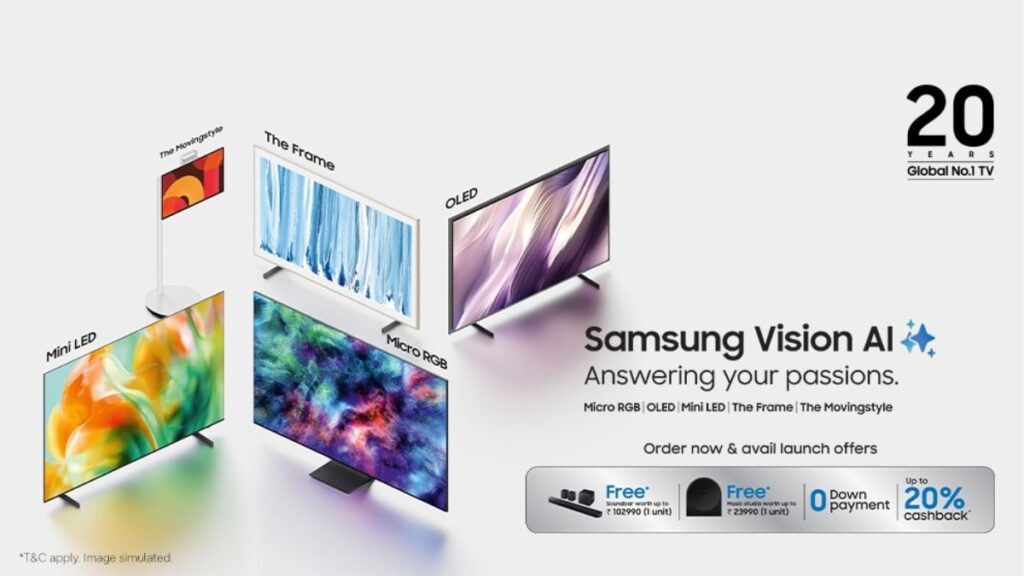
Table of Contents
A Massive Push for Intelligence in the Living Room
Samsung is not just refreshing its television lineup for the Indian market; it is attempting to redefine the TV as an active AI hub. On Wednesday, the South Korean electronics giant unveiled a staggering 72 new television models, marking one of its most aggressive product pushes in the region to date. The center of this strategy is the “Vision AI” ecosystem, a suite of software and hardware integrations designed to move beyond basic smart features toward genuine content personalization.
The most significant technical addition to the Indian portfolio is the introduction of Micro RGB technology. While Samsung has teased micro-LED capabilities in high-end global demos for years, bringing a scalable Micro RGB lineup to India suggests a move to capture the ultra-premium segment where traditional OLEDs may struggle with peak brightness and long-term burn-in. These sets start at Rs. 1,24,990, positioning them as the flagship offering for enthusiasts seeking maximum luminance and color accuracy.
The ‘Vision AI Companion’ and the Shift in UX
Beyond the panels, the real story is the Vision AI Companion (VAC). Unlike previous iterations of AI upscaling—which primarily focused on sharpening low-resolution signals—the VAC is designed as an omnipresent layer across the OS. It targets picture and sound optimization in real-time, analyzing the genre of the content and the acoustics of the room to adjust the audio profile.
According to Samsung, the goal is to democratize these AI tools. While previously reserved for the top-tier 8K models, the 2026 Vision AI features are now trickling down into more affordable segments, including the Neo QLED and even the UHD lineups. This strategy mirrors what we’ve seen in the smartphone market with the Galaxy S series, where “Galaxy AI” is slowly becoming a standard feature across mid-range A-series devices.
Breaking Down the Pricing Tiers
Samsung is casting a wide net here, ensuring that the AI-driven experience is accessible at various price points. The pricing structure reflects a clear segmentation: the ultra-premium Micro RGB and OLED tiers for cinema lovers, and the lifestyle and UHD tiers for the broader consumer base.
| Series | Starting Price (INR) | Primary Target |
|---|---|---|
| Micro RGB | 1,24,990 | Ultra-Premium / High Brightness |
| OLED | 1,14,990 | Cinema / Contrast Purists |
| The Frame | 56,990 | Interior Design / Art Lovers |
| Neo QLED | 52,990 | Mainstream Premium / Gaming |
| Mini LED | 42,990 | Budget Performance |
| UHD TVs | 36,990 | Entry Level / Mass Market |
Contextualizing the Competition
This launch places Samsung in direct competition with LG’s latest OLED series and Sony’s BRAVIA AI processors, both of which have been leaning heavily into “AI Picture Pro” and similar neural-network-driven enhancements. However, Samsung’s sheer volume—72 models—indicates a desire to saturate every possible price bracket in India, from budget-conscious bedrooms to luxury home theaters.
The inclusion of The Frame and other lifestyle TVs highlights Samsung’s recognition that the TV is no longer just a screen, but a piece of furniture. By integrating the Vision AI Companion into these models, Samsung is betting that users will value an AI that understands the context of the room as much as the quality of the 4K signal.


