Samsung Floods Indian Market With 72-Model TV Lineup, Betting Big on Micro LED and OLED
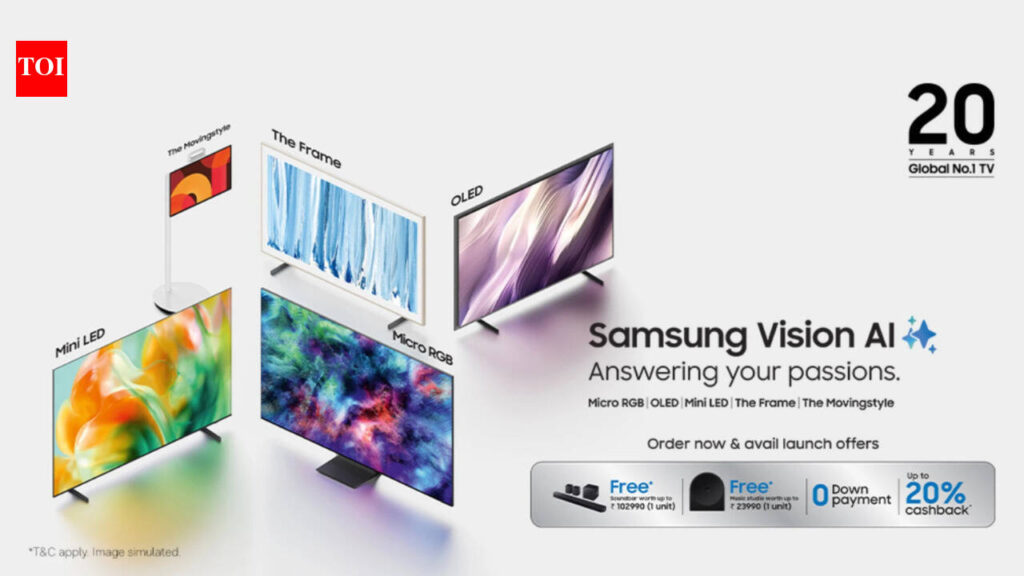
Table of Contents
A Volume Play for the Premium Segment
Samsung has unveiled its 2026 television portfolio for the Indian market, deploying an aggressive strategy that sees 72 different models hitting retail shelves. The sheer scale of the launch suggests a move to blanket every possible consumer price point, from entry-level 4K sets to the ultra-luxury ceilings of the Micro LED category.
The standout addition to the 2026 roster is the expanded availability of Micro LED. While previously relegated to the realm of ‘concept’ luxury or bespoke installations for the ultra-wealthy, Samsung is attempting to push this technology further into the premium consumer consciousness. By decoupling the pixels from a traditional backlight—essentially making every single diode its own light source—Samsung is positioning Micro LED as the ultimate evolution of the display, offering the perfect blacks of OLED without the risk of organic degradation or burn-in.
The Battle of the Panels: OLED vs. Neo QLED
The bulk of the 72-model lineup is split between the brand’s two primary architectural bets: QD-OLED and Neo QLED. In the OLED space, Samsung is doubling down on Quantum Dot integration to solve the traditional brightness issues associated with self-emissive panels. This allows the 2026 OLED sets to compete more effectively in India’s brightly lit living rooms, where traditional OLEDs often struggle with reflections and peak luminance.
Meanwhile, the Neo QLED series continues to rely on Mini LED technology. By utilizing thousands of microscopic LEDs for backlighting, Samsung can achieve far more precise dimming zones than standard LED-LCDs. For the average consumer, this means a significant reduction in ‘blooming’—that annoying halo effect seen around white text on black backgrounds—while maintaining a brightness level that Micro LED and OLED still struggle to match in budget-friendly sizes.
Scaling for the Indian Living Room
Industry analysts note that the decision to launch 72 models is a tactical response to India’s fragmented purchasing power. The lineup ranges from compact 43-inch sets designed for urban apartments to massive 98-inch displays that aim to replace the home cinema experience.
Beyond the hardware, Samsung is integrating deeper AI-driven upscaling into the 2026 series. The new NQ8 AI processors are designed to handle the specific challenge of low-bitrate streaming content, which remains common across many Indian ISPs. By using neural networks to predict missing pixels in real-time, the TVs can push 1080p or 720p content closer to a native 4K appearance without the ‘smearing’ seen in cheaper interpolation methods.
Market Positioning and Competition
This massive rollout puts Samsung on a direct collision course with LG’s OLED dominance and the aggressive pricing of Chinese challengers like Xiaomi and TCL. While those brands often compete on raw specifications per rupee, Samsung is leaning into its ecosystem. The 2026 lineup is heavily integrated with SmartThings, positioning the TV not just as a display, but as a hub for the broader smart home.
The inclusion of Micro LED in the broader lineup, even at a premium price, serves as a ‘halo’ product. It signals technical leadership, ensuring that even customers who purchase a mid-range Neo QLED feel they are buying into a brand that defines the cutting edge of display science.


