Samsung Aggressively Undercuts Premium Market with New AI Mini LED Range in India
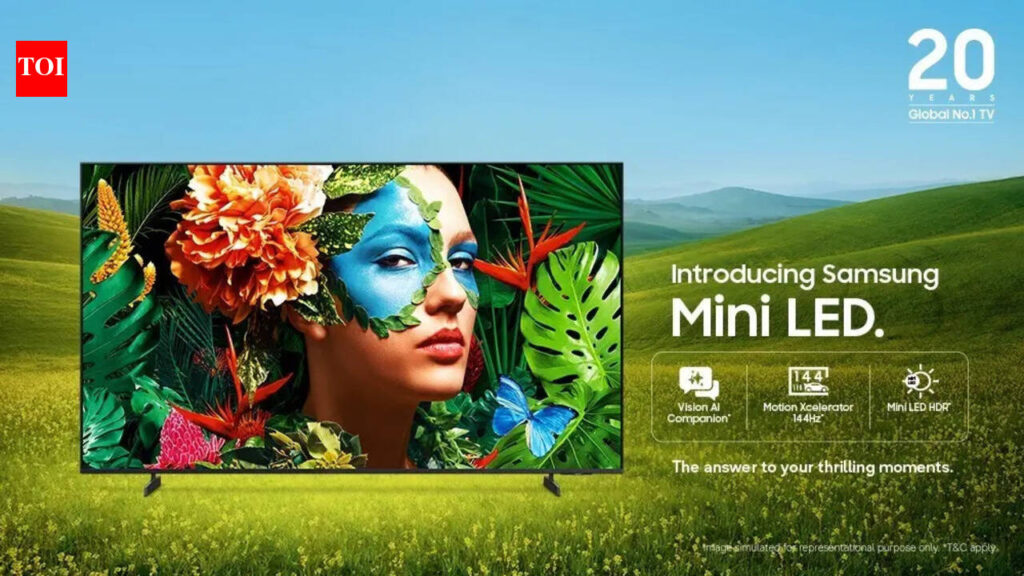
Table of Contents
A Strategic Pivot to the Mid-Range
Samsung is making a calculated move to dominate the Indian living room by lowering the barrier to entry for high-end display technology. The company has officially launched its latest series of AI-powered Mini LED TVs in India, with a surprising entry price point of ₹42,990. This pricing strategy signals a shift in how Samsung views the Indian consumer: no longer just as a buyer of budget LED panels or ultra-luxury OLEDs, but as a massive market for ‘attainable premium’ tech.
While Mini LED has traditionally been reserved for the flagship Neo QLED series, this new rollout suggests Samsung is attempting to squeeze out competitors like Xiaomi and TCL who have dominated the budget-to-midrange segment. By integrating AI-driven processing into a more affordable chassis, Samsung is effectively bringing professional-grade backlight control to the masses.
The Role of AI in the Picture Pipeline
The centerpiece of these new sets isn’t just the hardware, but the neural processing unit (NPU) handling the image. Unlike standard upscaling, which often results in a ‘soapy’ or overly processed look, Samsung’s new AI engine focuses on contrast optimization and texture preservation. The system analyzes the content in real-time—distinguishing between a sports broadcast, a cinematic movie, or a gaming session—and adjusts the Mini LED zones accordingly to prevent the dreaded ‘blooming’ effect common in cheaper LED TVs.
Technically, the AI works in tandem with the Mini LED arrays, which are significantly smaller than standard LEDs. This allows for thousands of local dimming zones. In practical terms, this means a black screen remains truly black even when a bright object, like a moon or a candle, appears in the frame, maintaining a level of contrast that previously required a spend of over ₹1 lakh.
Market Positioning and Competitive Friction
At ₹42,990, Samsung is entering a territory where brand loyalty is often secondary to specifications. However, the inclusion of the Tizen OS ecosystem gives them an edge. The integration with Samsung SmartThings allows these TVs to act as a central hub for home automation, a feature that is increasingly becoming a deciding factor for tech-savvy Indian households.
The launch comes at a critical time for the Indian consumer electronics market, where the ‘premiumization’ trend is peaking. Buyers are moving away from the smallest available screens toward 55-inch and 65-inch models, but they are unwilling to pay the steep premium for OLED. Mini LED serves as the perfect bridge, offering 90% of the performance at a fraction of the cost.
Hardware Specifications and Availability
While the entry-level model starts at the aforementioned price, the lineup scales up with larger screen sizes and higher refresh rates for gamers. The higher-end variants in this AI series are expected to support 120Hz and HDMI 2.1, making them viable companions for the PlayStation 5 and Xbox Series X.
The new range is available through Samsung’s online store, major e-commerce platforms like Amazon and Flipkart, and physical retail outlets across the country. Samsung has also bundled various bank offers and exchange deals to further lower the effective price, suggesting a high-volume strategy to gain market share in the first half of 2026.


