Samsung Aggressively Targets Indian Mid-Range Market with AI-Driven Mini LED TVs
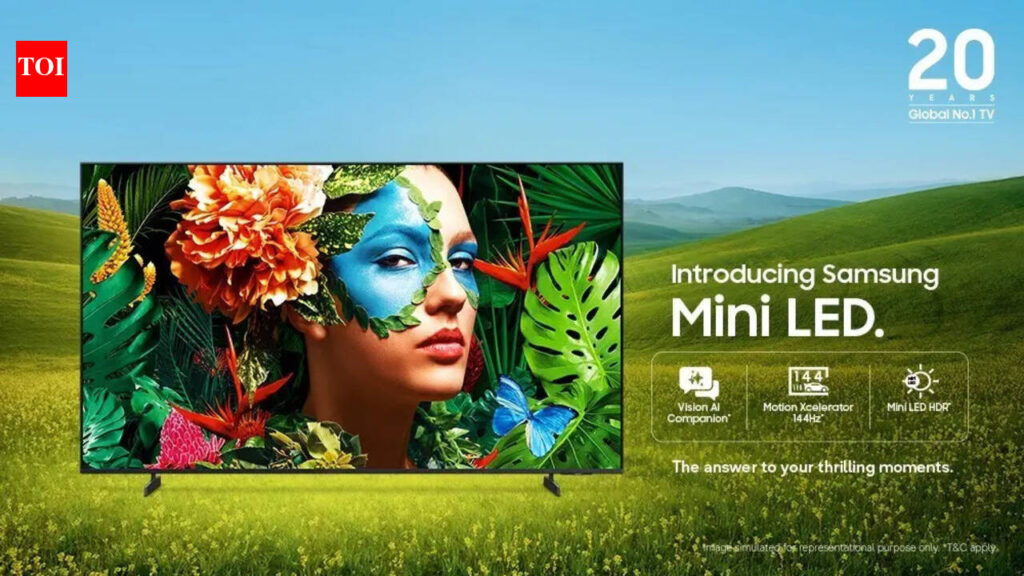
Table of Contents
A Strategic Pivot to the Mid-Range
Samsung is making a calculated move to democratize high-end display technology in one of its most critical growth markets. The company has officially launched its latest lineup of AI-powered Mini LED TVs in India, with a surprising entry price point of Rs 42,990. While Mini LED has traditionally been reserved for flagship Neo QLED models costing well into the lakhs, this new pricing strategy suggests Samsung is attempting to squeeze out competitors in the budget-to-mid-range segment.
The shift is likely a response to the increasing dominance of Chinese brands like Xiaomi and TCL, which have aggressively undercut premium manufacturers on price while offering similar spec sheets. By bringing Mini LED—a technology that uses much smaller LEDs for better contrast and brightness control—down to the 40k range, Samsung is pivoting from being purely ‘premium’ to ‘accessible premium.’
The AI Edge: Beyond Just a Buzzword
The core of this new range isn’t just the hardware, but the integration of Samsung’s proprietary AI processing. According to technical specifications provided during the launch, these sets utilize a new AI-driven upscaling engine designed to bring legacy content (720p or 1080p) up to 4K resolution with significantly fewer artifacts than previous iterations.
Unlike standard LED-LCDs, the Mini LED architecture allows for more precise local dimming zones. When paired with the AI processor, the TV can dynamically analyze the brightness of individual frames and adjust the backlight in real-time. This reduces the ‘blooming’ effect often seen around bright objects on dark backgrounds, a common pain point for users moving from basic LEDs to more advanced displays.
Gaming and Connectivity
Samsung hasn’t neglected the gaming crowd in this rollout. The new series supports HDMI 2.1 and features a dedicated ‘Game Mode’ that reduces input lag, making them viable options for PS5 and Xbox Series X users who cannot justify the cost of a high-end OLED. The integration of Tizen OS remains the backbone of the user experience, providing a seamless ecosystem for those already using Samsung smartphones and tablets.
Market Implications for the Indian Consumer
The pricing of Rs 42,990 creates a precarious situation for traditional 4K LED TVs. For a marginal increase over basic models, consumers now get the superior contrast of Mini LED and the intelligence of AI upscaling. Industry analysts suggest this may force other players to either lower their prices or accelerate their own transition to Mini LED technology to stay relevant.
However, the trade-off in these entry-level Mini LED models usually manifests in the peak brightness levels and the total number of dimming zones compared to the ultra-premium Neo QLED series. While these TVs will outperform standard LEDs, they won’t quite hit the ‘infinite contrast’ territory of the more expensive QD-OLED panels.
The rollout is expected to hit major retail chains and online platforms like Amazon and Flipkart immediately, with various bank offers likely bringing the effective price even lower for early adopters.


