Samsung Aggressively Prices New AI Mini LED Lineup to Shake Up Indian Home Cinema Market
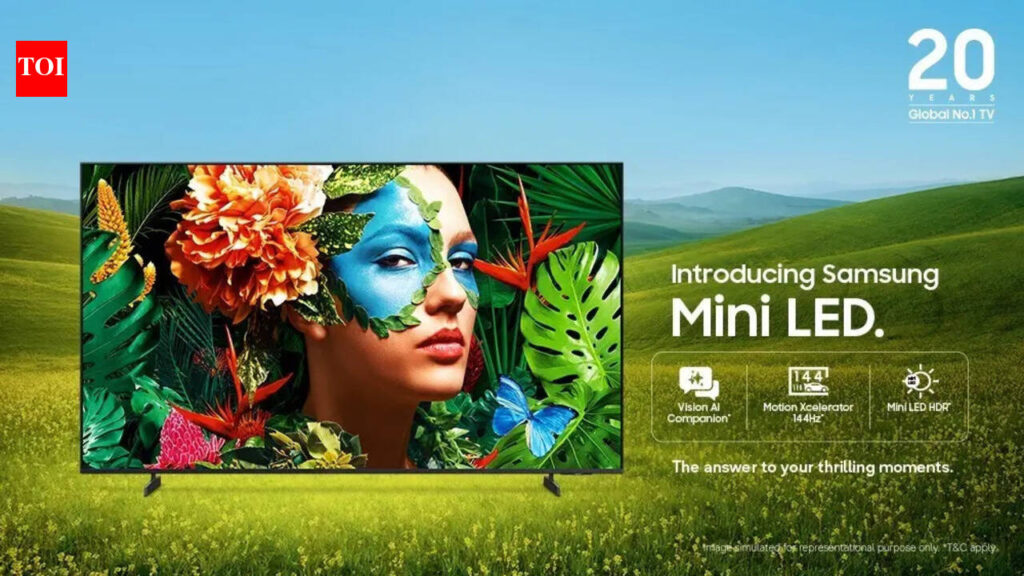
Table of Contents
A Strategic Pivot Toward Mid-Range Luxury
Samsung is making a calculated move to democratize high-end display technology in India, launching a new series of AI-powered Mini LED televisions with a surprisingly aggressive entry point of Rs 42,990. For years, Mini LED—which uses thousands of tiny LEDs to provide precise backlight control and deeper blacks—was reserved for the flagship Neo QLED series, often costing well into the six-figure range. By sliding this tech into a more accessible price bracket, Samsung is directly challenging the dominance of budget-friendly 4K LED panels and the encroaching popularity of OLEDs from LG and Sony.
The shift isn’t just about hardware; it’s about how Samsung is leveraging its latest AI processing suites to compete. In the Indian market, where content varies wildly from low-bitrate cable TV broadcasts to high-fidelity 4K streaming, the ability to clean up an image is as important as the panel itself.
The AI Engine: Beyond Simple Upscaling
At the heart of these new sets is an upgraded AI processor designed to handle real-time contrast enhancement. Unlike traditional LEDs, which often suffer from “blooming”—where light leaks from bright objects into dark areas—these Mini LED sets utilize AI-driven local dimming. The processor analyzes the frame in real-time, identifying high-contrast edges and shutting down specific clusters of Mini LEDs to maintain a true black, effectively mimicking the per-pixel control of OLED without the risk of permanent burn-in.
Samsung has also integrated a more aggressive AI upscaling algorithm. This system doesn’t just stretch pixels; it uses a neural network to recognize textures and objects, adding synthetic detail to older 1080p content to make it appear sharper on a 4K canvas. For the average consumer in India, this means a noticeable jump in quality when watching legacy sports broadcasts or older cinematic content.
Market Positioning and Competition
The pricing strategy here is telling. At Rs 42,990 for the entry-level model, Samsung is positioning this line to intercept buyers who are currently browsing high-end LED TVs but are hesitant to spend the premium required for a full Neo QLED or OLED experience. This puts immense pressure on brands like Xiaomi and TCL, who have built their Indian presence on offering spec-heavy panels at low margins.
However, the real battle is for the “aspirational” middle class. By branding these as “AI TVs,” Samsung is moving the conversation away from raw hardware specs—like nit brightness or refresh rates—and toward a smarter, more autonomous user experience. The sets also feature enhanced integration with Samsung’s SmartThings ecosystem, allowing the TV to act as a hub for home automation, a feature that is gaining traction in urban Indian households.
Technical Trade-offs
While the starting price is disruptive, it is likely that the base models will feature fewer dimming zones than the ultra-premium flagship versions. The efficiency of Mini LED depends on the granularity of these zones; while still vastly superior to standard edge-lit LEDs, the entry-level AI Mini LED models may exhibit slightly more blooming in extreme dark-room scenarios compared to the top-tier 8K variants.
Despite this, the inclusion of a high-refresh-rate gaming mode and support for Variable Refresh Rate (VRR) ensures these TVs remain relevant for the growing gaming community in India, particularly those pairing their screens with the PS5 or Xbox Series X.


